
Ten of Pentacles: meaning and symbolism of the tarot card
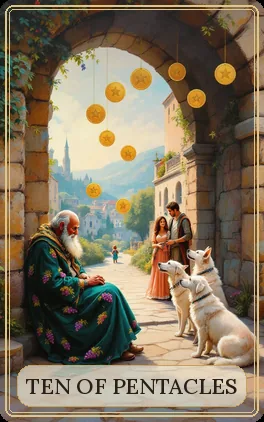
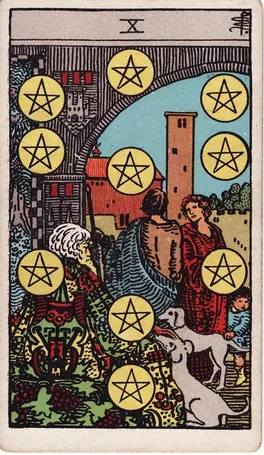
The Ten of Pentacles is the card of the house that endures. Beneath a stone arch, at the entrance to a town, stand three generations: an old man with a white beard sitting in the corner, a young couple standing further along, a child in the distance on the road — and, with them, the household dogs. Above them all, ten gold coins hang from the arch. It is not a scene of celebration or luxury: it is the portrait of a family and of what it has built and will pass on to those who come next.
In a spread, the Ten of Pentacles speaks of inheritance, family and long-term security. It is the most established card of the whole suit: the point at which wealth stops being personal and comes to belong to a lineage. It is almost always favourable, but it carries with it the weight of everything that is inherited — traditions, expectations, the dividing up of an estate. What you receive you also have to carry.
The card at a glance
| Card | Ten |
|---|---|
| Suit | Pentacles |
| Element | Earth |
| Astrology | Mercury in Virgo (Golden Dawn) |
| Keywords | inheritance, family, lineage, home, estate, tradition, lasting security, stability |
| Reversed | disputed inheritance, divided household, family conflicts, the weight of tradition, an estate that binds |
| Yes or no | Yes — a solid, lasting yes, especially in matters of home and family |
The image on the card
In the Sol da Alma Tarot, the scene is framed by a great arch of golden stone, covered in ivy and green branches. On the left, sitting on a stone step, is an old man with very long white hair and beard, wrapped in a dark-green cloak embroidered with bunches of purple grapes and leaves; his hands rest on his knees and he looks calmly at the road. On the right, in the shade of the walls of a house with a balcony, stands a young couple: the woman, with long brown hair and a peach-coloured dress, leans against the man, in a waistcoat and red cape, who has his arm around her. Beside them are three long-haired white dogs, sitting on the flagstones, turned towards the old man. Further off, halfway down the cobbled road, a small child in a blue dress walks alone. In the background stretches a town of pale houses and red roofs, with a pointed church spire, green hills and bluish mountains. From the arch hang ten gold coins with stars, suspended on fine threads at different heights.
In the 1909 Rider-Waite-Smith, the scene is essentially the same, and it was from it that the Sol da Alma painting set out: an old man with a white beard, seated on the left in a cloak richly embroidered with bunches of grapes and other symbols, has two white dogs beside him, turned towards him; beneath an arch, a man and a woman are talking, and a small child peeps out beside the woman. Houses and a tower can be seen in the background, and there is a coat of arms on the arch. The ten coins are painted over the whole scene, arranged in the pattern of the Kabbalistic Tree of Life. The Sol da Alma keeps the old man, the cloak with grapes, the arch, the couple and the dogs, but changes the composition: the coins hang from the arch instead of floating above the figures, without the Kabbalistic pattern; there are three dogs and they are beside the couple; and the child is apart, alone on the road, instead of next to the parents.
In the Marseille Tarot, the Dix de Deniers has no scene: it is ten coins arranged among foliage ornaments. The family, the arch and the dogs are a creation of the Rider-Waite-Smith.
The symbolism, detail by detail
This card speaks of everything that passes from one generation to the next. Each detail adds a nuance.
- The three generations
- The old man, the couple and the child are the whole span of a family’s time: the past that founded it, the present that maintains it, the future that will inherit it. The wealth of the Ten of Pentacles does not belong to one person; it belongs to a lineage.
- The seated old man
- The founder, the grandfather, the memory of the house. He no longer works: he watches. His wealth is made and his role now is to pass it on.
- The cloak with grapes
- The harvest of a lifetime. The same grapes as in the Nine of Pentacles, now embroidered on the old man’s cloak: the fruit of work has become part of who he is, and of what he leaves behind.
- The young couple
- The generation that keeps the house going, the one that holds the present in its hands. They are together, embracing, and their union is what guarantees continuity.
- The child on the road
- The future. In the Sol da Alma painting, the child walks alone, already a little apart: the one who will inherit, but also the one who will one day make their own way.
- The dogs
- Loyalty, protection, domestic life. They are turned towards the old man, as if acknowledging his authority. They are the faithfulness that binds the family to the house.
- The stone arch
- The entrance to an estate, the passage between the house and the world. It is a structure that was there before these people and will remain after them.
- The ten suspended coins
- Accumulated wealth, hovering over the whole family. They are above the figures: they belong to everyone, and to no one in particular.
- The town in the background
- The community, the place the family belongs to. Inheritance is not only money: it is also a name, a piece of land, a place in the world.
- The church spire
- Tradition and the institutions that shape the life of a family — the rites, the customs, the rules that are handed down.
The history of the Ten of Pentacles
In the first tarots of northern Italy, in the fifteenth century, and in the Marseille decks, which took their settled form between the seventeenth and eighteenth centuries, the Ten of Pentacles was a pip card: ten coins drawn, with no figure. It was used for the game of tarocchi and had no divinatory meaning of its own.
At the end of the nineteenth century, the Hermetic Order of the Golden Dawn gave each numbered card a title and an astrological attribution. The Ten of Pentacles was given Mercury in Virgo and the title ‘Lord of Wealth’ — wealth no longer as gain, but as a finished state.
In 1909, Arthur Edward Waite and Pamela Colman Smith gave it the scene of the family beneath the arch that leads into a house and an estate. In the book that accompanied the deck, Waite gave as its meanings gain, riches, family matters, archives, extraction — that is, lineage — and the abode of a family. Pamela Colman Smith arranged the ten coins in the pattern of the Kabbalistic Tree of Life, a design the Golden Dawn used to order the numbers from one to ten. The Sol da Alma Tarot follows the scene and the reading, but hangs the coins from the arch and gives the child a road of its own.
The Ten of Pentacles upright: the meaning
Upright, the Ten of Pentacles is the card of inheritance in the broadest sense: what is received from those who came before and passed on to those who come after. It may be money, a house, a family business — but also a name, a profession, values, a way of being in the world. It speaks of lasting security, of roots, of belonging.
It is the card of family and home. In a reading, it can herald the purchase of a house, a move to a permanent home, a marriage that unites two families, the birth of a new generation, a family gathering. It favours everything planned for the long term: safe investments, savings, wills, plans for children and grandchildren.
What sets it apart from the Nine of Pentacles is sharing. In the Nine, wealth is personal and enjoyed alone; in the Ten, it is shared and passes from hand to hand. The Ten of Pentacles says that true prosperity is the kind that outlasts us — and that, for that reason, it is not measured in money alone.
The Ten of Pentacles reversed
Reversed, the Ten of Pentacles does not lose the inheritance: it is the same inheritance in dispute. The household divides, siblings fall out over the division of the estate, the wealth that should unite the family comes to separate it. It can speak of family conflicts over money, of contested wills, of family businesses in crisis, or of a house nobody wants and nobody dares to sell.
It can also speak of the weight of tradition: family expectations that bind, an inherited profession that was never chosen, the feeling that life had already been decided before it began. Or of an excess of the same security — living so tied to the estate and to a family’s appearances that you stop living your own life. The card asks you to separate what you receive from who you are, and to decide what is worth keeping.
The Ten of Pentacles in love
In love, the Ten of Pentacles is one of the most solid cards in the deck. It speaks of relationships thought of in the long term: marriage, a life together, a home, children, a family being built. For a couple, it is the sign of a stable commitment and a shared future. For someone who is single, it can herald someone with whom it is possible to make plans — often met through the family or through a long-standing circle of friends.
Reversed, it warns against family interference in the relationship, against conflicts over money within the couple, or against a relationship kept up for appearances and convenience rather than affection.
The Ten of Pentacles in work and money
At work, it favours established companies, family businesses, solid institutions, secure jobs with a future. It can indicate a profession that passes from parents to children, or a position in an organisation with a long tradition. In a question about a project, it says the project has what it takes to last.
With money, it is the strongest card of the suit: an estate, safe investments, property, inheritances, pensions, accumulated wealth. Reversed, it can warn against conflicts over the division of an estate, against family debts, or against risky investments that endanger what took generations to build.
The Ten of Pentacles in health and wellbeing
In questions about wellbeing, the Ten of Pentacles speaks of stability, of family routines, of the support that comes from close ties and of a long, well-lived life. Reversed, it points to the tiredness that comes from carrying everyone else’s problems. The cards are no substitute for any kind of healthcare: the reading speaks of attitude and tendency, not diagnosis.
The Ten of Pentacles in spiritual life
On the inner path, the Ten of Pentacles is tradition: what is received from the ancestors, the practices and values of a family or a people. It can speak of reconciliation with your own roots, of acknowledging what you owe to those who came before, or of the responsibility of passing something on to those who come after. It is a reminder that nobody starts from nothing: we are all heirs, and we all leave something behind.
The Ten of Pentacles as advice
As advice, the Ten of Pentacles says: think long term. Build something that lasts, look after your family ties, honour what you have received. And it also says: an inheritance is there to sustain, not to bind. Keep what is worth keeping, and have the courage to let go of what weighs more than it helps.
The Ten of Pentacles in the positions of a spread
- In the past
- The roots: a family, an inheritance or a tradition that shaped the present situation.
- In the present
- A moment of stability and security; or a question of family, home or estate that is on the table.
- In the future
- Lasting security on its way: a home, a commitment, a family, an inheritance.
- As an obstacle
- Family conflicts, a difficult division of an estate, or the weight of expectations and traditions.
- As the outcome
- A solid, lasting outcome that benefits not only the person asking but also those close to them.
Numerology and correspondences
Ten is the end of the cycle: everything the suit could give has been given, with the abundance and the weight that brings. In Pentacles, the suit of Earth, the end of the cycle takes the form of completed wealth — the house built, the estate made, the family established. It is the point at which matter stops belonging to one person and comes to belong to a whole span of time. But the Ten is also a passage: after it come the court cards, and what has been accumulated has to be governed by someone.
In the Golden Dawn tradition, the card corresponds to Mercury in Virgo. Mercury is the planet of exchange, commerce and transmission; Virgo, the Earth sign of method, order and care. Together they describe the scene well: a well-managed wealth that circulates and is handed down from generation to generation. Hence the title the order gave it, ‘Lord of Wealth’.
Combinations with other cards
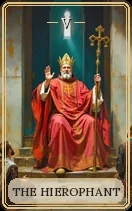 The Hierophant — A traditional wedding, a family ceremony, values handed down.
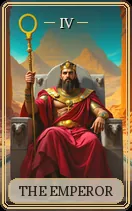 The Emperor — Family authority, a well-managed estate; the head of the household.
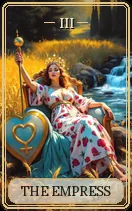 The Empress — Fertility and abundance; a growing family.
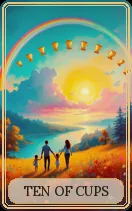 Ten of Cups — Complete family happiness: material security and emotional harmony.
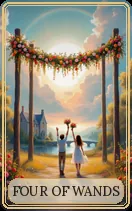 Four of Wands — A house being inaugurated, a family celebration, roots being celebrated.
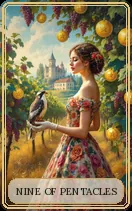 Nine of Pentacles — From personal wealth to shared wealth; what was built alone comes to sustain others.
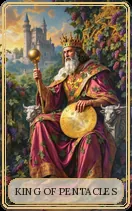 King of Pentacles — A solid, well-governed estate; the head of a family or of a business.
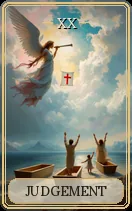 Judgement — Questions of inheritance, wills, family matters coming to the surface.
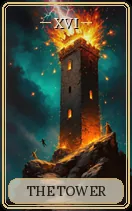 The Tower — A rupture within the family or the estate; what seemed solid is shaken.
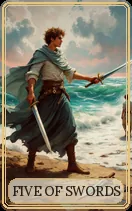 Five of Swords — Conflicts over dividing an estate; an inheritance that divides.
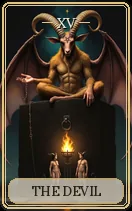 The Devil — Excessive attachment to the estate; a family held captive by money.
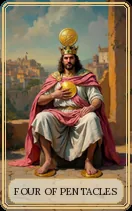 Four of Pentacles — Holding on at all costs; the fear of losing what has been inherited.
Frequently asked questions
What does the Ten of Pentacles mean in tarot?
Inheritance, family and lasting security: what is built to outlast us and passes from generation to generation.
What does the Ten of Pentacles mean in love?
A solid commitment, thought of in the long term: marriage, a home, a family. Reversed, it warns against family interference or conflicts over money.
Is the Ten of Pentacles a yes or a no?
It is a solid, lasting yes, especially in matters of home, family and property.
Is the Ten of Pentacles reversed bad?
No. It is the same inheritance, disputed or burdensome: family conflicts, a difficult division of an estate, traditions that bind. It asks you to decide what is worth keeping.
Does the Ten of Pentacles speak of inheritance?
Yes, it is the inheritance card par excellence — but in the broad sense: money and property, and also the values, professions and traditions received from the family.
No sign-up · Reading written on the spot · Free