
The Hierophant: meaning and symbolism of the tarot card
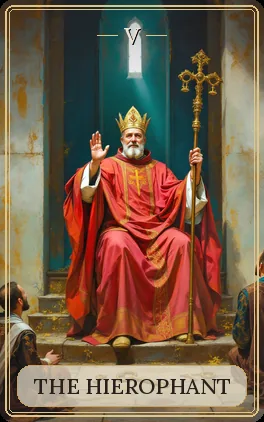
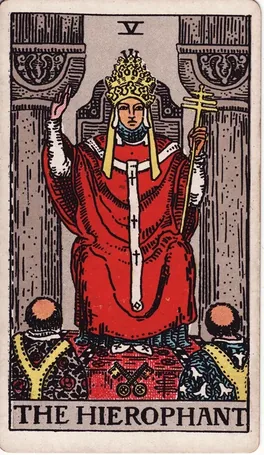
The Hierophant is the fifth card of the Major Arcana. A figure wearing a crown or tiara, seated in a raised place, lifts a hand to bless two people standing before him, further down. He does not govern by force, like The Emperor, nor does he keep the secret, like The High Priestess: he teaches. He is the outer teacher, the one who passes on what he received from those who came before.
In a spread, The Hierophant speaks of tradition, teaching, shared rules, institutions and formal commitments — a marriage, a contract, a vow, a diploma. He can represent a teacher, an adviser, a guide, or simply the accumulated wisdom of a community. It is a card of framework and belonging. Its risk is the risk of every tradition: to go on repeating the rule after it has lost its meaning.
The card at a glance
| Number | V |
|---|---|
| Arcana | Major Arcana |
| Historical names | Il Papa (Italy); Le Pape (Marseille); The Hierophant (Rider-Waite-Smith) |
| Element | Earth (through the sign of Taurus) |
| Astrology | Taurus (Golden Dawn) |
| Hebrew letter | Vav (ו), according to the Golden Dawn |
| Keywords | tradition, outer teacher, teaching, counsel, institution, formal commitment, faith |
| Reversed | dogma, conformity, the letter without the spirit, rebellion, hypocrisy, bad advice |
| Yes or no | Yes, if the established path is followed; ‘it depends’, if the question is about breaking the rules |
The image on the card
In the Sol da Alma Tarot, The Hierophant is an elderly man with a white beard, seated on the stone steps of a tall niche in a church or temple. He wears a golden crown and a red chasuble embroidered in gold, with a golden cross on the breast, over a white tunic. He raises his open right hand in a gesture of blessing, and with his left hand holds a tall golden crosier topped by an ornate cross. Behind him the wall is blue-green and, high above, a narrow arched window lets in a ray of light. The stone walls at the sides are worn, with patches of gold and rust. In the lower corners, two seated or kneeling figures look up at him: on the left, a bearded man with a pale shawl; on the right, another figure in embroidered blue, cut off by the edge of the card.
The Rider-Waite-Smith of 1909 has the same structure, and it is the starting point for the Sol da Alma painting: the man seated in a high place, dressed in red, his hand raised in blessing, the crosier with the cross, the two figures in the foreground. But there are many differences. In the RWS the Hierophant wears a triple-crowned tiara and blesses with two fingers raised; the crosier has a triple cross; he sits between two grey pillars; the two figures are tonsured monks, seen from behind, in robes decorated with roses and lilies; and at his feet lie two crossed keys. In the Sol da Alma the tiara has become a crown, the blessing is given with the whole hand, the pillars have given way to a niche with a window of light, and the keys cannot be clearly seen.
In the Tarot de Marseille the card is called Le Pape: the Pope, with a triple tiara and a cross with three bars, seated between two pillars, blessing two smaller figures in front of him, their backs to the viewer. It is the scene the Sol da Alma table describes — the outer teacher between two pillars, before two disciples.
The symbolism, detail by detail
Everything in this card speaks of transmission: of something that comes down from above, passes through someone and reaches others. Each element adds a nuance to that idea.
- The hand giving the blessing
- Teaching, counsel, approval. It is the gesture of someone who passes something on, not of someone who gives orders. In the RWS, two fingers raised; in the Sol da Alma, the whole hand open.
- The crosier with the cross
- Spiritual authority and the responsibility to guide. In the RWS the cross is triple, a sign of a power that extends across several planes.
- The crown or the tiara
- Authority recognised by a community. The Hierophant does not appoint himself: he is chosen and accepted.
- The two figures
- The disciples, the students, the faithful — those who receive the teaching. There are two because tradition is shared: there is no teacher without someone to learn.
- The crossed keys
- In the RWS, at the Hierophant’s feet: the keys of Saint Peter, the power to open and to close, to grant access to knowledge and to what is sacred.
- The pillars, or the niche
- The temple, the institution, the structure that keeps the tradition. In the Sol da Alma, the niche of worn stone says that this structure is an old one.
- The window of light
- A detail of the Sol da Alma’s own: light that comes from above and passes through a narrow opening. True teaching is that light, not the walls.
- The red of the chasuble
- Dedication, commitment, a life placed at the service of a cause. Underneath, the white of the tunic speaks of intention.
- The steps
- Hierarchy and the path: there are levels of knowledge, and one climbs from one to the next with time and learning.
The history of The Hierophant
In the tarot decks of the fifteenth century this card was Il Papa — the Pope, the highest authority of the Church. Alongside the Emperor, the Empress and the Popess, he completed the hierarchy of the world as the Italians of the time saw it: two temporal powers, two spiritual powers. In the Tarot de Marseille, which took its settled form between the seventeenth and eighteenth centuries, he is called Le Pape, with the triple tiara, the three-barred cross and two tonsured figures kneeling before him.
Because he was such an explicitly religious figure, the Pope was replaced by other characters in some later decks, to avoid trouble with the authority of the Church. The occultists of the eighteenth and nineteenth centuries, for their part, wanted to see him as a priest of the ancient mysteries rather than the head of the Church of Rome.
The name ‘Hierophant’ comes from Greek and means, literally, ‘the one who shows the sacred things’. It was the title of the priest who led the mysteries of Eleusis in ancient Greece. That was the name Arthur Edward Waite chose for the card in the 1909 deck, drawn by Pamela Colman Smith, following the Golden Dawn, which had assigned it the sign of Taurus and the letter Vav. The image stayed very close to the Marseille Pope, but the name changed its meaning: he is no longer the head of a Church, but any teacher who passes on a traditional knowledge. That is how the Sol da Alma reads him.
The Hierophant upright: the meaning
Upright, The Hierophant is the card of transmission. It speaks of what is learnt from those who came before: a teacher, a master, an adviser, a tradition, a school. It says there is a path already laid out and that, at this moment, it is worth following — learning the rules before thinking about changing them.
It is also the card of institutions and formal commitments: marriage, a contract, a diploma, a vow, the ceremony that marks a rite of passage. In a spread, it can herald one of these moments, or ask you to give official form to something that until now was informal.
Finally, The Hierophant speaks of belonging and shared values: family, community, faith, the group with whom one shares a view of the world. It says there is a framework that gives meaning, and that there is no need to reinvent everything. The strength of this card lies in continuity.
The Hierophant reversed
Reversed, The Hierophant does not become his own opposite: it is the same tradition having lost its life. The rule remains, but no one knows why any more; the teaching is repeated without being understood; the institution protects itself instead of serving. It can speak of dogma, conformity, hypocrisy, pressure to follow what others expect, or an adviser who does not deserve the trust placed in them.
It can also speak of the opposite reaction: the wish to break the rules, to follow a path of one’s own, to question authority. This is not always negative — some traditions need to be challenged. The advice is to tell the spirit from the letter: keep what still makes sense and let go of what is repeated only out of habit.
The Hierophant in love
In love, The Hierophant is the card of formal commitment: engagement, marriage, the decision to make a relationship official. It speaks of a traditional relationship, with shared values and long-term plans, often with the family’s blessing. For those who are single, it can point to meeting someone through friends, family or a community, or to someone with solid values.
Reversed, it can speak of a relationship lived out of obligation, of family pressure, of differences in values or beliefs that weigh on the couple. It can also point to the wish to live love in a less conventional way.
The Hierophant in work and money
At work, The Hierophant favours teaching, training, learning from someone more experienced and large institutions: schools, universities, the civil service, companies with a strong culture, religious organisations or associations. It can herald a course, a qualification, a mentor, or joining a team with clear rules. It says the way forward is to follow procedure and learn from those who know.
With money, it calls for prudence and conventional solutions: banks, advisers, safe products, known rules. Reversed, it warns against self-interested advice, against the rigidity of an institution, or against the temptation to get round the rules.
The Hierophant in health and wellbeing
In questions about wellbeing, The Hierophant is a reminder of the importance of following good advice and keeping consistent habits, learnt from those who know. Reversed, it can speak of routines repeated without conviction. The cards are no substitute for any kind of healthcare: the reading speaks of attitude, not diagnosis.
The Hierophant in spiritual life
On the inner path, The Hierophant is the teacher, the tradition, the school: spirituality lived in community, with rites, texts and teachings received. It says there is wisdom in what has been handed down through the generations, and that it is worth learning with humility. Where The High Priestess teaches you to listen within, The Hierophant teaches you to hear those who have already walked the path. Reversed, it can point to the need to find a path of one’s own, outside inherited forms — or to the risk of following an authority without ever questioning it.
The Hierophant as advice
As advice, The Hierophant says: learn from those who know. Look for a teacher, ask for advice, follow the method that has already proved it works. Make the commitments you need to make, and give them their proper form. But keep the spirit alive: follow the rule for as long as it serves, and know how to ask why.
The Hierophant in the positions of a spread
- In the past
- An upbringing, a tradition or a teacher that left their mark on the person; values received that still guide them today.
- In the present
- The moment to learn, to ask for advice or to make a formal commitment.
- In the future
- A marriage, a contract, a course, joining an institution or a group.
- As the obstacle
- Conformity, a rigid rule, pressure from family or society, or a bad adviser.
- As the outcome
- Official recognition: what was sought takes on form, legitimacy and a place.
Numerology and correspondences
Five is the test: the form of four breaks open, and there is friction or lack — it is the step that forces movement. After The Emperor, who closes the material order, The Hierophant opens it to another dimension: meaning, values, what cannot be seen. It is proof that structure alone is not enough. But it is also the number of challenge: teaching is only worth something if it is put to the test by those who receive it.
In the Golden Dawn tradition it corresponds to the sign of Taurus — an earth sign, the sign of constancy, patience and what endures — and to the Hebrew letter Vav, whose name means ‘nail’ or ‘hook’: that which joins one thing to another. That is exactly what The Hierophant is: the link between what is above and what is below, between ancient knowledge and those who will receive it.
Combinations with other cards
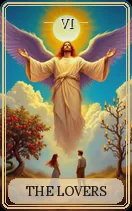 The Lovers — Marriage or formal commitment; a blessed and recognised union.
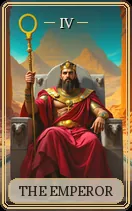 The Emperor — Institutions, authority and rules; a very firm structure, sometimes a rigid one.
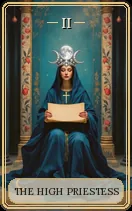 The High Priestess — Outer and inner knowledge together: deep study, an initiation, a true teacher.
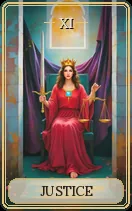 Justice — Legal matters and contracts; decisions made by the rules.
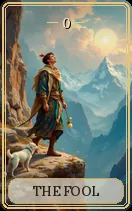 The Fool — Breaking with tradition, following a path of one’s own outside the established rules.
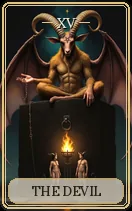 The Devil — Dogma, dependence on an authority or a group; an institution that holds you captive.
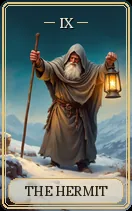 The Hermit — A wise teacher, a spiritual guide, the search for deep counsel.
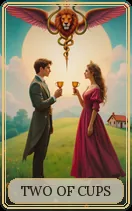 Two of Cups — A union made official; engagement, marriage.
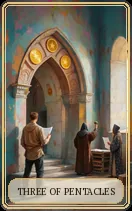 Three of Pentacles — Learning a trade under a master; recognised work within an institution.
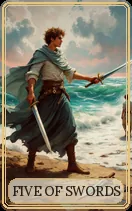 Five of Swords — Conflict with authority or with a group; rules that divide.
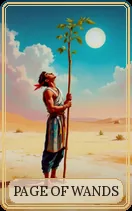 Page of Wands — An enthusiastic student, a new course, news about training.
Frequently asked questions
What does The Hierophant mean in tarot?
Tradition, teaching and formal commitment: learning from those who know, following an established path, giving official form to a decision. It represents the outer teacher and institutions.
Is The Hierophant a yes or a no?
It leans towards yes, especially if the question is about following the established path, marrying, studying or signing. If it is about breaking the rules, the answer is more guarded.
What does The Hierophant mean in love?
Serious commitment: engagement, marriage, a relationship with shared values. Reversed, it can speak of family pressure or a relationship lived out of obligation.
Is The Hierophant reversed bad?
It is not a card of misfortune. Reversed, it speaks of tradition drained of life — dogma, conformity, bad advice — or of the wish to break the rules. It asks you to tell what still makes sense from what is merely repeated.
What is the difference between The Hierophant and the Pope?
They are the same card. In the old decks it was called the Pope; the Rider-Waite-Smith gave it the name Hierophant, the priest of the Greek mysteries, to link it to any tradition and not only to the Church.
Does The Hierophant represent a person?
It can: a teacher, a mentor, an adviser, a priest, someone older and more experienced. Often it represents an institution or a set of rules.
No sign-up · Reading written on the spot · Free