
Five of Swords: meaning and symbolism of the tarot card
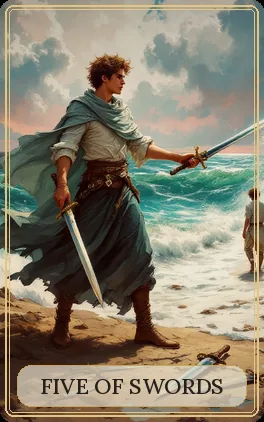
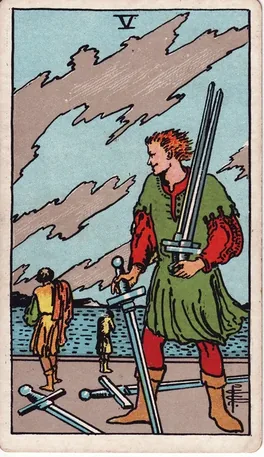
The Five of Swords is the card of the conflict nobody truly wins. A young man stands on the beach, sword in hand, and watches someone walking away. There are swords lying on the sand. He has won — but he is alone, and the sea around him is not calm. It is an image of victory, and at the same time of loss.
In a spread, the Five of Swords speaks of arguments, rivalries, wounded pride, situations in which someone wins at another’s expense. It is the card of being right in a way that isolates: the argument was won and the friendship, the respect, the peace were lost. It may describe the person asking as the winner, as the loser, or as a witness. In any case, it asks the same thing: to think about what you really want to win.
The card at a glance
| Card | Five |
|---|---|
| Suit | Swords |
| Element | Air |
| Astrology | Venus in Aquarius (Golden Dawn) |
| Keywords | bitter victory, conflict, pride, discord, humiliation, winning at any cost, estrangement |
| Reversed | reconciliation, end of discord, regret, giving up a fight, lingering resentment |
| Yes or no | Yes, but at a price — ask whether it is worth it |
The image on the card
In the Sol da Alma Tarot, a young man with tousled red hair stands on a beach of dark sand, beside a rough sea of blue-green waves and white foam. He wears a white shirt with rolled-up sleeves, a long dark-green skirt or tunic, leather belts and tall boots; a grey-green cloak, wrapped around his neck, flaps in the wind. He holds two swords: one in the hand on the left-hand side of the card, pointing at the ground, and the other stretched out to the right, towards the sea. He looks over his shoulder, to the right, where a smaller figure in pale clothes is walking away along the water’s edge. On the sand, at his feet, other swords lie fallen. The sky is full of dark clouds, with pinkish patches near the horizon.
In the 1909 Rider-Waite-Smith, the scene is essentially the same, and it was the starting point for the Sol da Alma painting: a red-haired young man with a disdainful smile holds three swords — two over his shoulder and one pointing at the ground — while two figures walk away, dejected, towards the water, and two swords lie on the ground. The sky is slashed by jagged clouds, like rags. The Sol da Alma arranges his swords differently, reduces the defeated to a single figure in the distance, and turns the calm water in the background into a stormy sea that fills half the card.
In the Marseille Tarot, the numbered cards have no scene. The Five of Swords shows curved blades interlaced in a kind of oval, with a straight sword running through the centre, as in the other odd numbers of the suit. The victor and the vanquished are a creation of the Rider-Waite-Smith.
The symbolism, detail by detail
This card shows the end of a fight, and nobody in it seems happy. Each detail says something about the price of winning.
- The victor
- The one left holding the field and the weapons. In the Rider-Waite-Smith he smiles disdainfully; in the Sol da Alma he looks tenser, like someone who has not yet put the fight down. He has won, but he does not seem at peace.
- The outstretched sword
- In the Sol da Alma painting, one blade points into the distance, towards whoever is leaving: the hostility that continues after the argument, the wish to have the last word.
- The sword pointing at the ground
- The fight that is over, or the weapon no longer needed. It is also the weight of what was won: a victory that drags along.
- The fallen swords
- What the defeated left behind — or what was lost in the fight. They lie there on the ground: the defeat is visible, and nobody picks them up.
- The figure walking away
- The loser, the friend who was lost, the person who gave up arguing. They leave with their back turned: the relationship has been left behind.
- The look over the shoulder
- The victor looks at whoever is leaving. It may be triumph, it may be doubt, it may be the beginning of regret. The card leaves the question open.
- The rough sea
- An addition of the Sol da Alma: the turbulent emotions the conflict has left behind. The argument is over, but inside nothing has calmed down.
- The cloak in the wind
- Wind is the element of the suit — Air. Here it blows hard: agitated thoughts, words still flying about.
- The dark clouds
- The heavy atmosphere after the argument. In the Rider-Waite-Smith, the torn clouds recall a wounded sky.
The history of the Five of Swords
The tarot was born in northern Italy in the fifteenth century as a card game — the tarocchi — with the four suits of the Latin cards. In the oldest decks, such as those painted for the Visconti and the Sforza in Milan around 1450, and later in the Marseille decks, which settled into their form between the seventeenth and eighteenth centuries, the numbered cards showed only the suit symbols. The Five of Swords was an arrangement of blades, and its meaning came from the suit and the number.
The Hermetic Order of the Golden Dawn, at the end of the nineteenth century, gave each numbered card a planet in a sign and a title. The Five of Swords is Venus in Aquarius, with the title ‘Lord of Defeat’. It is a blunt title, which says without beating about the bush what the card is about.
The scene of the victor with the swords was born with the Rider-Waite-Smith, drawn by Pamela Colman Smith under the direction of Arthur Edward Waite and published in 1909 — the first widely circulated deck with scenes on all the Minors. Waite describes a disdainful man looking after two retreating and dejected figures, master in possession of the field, and gives the card the meanings of degradation, destruction, revocation, dishonour and loss. The modern reading has added the ambiguity the image suggests: the defeat belongs not only to those who leave, but also to the one who stays. It is this reading, that of the bitter victory, that the Sol da Alma follows.
The Five of Swords upright: the meaning
Upright, the Five of Swords is the bitter victory. There was an argument, a dispute, a competition, and someone won — but at the cost of something more important: a friendship, trust, the harmony of a home or a team. It is the card of someone who wanted to be right at all costs, and managed it.
It can also speak from the side of the one who loses: humiliation, the feeling of having been treated unfairly, the wish to walk away from a fight that cannot be won. And sometimes from the side of the one looking on — the person who sees a conflict around them and realises that nobody is going to come out of it better off.
In a broader sense, the Five of Swords speaks of pride, unfair competition, cleverness used against others. It is not a card of malice, but of a very human blindness: that of mistaking winning for succeeding. It asks you to look at what has been left lying on the ground.
The Five of Swords reversed
Reversed, the Five of Swords does not become its own opposite: it is the same conflict, seen afterwards, or turned inwards. Very often, it is reconciliation — the argument that runs out of steam, people speaking to each other again, the recognition that being right was not worth what it cost. It may be the moment to apologise, or to accept an apology.
But it can also be the resentment that remains: the fight is over on the outside and goes on inside, in bitterness, in the desire for revenge, in the memory of humiliation. Or the decision to give up a fight, out of weariness or out of wisdom. In both cases, the card asks the same thing — lay down the swords, and ask what you want to salvage from here on.
The Five of Swords in love
In love, the Five of Swords speaks of arguments in which things are said that should not be, of power games, of pride that will not give way. It may describe a couple in which one of the two always wins — and the other gradually drifts away. It can also point to a separation made in bitterness, or a relationship in which each wounds the other so as not to be wounded.
For those who are single, it may speak of disappointment with someone who played with their feelings, or of the temptation to compete rather than to give yourself. Reversed, it is a card of possible reconciliation — but only if both are willing to stop needing to be right.
The Five of Swords in work and money
At work, it is the card of tough competition: rivalries between colleagues, power games, a dispute over a post or a project, someone who wins by less than clean means. It warns against conflicts in which you win the argument and lose the team. It can also describe an environment in which it is better not to get involved in fights that are not yours.
With money, it speaks of disputes — a difficult division of assets, a deal in which someone comes off worse, a gain that leaves a bad taste. It asks you to pay attention to the honesty of agreements. Reversed, it announces the end of a dispute, or the recognition that some losses are not worth fighting over.
The Five of Swords in health and wellbeing
In questions about wellbeing, the Five of Swords speaks of the toll that conflicts take: tension, irritation, energy spent on arguments. It asks you to choose your battles and protect your peace. Reversed, it is a reminder that resentment held inside is tiring too. The cards are no substitute for any kind of health care: here, as with any other card, the reading speaks of attitude, not of diagnosis.
The Five of Swords in spiritual life
On the inner path, the Five of Swords is a mirror of the ego: of the part of us that wants to win, to be right, to come out on top. The card invites us to look at that desire without condemning it, but without obeying it either. Many traditions teach that there are victories that impoverish and defeats that set free. The Five of Swords is the lesson of someone who discovers, with all the swords in hand, that they have been left alone on the beach.
The Five of Swords as advice
As advice, the Five of Swords says: choose your battles. Before getting into an argument, ask yourself what you really want to win — and what you are prepared to lose. Sometimes the strongest thing to do is to let the other person have the last word. And if the fight has already happened, look at whoever walked away: perhaps there is still time to call them back.
The Five of Swords in the positions of a spread
- In the past
- A conflict that left its mark — an argument, a break, a defeat or a victory whose consequences are still being felt.
- In the present
- A dispute under way, or a tense atmosphere in which someone wants to win at all costs.
- In the future
- A warning of a possible conflict: there is time to choose whether it is worth getting into.
- As an obstacle
- Pride, stubbornness, the need to be right — your own or someone else’s.
- As the outcome
- A victory that comes at a cost, or a defeat that teaches. Nobody comes out unscathed, but the matter is settled.
Numerology and correspondences
The Five is the test: the form of the Four breaks, and there is loss, friction or lack. It is the step that forces movement. In the suit of Swords — the suit of Air, of thought, of speech and of conflict — that test is open struggle. The truce of the Four is over; the swords have come off the wall and been used. The result is imbalance: some are left with everything, others with nothing, and nobody with peace.
In the Golden Dawn tradition, the Five of Swords corresponds to Venus in Aquarius and bears the title ‘Lord of Defeat’. Venus is the planet of harmony and relationships; Aquarius, an Air sign, is the sign of ideas, independence and detachment. The two together speak of bonds that come undone because of ideas — the harmony that is lost when each person clings to being right.
Combinations with other cards
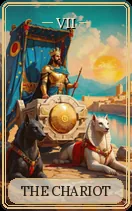 The Chariot — A victory won by force; watch what you leave behind along the way.
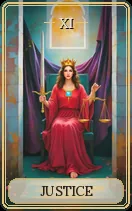 Justice — A legal dispute or a question of justice; the outcome may be fair but bitter.
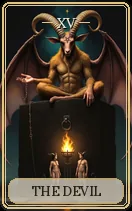 The Devil — Manipulation, power games, a fight driven by pride or ambition.
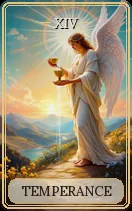 Temperance — Reconciliation: the conflict calms down when each side gives a little.
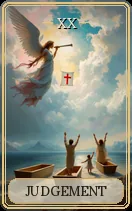 Judgement — An honest reckoning with a past conflict; the time to ask for or grant forgiveness.
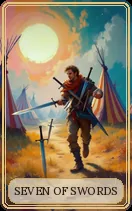 Seven of Swords — Cunning and disloyalty: someone wins by less than clean means.
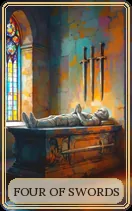 Four of Swords — Stepping back from the fight to recover; refusing to be drawn into an argument.
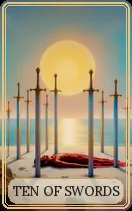 Ten of Swords — A conflict taken to the bitter end, with no winners; hitting rock bottom in order to start again.
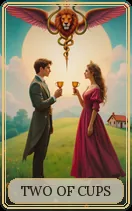 Two of Cups — A relationship wounded by an argument; the bond can be mended, if pride gives way.
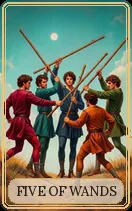 Five of Wands — Competition and rivalry; many voices vying for the same place.
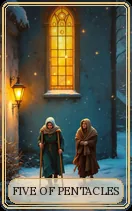 Five of Pentacles — A loss that isolates; someone left out in the cold after a dispute.
Frequently asked questions
What does the Five of Swords mean in tarot?
A bitter victory: an argument or a dispute was won, but something more important was lost. It speaks of conflict, of pride and of the price of wanting to be right.
What does the Five of Swords mean in love?
Arguments, power games, pride that will not give way. It may describe a bitter separation. Reversed, it opens the door to reconciliation.
Is the Five of Swords reversed good?
Often, yes: it speaks of reconciliation and the end of discord. It can also point to resentment held inside, which needs to be let go.
Is the Five of Swords a yes or a no?
It is a yes with a price. You may get what you want, but the card asks whether what you will lose along the way is worth it.
Does the Five of Swords indicate betrayal?
It can point to disloyalty or unfair competition, especially with cards such as the Seven of Swords. But its main meaning is conflict and pride, rather than betrayal.
No sign-up · Reading written on the spot · Free