Knight of Pentacles: meaning and symbolism of the tarot card
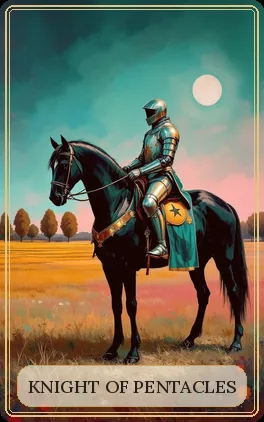
The Knight of Pentacles is the only knight in the tarot who does not charge. A man in full armour sits on a great black horse, standing still in the middle of a golden field, his visor closed, looking straight ahead. There is no gallop and no hurry: there is a knight who knows where he is going and who will get there, whatever it takes, at his own pace. It is the image of consistency and reliability.
In a spread, the Knight of Pentacles speaks of methodical work, of responsibility and of slow but steady progress. It may represent a person — someone reliable, patient, hard-working — or an attitude the situation calls for. It is a card that does not impress at first sight, but one you can trust. Its risk is the same thing seen from the other side: someone who moves so slowly may one day simply stop moving.
The card at a glance
| Card | Knight |
|---|---|
| Suit | Pentacles |
| Element | Earth |
| Astrology | Varies between schools |
| Keywords | consistency, reliability, method, responsibility, patience, methodical work, steady progress |
| Reversed | stagnation, stubbornness, routine, excessive slowness, laziness, rigidity, fear of change |
| Yes or no | Yes, but slowly — the result will come, without hurry |
The image on the card
In the Sol da Alma Tarot, the Knight sits on a great black horse with a long mane and tail, standing still in profile and facing left. The knight wears a full suit of plate armour, of pale steel with greenish and golden glints, and a closed helmet with the visor down, hiding his face. Beneath the saddle hangs a blue-green caparison with a golden border, and embroidered on it, in plain view, is a large gold coin with a dark star. The horse wears reins and a brown breastplate with gold ornaments. The Knight does not hold the coin in his hand: he carries it with him, fixed to the horse, as part of his equipment. He is in an open field of golden and pinkish grass, with a few small flowers; in the background, a row of rust-coloured autumn trees, and a blue-green sky turning pink near the horizon, where a pale round disc hangs, like a moon or a low sun.
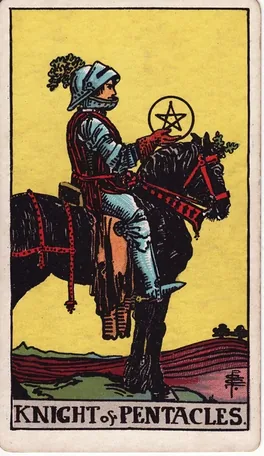
In the 1909 Rider-Waite-Smith, the Knight of Pentacles also sits still on a heavy black horse, in profile, and he is the only one of that deck’s four knights who is not in motion. He wears armour, a helmet with the visor raised and a green sprig serving as a plume, and holds in his right hand a coin with a pentacle; the horse also has leaves on its head. In the background there is a ploughed field, in furrows, under a yellow sky. The Sol da Alma essentially follows this iconography — the black horse standing still, the armour, the field —, but moves the coin: instead of being in the knight’s hand, it is embroidered on the caparison. And the closed helmet makes the figure more impersonal and more solid, almost a statue. The field is not ploughed in furrows, but covered in golden grass.
In the Marseille Tarot, the Cavalier de Deniers is a mounted knight with the coin, with no landscape. The horse standing still and the field are contributions of the Rider-Waite-Smith.
The symbolism, detail by detail
The card speaks of a strength that has no need to hurry. Each detail adds a nuance.
- The horse standing still
- Patience and consistency. The other knights of the tarot race, rear up, gallop; the Knight of Pentacles is still. His movement is that of the earth: slow, but unstoppable.
- The black horse
- A heavy, enduring strength, made for work and not for speed. It is a plough horse, not a racehorse.
- The full armour
- Protection and responsibility. The Knight of Pentacles risks nothing he has not thought through; he goes prepared for anything.
- The closed helmet
- In the Sol da Alma painting, the face cannot be seen. It is the figure of duty above the person: what counts is the work accomplished, not who does it. But it can also be the sign of someone closed off, who does not let himself be seen.
- The coin on the caparison
- The value the knight carries with him and that identifies him. He does not need to raise it to show it: it is there, in plain view, like a coat of arms.
- The golden field
- The harvest, the fertile earth that bears fruit for whoever works it with consistency. It is the natural territory of the Knight of Pentacles.
- The autumn trees
- The time of the seasons, the natural rhythm of things. The earth does not hurry, and neither does the Knight of Pentacles.
- The pale disc in the sky
- Moon or low sun, it marks the end of one day or the beginning of another: the time passing over work that never stops.
- The gaze straight ahead
- A clear goal. The Knight of Pentacles knows where he is going, and is not distracted by what happens around him.
The history of the Knight of Pentacles
The knight is the figure that sets the tarot apart from ordinary playing cards. In today’s French-suited decks, each suit has three court cards — jack, queen and king — and in Spanish decks also three — sota, caballo and rey. The tarots of fifteenth-century northern Italy, and later those of Marseille, which took their settled form between the seventeenth and eighteenth centuries, have four: page, knight, queen and king. In the Marseille deck, this card is called the Cavalier de Deniers.
In 1909, Arthur Edward Waite and Pamela Colman Smith gave him the horse standing still and the field. In the book that accompanied the deck, Waite wrote that the knight rides a slow, enduring, heavy horse, to which his own aspect corresponds, and that he exhibits his symbol without looking at it. As meanings, he gave it utility, serviceableness, interest, responsibility and rectitude. That is where the reading of the Knight of Pentacles as the most reliable — and the slowest — of all the knights comes from.
The astrological and elemental attributions of the court cards vary from school to school — the Golden Dawn itself rearranged the names of the court figures differently from other traditions —, and none can be given as certain. The reading common to all of them is that of the card as the suit set in motion. In Pentacles, that motion is the slowest in the deck. That is the reading of the Sol da Alma.
The Knight of Pentacles upright: the meaning
Upright, the Knight of Pentacles is the card of consistency. It speaks of slow but steady progress, of methodical work, of goals reached step by step. It brings no sudden changes or strokes of luck: it brings the certainty that, with persistence, you will get there. In a reading, it can say that the situation is moving slowly, but it is moving — and that there is no point in forcing it.
It is also the card of responsibility and reliability. The Knight of Pentacles keeps his promises, finishes what he starts, is there when he is needed. It favours everything that calls for patience and discipline: long-term projects, savings, long courses of study, routine work done well. It is the figure of someone who does not shine, but whom everyone trusts.
What sets him apart from the other knights is time. The Knight of Wands sets off at a run, the Knight of Cups comes slowly but dreaming, the Knight of Swords charges at full speed. The Knight of Pentacles is standing still, looking at the field — and he is perhaps the only one who always reaches his destination.
The Knight of Pentacles reversed
Reversed, the Knight of Pentacles does not lose his consistency: he loses his movement. Slowness turns into stagnation, and the sure step into a refusal to change. The person stays stuck in the same place, doing the same things, out of habit or fear, even when the situation calls for something else. It can speak of stifling routine, of laziness, of endless postponements, of a project that goes nowhere.
It can also speak of an excess of the same prudence: the stubbornness of someone who will not accept any other way of doing things, rigidity, the perfectionism that delays everything, the attachment to what is safe that rules out any risk. Or the opposite — a Knight of Pentacles who has lost his patience and started doing things hastily and badly. The card asks you to get the horse moving again, even if slowly.
The Knight of Pentacles in love
In love, the Knight of Pentacles is not the impetuous lover: he is the loyal, stable partner who is there every day. He speaks of a relationship built slowly, with commitment, fidelity and concrete plans. For someone who is single, he can herald someone serious and discreet, who takes a while to open up but who, once committed, is there to stay. It is a card of reliable love, more than romantic love.
Reversed, it warns against a relationship that has fallen into routine and no longer renews itself, against a lack of initiative or of emotional expression, or against a partner so wrapped up in duty that he forgets to show what he feels.
The Knight of Pentacles in work and money
At work, the Knight of Pentacles is the worker you can rely on. He favours stable jobs, tasks that call for method and rigour, professions connected with the land, administration, finance and construction. In a question about a project, he says it will move forward, but slowly, and that patience is needed to see the results. In a question about a promotion, he says it will come through consistency, not brilliance.
With money, it is a very favourable card: saving, prudent investments, careful management, slow but steady growth of one’s assets. Reversed, it warns against financial stagnation, against fear of investing, or against the miserliness of someone who saves so much that they enjoy nothing.
The Knight of Pentacles in health and wellbeing
In questions about wellbeing, the Knight of Pentacles speaks of stable routines, of regular, moderate exercise, of slow and steady progress. Reversed, it points to the risks of a sedentary life and a lack of movement. The cards are no substitute for any kind of healthcare: the reading speaks of attitude and tendency, not diagnosis.
The Knight of Pentacles in spiritual life
On the inner path, the Knight of Pentacles is perseverance. It is the card of someone who practises every day, without expecting illumination, and who moves forward because he does not give up. It is a reminder that inner growth is like tilling the land, not a race: there are seasons, there are times of waiting, there are harvests that only come after a great deal of work. His spirituality is discreet and practical — made more of faithfulness than of enthusiasm.
The Knight of Pentacles as a person
When it represents someone, the Knight of Pentacles is traditionally a young or middle-aged man, or a person of any gender with these qualities: hard-working, patient, responsible, methodical, loyal. It is someone who prefers facts to promises, who keeps to schedules, who dislikes surprises and needless risks. It is the friend you can count on and the colleague who never misses a deadline. Their faults are stubbornness, slowness, a certain rigidity — and, sometimes, difficulty in showing what they feel.
The Knight of Pentacles as advice
As advice, the Knight of Pentacles says: be consistent. Do a little every day, keep your promises, do not give up halfway. Do not hurry: what is worthwhile takes time. And it also says: do not confuse patience with standing still. Moving slowly is still moving — but stopping is not.
The Knight of Pentacles in the positions of a spread
- In the past
- A period of steady work that laid solid foundations, or a reliable person who played an important role.
- In the present
- It is a time for patience and method: the situation is moving slowly, but it is moving.
- In the future
- Slow, steady progress; or the arrival of someone reliable and hard-working.
- As an obstacle
- Stagnation, stubbornness, the routine that prevents change.
- As the outcome
- The matter is resolved through persistence: a solid result, which takes time but arrives.
The Knight and the suit of Pentacles
The Knight is the one who sets out: the suit set in motion, on its way somewhere, with the haste and courage of someone on the move. In Pentacles — the suit of Earth, of the body, of money and of the slow time of things that are built —, this gives a paradoxical figure: the movement of the earth, which is the slowest of all. The Knight of Pentacles is also on his way, but at the pace of the seasons, not of the wind.
There is no fixed astrological attribution for the knights in tarot: the schools are divided, and it is best not to give any as certain. The safe reading is that of the Knight’s position in the hierarchy of the suit: after the Page, who studies and learns, and before the Queen and the King, who sustain and govern, the Knight is the one who carries things out — the work set in motion, day after day, until it bears fruit.
Combinations with other cards
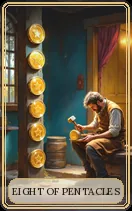 Eight of Pentacles — Methodical, dedicated work; skill gained with patience.
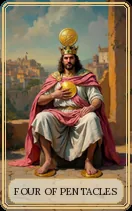 Four of Pentacles — Excessive caution with money; saving instead of investing.
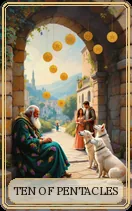 Ten of Pentacles — Building for the long term; a security that rises slowly and lasts.
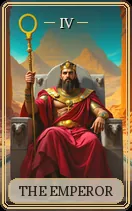 The Emperor — Discipline, structure and authority; well-organised work.
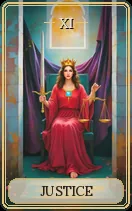 Justice — Responsibility and rectitude; fair, carefully weighed decisions.
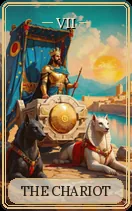 The Chariot — Progress that finally speeds up; patient work that finds its direction.
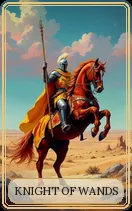 Knight of Wands — The clash between haste and prudence; two rhythms that need to come to terms.
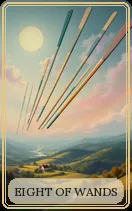 Eight of Wands — A stalled situation that picks up speed; the end of the waiting.
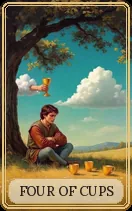 Four of Cups — Stagnation and apathy; routine that no longer means anything.
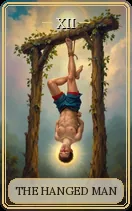 The Hanged Man — A long wait; the matter is not moving forward for now.
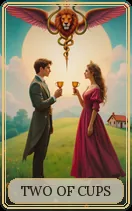 Two of Cups — A stable, loyal relationship, built with patience.
Frequently asked questions
What does the Knight of Pentacles mean in tarot?
Consistency and reliability: slow but steady progress, made of methodical work and responsibility.
What does the Knight of Pentacles mean in love?
A loyal, stable partner, or a relationship built slowly and with commitment. Reversed, it warns against routine and a lack of emotional expression.
Is the Knight of Pentacles a yes or a no?
It is a yes, but slowly. What you are asking about will happen, with patience and persistence.
Is the Knight of Pentacles reversed bad?
No. It is the same slowness without movement: stagnation, stubbornness or routine. It asks you to start moving forward again, even if slowly.
Why is the Knight of Pentacles’ horse standing still?
Because he is the knight of Earth, the slowest element. His movement is that of the plough and the seasons: he does not race, but he always reaches his destination.
Does the Knight of Pentacles represent a person?
It can: traditionally, someone hard-working, patient and reliable, who keeps their promises. But it can also simply be the attitude of consistency that the situation calls for.
No sign-up · Reading written on the spot · Free