
Queen of Pentacles: meaning and symbolism of the tarot card
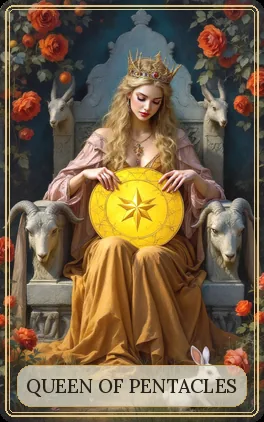
The Queen of Pentacles is the figure of the fertile earth. Seated on a stone throne carved with the heads of goats and rams, among roses in bloom, a fair-haired queen holds a large gold coin in her lap and looks at it tenderly. At her feet, almost hidden, a white rabbit. There is nothing in her of the distance of someone who governs from afar, nor of the dreaming of someone who lives inwardly: there is someone who has, who cares and who shares. It is the image of abundance well managed.
In a spread, the Queen of Pentacles speaks of generosity, of practical care and of security. It may represent a person — someone who knows how to run a home, a business or a family, and who makes others feel supported — or an attitude the situation calls for. Her strength is caring with her feet on the ground; her risk is the same gesture taken too far — caring so much that it binds, or filling life with things that have nothing inside.
The card at a glance
| Card | Queen |
|---|---|
| Suit | Pentacles |
| Element | Earth |
| Astrology | Varies between schools |
| Keywords | generosity, practical care, abundance, security, practical sense, warmth and welcome, good housekeeping |
| Reversed | smothering possessiveness, empty comfort, materialism, self-neglect, dependence, excessive worry |
| Yes or no | Yes — a secure yes, especially in matters of home, money and care |
The image on the card
In the Sol da Alma Tarot, the Queen is a young woman with long, wavy fair hair, wearing a tall-pointed gold crown set with red stones. Her eyes are lowered, resting on the coin, and she has a faint smile. She wears an old-rose off-the-shoulder blouse with wide sleeves and a golden bodice, and a full mustard-coloured skirt that falls in folds to the ground; around her neck, a gold pendant. With both hands she holds in her lap a large gold coin, engraved with fine lines and with an eight-pointed star at its centre. She sits on a throne of pale stone, whose back is topped by two goat heads with straight horns, and whose arms end in two ram heads with curled horns. Around the throne grow rose bushes with orange and coral roses, green leaves and small orange fruits, against a dark-blue background. Below, on the right, among the grass and the roses, a white rabbit peeps out.
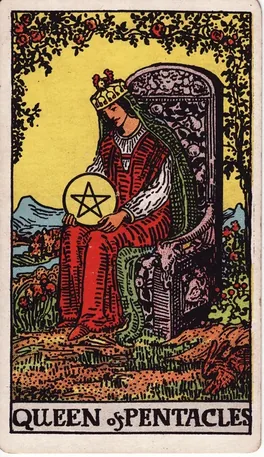
In the 1909 Rider-Waite-Smith, the Queen of Pentacles sits in profile on a stone throne decorated with carvings of fruit, cherubs and a goat’s head, and holds in her lap the coin with a pentacle, at which she looks attentively. She wears a red dress and a green veil, and sits beneath a bower of roses. Around her is a fertile landscape, with mountains and a river in the distance, and below, on the right, a rabbit. The Sol da Alma follows this iconography closely: the stone throne with the horned animals, the coin in her lap and her gaze on it, the roses, the rabbit. What differs is the position — the Queen faces forward rather than in profile —, the colours, warmer and more golden, the greater number of animal heads on the throne, and the absence of the landscape, replaced by a dark background covered in roses.
In the Marseille Tarot, the Reine de Deniers is a crowned figure with the coin, with no garden and no animals. The roses, the rabbit and the carved throne are contributions of the Rider-Waite-Smith.
The symbolism, detail by detail
The card speaks of a wealth that is cared for and shared. Each detail adds a nuance.
- The coin in her lap
- What one has and protects. The Queen holds it with both hands, in her lap, the way one holds a child: for her, money and possessions are something to be cared for, not accumulated.
- The gaze resting on the coin
- Attention, responsibility. The Queen of Pentacles knows what she has and what it is worth. She is neither absent-minded nor a spendthrift.
- The eight-pointed star
- In the Sol da Alma painting, the Queen’s coin is larger and more finely worked than those of the other cards in the suit: a treasure that shines, matter treated with beauty.
- The goat and ram heads
- Animals of the land and the mountains, hardy, fertile and stubborn. They speak of fertility, of the strength that climbs slowly and of the persistence of someone who does not give up what is theirs.
- The stone throne
- Stability. The Queen of Pentacles rests on something solid: she does not depend on luck, but on what she has built.
- The roses
- The beauty and pleasure of life. The Queen does not live for duty alone: she knows how to enjoy herself. The roses grow around her as they grow in a well-tended garden.
- The small fruits
- The fertility of the earth, the harvest, the abundance that renews itself.
- The white rabbit
- Fertility, life that multiplies, and also tenderness and sweetness. It is almost hidden, like the gentleness hidden behind the Queen’s practical sense.
- The warm colours
- Gold, mustard, rose: the colours of the earth in the sun, of bread, of autumn. Everything in this card speaks of warmth and comfort.
The history of the Queen of Pentacles
The queen has been one of the four court figures of each suit since the first tarot decks, painted in northern Italy in the fifteenth century. In the Marseille decks, which took their settled form between the seventeenth and eighteenth centuries, she is called the Reine de Deniers and appears with the coin in her hand.
At the end of the nineteenth century, the Hermetic Order of the Golden Dawn rearranged the court figures and gave them other names, but the Queen kept hers. Arthur Edward Waite and Pamela Colman Smith, in the 1909 deck, gave her the carved throne, the bower of roses and the rabbit. In the book that accompanied the deck, Waite wrote that her face suggests greatness of soul and a serious cast of intelligence, and that she contemplates her symbol and may see worlds therein. As meanings, he gave her opulence, generosity, magnificence, security and liberty.
The astrological and elemental attributions of the court cards vary between schools, and there is no consensus on any of them. In the usual reading, however, the Queen of Pentacles is often considered the most motherly and the most practical figure in the whole deck — Earth lived from within, as care.
The Queen of Pentacles upright: the meaning
Upright, the Queen of Pentacles is the card of fruitful generosity. It speaks of someone — the querent or another person — who has enough and knows how to share. She does not give for the sake of giving, nor give what she does not have: she manages her resources well, and that is why she can be generous. She is the figure of the house where there is always a place at the table, of the person who helps in concrete ways, with time, with money, with work.
It is also the card of sound management of practical life. The Queen of Pentacles knows how to run a home, a budget, a business, a family. She makes things work without fuss. In a reading, it can say that the situation calls for practical sense, organisation, care for the details of daily life — and that this, done with warmth, is a form of love.
What sets her apart from mere wealth is tenderness. The Queen looks at the coin the way one looks at something alive. She does not confuse possessions with life, but she knows that possessions well cared for make life better — for her and for those around her.
The Queen of Pentacles reversed
Reversed, the Queen of Pentacles does not lose the wish to care: she loses her sense of measure. Care turns into control, and generosity into possessiveness. It may be the person who looks after others so much that she smothers them, who gives in order to bind, who makes others depend on her. Or it may be an excessive attachment to things — the house, money, appearances — that takes the place of affection.
It can also speak of the opposite movement: the person who looks after everyone and forgets herself, who wears herself out tending the house and others. Or of empty comfort — a life full of things with nothing inside, an abundance that no longer brings joy. The card asks you to return to what is essential: to care without binding, to have without being possessed, and not to forget that you too need to be cared for.
The Queen of Pentacles in love
In love, the Queen of Pentacles speaks of a stable, warm and concrete relationship. It is love shown in gestures — a meal, a well-kept home, being there on difficult days. She can represent a loyal, sensual, protective partner who gives security. For someone who is single, she says love may come from someone with their feet on the ground, and that it is worth looking at those who care rather than those who promise.
Reversed, she warns against a relationship in which one person gives care and the other only receives, against possessive jealousy, or against a life together that has become nothing but household management, without tenderness.
The Queen of Pentacles in work and money
At work, the Queen of Pentacles favours professions connected with practical care, management and property — administration, accountancy, estate agency, farming, catering, hospitality, work with children or with nature. She may represent a competent and welcoming boss or colleague, or ask you to use your practical sense more. In a question about a business of your own, she is very favourable: she says it can prosper, if it is well managed.
With money, it is one of the best cards in the deck: abundance, security, good management, an income that allows you to live well and help others. Reversed, it warns against spending too much on others, against an exaggerated attachment to money, or against financial dependence.
The Queen of Pentacles in health and wellbeing
In questions about wellbeing, the Queen of Pentacles speaks of looking after the body, of good food, of contact with nature, of comfort and rest. Reversed, she is a reminder that those who look after everyone also need to look after themselves. The cards are no substitute for any kind of healthcare: the reading speaks of attitude and tendency, not diagnosis.
The Queen of Pentacles in spiritual life
On the inner path, the Queen of Pentacles is embodied spirituality. It is the card of someone who finds the sacred in everyday life — in the garden, in the kitchen, in caring for others, in contact with the earth. It is a reminder that the body and matter are not the opposite of the spirit, but the place where it is made manifest. And it is also a reminder that serving others in concrete ways is, in many traditions, one of the highest forms of practice.
The Queen of Pentacles as a person
When she represents someone, the Queen of Pentacles is traditionally a mature woman, or a person of any gender with these qualities: practical, generous, warm, hard-working, with a taste for good things and a talent for management. She is the person who organises the home and the family, who knows how to solve everyday problems, who helps without needing to be thanked. She loves nature, animals, good food. Her faults are a tendency to control, to worry too much about material things, or to forget herself while looking after others.
The Queen of Pentacles as advice
As advice, the Queen of Pentacles says: look after what you have. Organise, save, take care of your home, your body and the people who depend on you. Be generous, but with your feet on the ground. And she also says: do not forget yourself. The best way to look after others is to have your own house in order.
The Queen of Pentacles in the positions of a spread
- In the past
- A person who cared, who gave material and emotional security; or a period of stability and abundance.
- In the present
- The situation calls for practical sense, organisation and care — or there is someone like that beside the person asking.
- In the future
- A phase of security and comfort, or the appearance of someone who offers support in concrete ways.
- As an obstacle
- Care that turns into control, attachment to material things, or self-neglect.
- As the outcome
- The matter is resolved with practical sense and generosity: a solid, comfortable result.
The Queen and the suit of Pentacles
The Queen is the one who receives and sustains: the suit lived from within, with maturity and with no need to prove it. In Pentacles — the suit of Earth, of the body, of money and of the home —, this inwardness takes the form of care: the Earth that welcomes, nourishes and sustains. That is why the Queen of Pentacles is, of all the court figures, the one who speaks most of shared abundance and concrete wellbeing.
The element of the suit is Earth. The elemental and astrological sub-attributions of the court cards vary between schools, and there is no consensus on any of them; the essential point is that the Queen represents Earth already settled and fertile, after the slow movement of the Knight and before the rule of the King.
Combinations with other cards
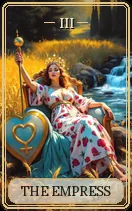 The Empress — Fertility, abundance, motherhood in the broad sense; a prosperous, welcoming home.
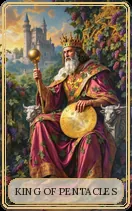 King of Pentacles — A prosperous, stable couple; shared management of a home or a business.
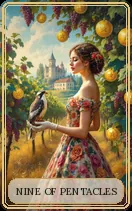 Nine of Pentacles — Independence and comfort; an independent woman who lives well on what she has built.
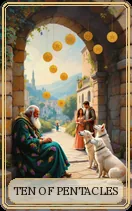 Ten of Pentacles — The matriarch, the centre of the family; an inheritance well looked after.
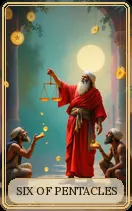 Six of Pentacles — Concrete generosity; helping someone with money or with time.
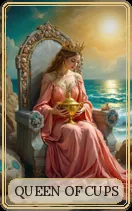 Queen of Cups — Practical and emotional care: someone who offers support through gestures and presence.
 Ten of Cups — A happy, well-cared-for family; harmony at home.
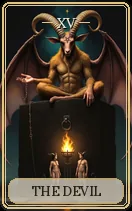 The Devil — Excessive attachment to material things; care that binds.
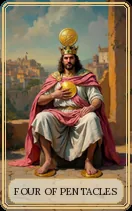 Four of Pentacles — Possessiveness and control; fear of losing what you have.
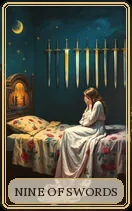 Nine of Swords — Excessive worry about the home or about money; sleepless nights thinking about others.
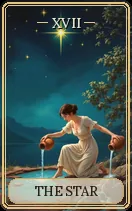 The Star — Generosity and hope; caring with trust in the future.
Frequently asked questions
What does the Queen of Pentacles mean in tarot?
Fruitful generosity and sound management of practical life: someone who looks after what they have so well that there is some left over for others.
What does the Queen of Pentacles mean in love?
A stable, warm and concrete relationship, or a loyal, protective partner. Reversed, it warns against control, possessive jealousy or an unbalanced relationship.
Is the Queen of Pentacles a yes or a no?
It leans towards a secure yes, especially in questions of home, money and family.
Is the Queen of Pentacles reversed bad?
No. It is the same care without measure: possessiveness that smothers, attachment to material things or self-neglect. It asks you to care without binding.
Does the Queen of Pentacles represent a woman?
Traditionally, a mature, practical and generous woman. But she can represent any person with these qualities, or simply the attitude the situation calls for.
What does the rabbit mean in the Queen of Pentacles?
Fertility and life that multiplies, and also the tenderness hidden behind the Queen’s practical sense.
No sign-up · Reading written on the spot · Free