
The Sun: meaning and symbolism of the tarot card
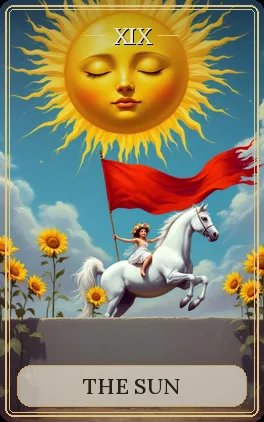
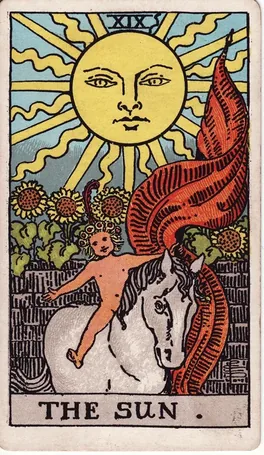
The Sun is the nineteenth card of the Major Arcana, and the most luminous of the whole series. A great sun with a human face shines in a blue sky; below, a child rides a white horse in front of a wall, holding a red banner, with sunflowers all around. There are no shadows and no threats. After the night of The Moon, it is full day.
In a spread, The Sun is almost always good news. It speaks of joy, success, clarity, energy and understanding between people. Wherever it falls, things show themselves as they are — and what shows itself is, as a rule, good. It is a card of simple truth, of trust and of life lived in broad daylight.
The card at a glance
| Number | XIX (XVIIII in the Marseille decks) |
|---|---|
| Arcana | Major Arcana |
| Historical names | Il Sole (Italy); Le Soleil (Marseille); The Sun (Rider-Waite-Smith) |
| Element | Fire |
| Astrology | Sun (Golden Dawn) |
| Hebrew letter | Resh (ר), according to the Golden Dawn |
| Keywords | joy, clarity, success, vitality, truth, understanding, childhood |
| Reversed | dimmed brightness, vanity, warmth without a centre, excessive optimism, delayed success |
| Yes or no | Yes — it is the clearest answer in the deck |
The image on the card
In the Sol da Alma Tarot, an enormous yellow sun fills the top of the card, with wavy rays and a serene face with closed eyes, rosy cheeks and a faint smile. Beneath it, against a blue sky with white clouds, a small child with a garland of flowers in their hair and a light white dress rides bareback on a rearing white horse. In one hand the child raises a pole bearing a large red banner stretched out by the wind. Below, a grey wall crosses the card, and tall sunflowers grow on either side, turned towards the light.
In the Rider-Waite-Smith of 1909, the elements are the same: the sun with a human face and rays alternately straight and wavy, a naked child with a garland of flowers and a red feather, riding a white horse and holding a large red banner, and behind the child a stone wall with sunflowers. The Sol da Alma follows this imagery closely, but dresses the child in white, closes the sun’s eyes, has the horse rearing and places the sunflowers at the sides, leaving the sky open behind.
In the Tarot de Marseille, Le Soleil has a different scene: beneath a sun with a human face, from which coloured drops fall, two almost naked children stand in front of a low brick wall and touch each other tenderly. They are often read as twins or as two friends. The horse and the banner are not part of this version.
The symbolism, detail by detail
Almost everything in this card speaks of a joy that has no need to hide. Each detail adds a nuance to that idea.
- The sun with a human face
- Consciousness, life, the light that makes everything visible. It has a face because it is a presence, not merely a heavenly body. In the Sol da Alma its eyes are closed: it is a tranquil light that has no need to keep watch.
- The rays
- Energy that spreads without being used up. In the Rider-Waite-Smith they alternate between straight and wavy; in the Sol da Alma they are rippling flames all the way round the disc.
- The child
- Innocence rediscovered, joy without calculation, spontaneity. It is not the innocence of someone who has not yet lived, as in The Fool: it is the simplicity of someone who has already crossed the night and learnt to trust again.
- The garland of flowers
- Life in bloom, and celebration. It is a crown that weighs nothing, unlike the crown torn away in The Tower.
- The white horse
- Life force guided without effort. The child rides without saddle or reins: the energy is at the child’s service, not the other way round.
- The red banner
- Vitality, passion and victory. It is raised high, to be seen — the joy of The Sun does not hide.
- The wall
- The boundary that protects. The child is on this side, safe, and no longer needs to run away; the garden is sheltered.
- The sunflowers
- Life growing turned towards the light. They are nature at full strength and, by their very name, the most direct image of the card.
- The blue sky
- Open weather, with no threatening clouds: clarity. In the Sol da Alma, the white clouds are only a reminder that the sky moves.
The history of The Sun
The Sun has belonged to the trumps since the Italian decks of the fifteenth century, where it appears after The Star and The Moon in the series of heavenly lights. In the Visconti-Sforza decks painted in Milan around 1450, it shows a winged child on a cloud holding aloft a sun with a face.
In the Marseille decks, which took their settled form between the seventeenth and eighteenth centuries and number it XVIIII, the image becomes that of the two children in front of a wall, beneath a sun shedding drops of light. It is a scene of friendship, fellowship and human warmth, and many readers see in it the idea of understanding between two people — which is still part of the card’s meaning today.
The Golden Dawn, at the end of the nineteenth century, naturally assigned it the Sun itself, together with the Hebrew letter Resh. In 1909, in the deck of Arthur Edward Waite and Pamela Colman Smith, the two children give way to a single child riding a white horse and carrying a red banner, with sunflowers behind the wall. It is this more festive version that the Sol da Alma follows.
The Sun upright: the meaning
Upright, The Sun is the card of joy and success. It heralds a happy period, an achievement, a visible success, a situation that turns out well. It says the person is where they belong and that their strengths are working in their favour. It is one of the most clearly positive answers in the deck.
It is also the card of clarity. Where there was doubt, The Sun brings the truth into the light: things show themselves as they are, misunderstandings dissolve, intentions become visible. After The Moon, it is the day on which you finally understand what was going on.
Finally, The Sun speaks of vitality and simplicity: energy, a healthy spirit, pleasure in simple things, the wish to play and to share. It is the card of human warmth — of honest friendships, of families in harmony, of children. Often it is a reminder that happiness lies less in great achievements than in being at ease with the people you love, out in the sun.
In a difficult spread, The Sun almost always acts as a counterweight. Beside heavy cards it does not erase the problem, but it shows that there is a way out in sight and the strength to find it. Beside cards that are already favourable, it reinforces them and confirms the outcome. The Sun is rarely read negatively: the only care it asks for is not to confuse sunlight with a spotlight — true joy with the need to be seen. When the question is about a decision, the card usually says that the answer is simpler than it seems, and that the person already knows it.
The Sun reversed
Reversed, The Sun does not go out. It is the same light, but dimmed, delayed or misdirected. It can indicate a success that takes longer than expected, a joy not yet fully felt, a day slow to brighten. Clarity is delayed, but it does not disappear.
It can also speak of excess: vanity, the need to shine, exaggerated optimism that ignores the problems, a showy success that gives little warmth inside. Sometimes it is warmth without a centre — plenty of activity, little real joy. The card then asks you to return to what matters: to what truly gives you pleasure, and not merely to what looks good.
The Sun in love
In love, The Sun is one of the best cards you can draw. It speaks of a happy, sincere and radiant relationship, of understanding, closeness and shared joy. For a couple it heralds a good phase of harmony and joint plans; for someone who is single, a warm and open meeting, with no games or ulterior motives.
It is also a card of truth: a relationship acknowledged in broad daylight and shown to others. In certain readings it speaks of family and children in the broad sense — of home life and the warmth of the hearth. Reversed, it may indicate a good but somewhat faded relationship, expectations set too high, or a happiness that has not yet let itself be fully felt.
The Sun in work and money
At work, The Sun heralds success and recognition: a project going well, a goal achieved, a promotion, a job in which the person feels in their element. It favours those who put themselves forward and those who lead, and every activity in which personal energy counts. In a question about an offer or an interview, it is a very favourable sign.
With money, it indicates stability and abundance, a period in which things are going well. Reversed, it asks you to avoid overconfidence and showy spending, and reminds you that some results may take a little longer than planned.
The Sun in health and wellbeing
In questions about wellbeing, The Sun is a card of vitality and good energy: the wish to be outdoors, to move, to make the most of the day. Reversed, it recalls how important it is not to overdo things and to recharge. The cards are no substitute for any kind of healthcare: the reading speaks of attitudes and tendencies, not of diagnoses.
The Sun in spiritual life
On the inner path, The Sun is clarity after the crossing: awakened consciousness, the joy of being, simplicity regained. Many traditions speak of becoming like a child again — not out of ignorance, but out of trust. That is the meaning of this card: after the trials of The Tower, The Star and The Moon, light is lived without effort, as something natural.
The Sun as advice
As advice, The Sun says: show yourself. Be frank, say what you think, let people see who you are. Make the most of the good moment, share your joy and do not be afraid to shine — without needing to outshine anyone. And remember the simple things: time with the people you love, the open air, the pleasure of doing well whatever you do.
The Sun in the positions of a spread
- In the past
- A happy period or a success that gave the person confidence and strength for what came afterwards.
- In the present
- A radiant phase: things are going well, the situation is clear and the energy is good.
- In the future
- Success and joy on the way; the favourable resolution of a situation.
- As an obstacle
- Overconfidence, vanity, or an optimism that prevents you from seeing the real problems.
- As the outcome
- A clearly positive conclusion: success, clarity and satisfaction.
Numerology and correspondences
The number XIX reduces to 10 (1 + 9) and then to 1, which links The Sun to Wheel of Fortune and to The Magician: the end of one cycle and a new beginning, this time in full light. In the Golden Dawn tradition, the card corresponds to the Sun itself — the heavenly body of life, consciousness and will — and to the Hebrew letter Resh, whose name means ‘head’ or ‘face’. Its element is Fire, the energy that warms and illuminates.
Combinations with other cards
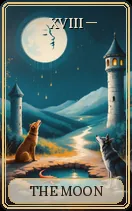 The Moon — Doubt dissolving: after confusion, the truth comes to light.
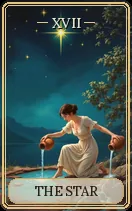 The Star — Hope fulfilled: a long-held wish that comes true.
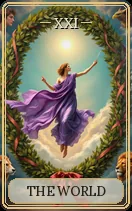 The World — Complete success; the happy conclusion of a great goal.
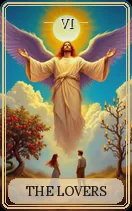 The Lovers — A happy, sincere relationship; love returned and openly acknowledged.
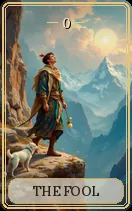 The Fool — A joyful, spontaneous beginning, full of energy.
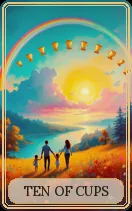 Ten of Cups — Family happiness; harmony at home.
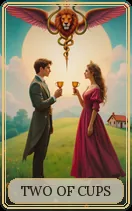 Two of Cups — A happy meeting, a radiant and balanced union.
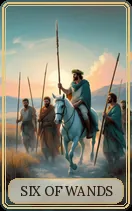 Six of Wands — Victory and public recognition.
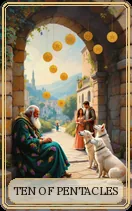 Ten of Pentacles — Prosperity and stability; material and family wellbeing.
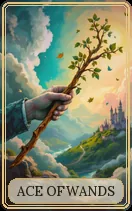 Ace of Wands — A new creative energy; a project that gets off to a strong start.
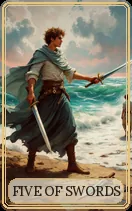 Five of Swords — A victory at a cost; it is worth checking whether everyone shares in the joy.
Frequently asked questions
Is The Sun a good card?
Yes, it is one of the most positive cards in the tarot. It speaks of joy, success, clarity and vitality. Even alongside difficult cards, it softens the reading and brings light to the situation.
What does The Sun mean in love?
A happy, sincere relationship full of understanding. For someone who is single, a warm and open meeting. Reversed, a good but somewhat faded relationship, or expectations set too high.
Is The Sun a yes or a no?
Yes. It is the clearest yes in the deck.
Is The Sun reversed bad?
No. Reversed, the light is only dimmed or delayed: a success that takes its time, a joy not yet fully felt, or a touch too much vanity. It is still a favourable card.
Why are there two children on The Sun in the Tarot de Marseille and only one in the Rider-Waite-Smith?
In the Tarot de Marseille, two children in front of a wall represent friendship and understanding. The Rider-Waite-Smith of 1909 shows instead a single child on a white horse with a red banner, and the Sol da Alma follows this version.
No sign-up · Reading written on the spot · Free