
The Star: meaning and symbolism of the tarot card
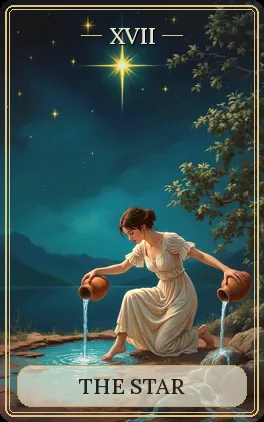
The Star is the seventeenth card of the Major Arcana, and it comes straight after The Tower. After the lightning and the fall, the night grows calm: a woman kneels at the water’s edge beneath a starry sky and pours out two jugs — one into the water, the other onto the land. There is no hurry and no strain. There is only someone giving, and a light that once again shows the way.
In a spread, The Star is one of the most comforting cards in the deck. It speaks of hope, of healing, of trust regained, of inspiration that arrives without being sought. It does not promise that everything will be solved tomorrow: it is a card of promise, not of arrival. But it says that the worst is over, that there is a direction, and that it is worth carrying on.
The card at a glance
| Number | XVII |
|---|---|
| Arcana | Major Arcana |
| Historical names | La Stella (Italy); L'Étoile (Marseille); The Star (Rider-Waite-Smith) |
| Element | Air |
| Astrology | Aquarius (Golden Dawn) |
| Hebrew letter | Tzaddi (צ), according to the Golden Dawn |
| Keywords | hope, healing, inspiration, trust, serenity, generosity, guidance |
| Reversed | discouragement, a clouded spring, a distant promise, lack of self-belief, giving without receiving |
| Yes or no | Yes — above all in the medium term; it is a promise rather than an immediate arrival |
The image on the card
In the Sol da Alma Tarot, a young woman with brown hair tied up, wearing a long cream dress with short sleeves, kneels at the edge of a small pool at night. One bare foot is in the water and she holds two earthenware jugs, one in each hand: the one on the left pours clear water into the pool, forming small ripples; the one on the right pours it over the stones of the bank, where it splits into trickling threads. In the deep blue sky shines a great golden star with long rays, surrounded by several smaller stars. In the background are blue mountains and the calm surface of a larger lake; on the right, a tree with green leaves bends its branches over the scene.
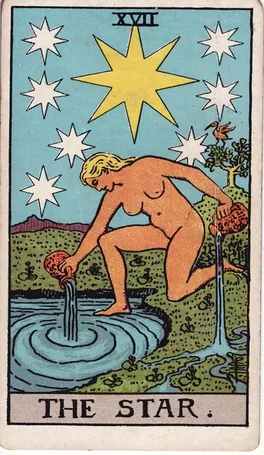
In the Rider-Waite-Smith of 1909, the scene has the same structure: a kneeling woman, one foot in the water and one knee on the land, pours out two jugs — one into the pool, the other onto the grass, where the water divides into little streams. Above her are a large yellow eight-pointed star and seven smaller white stars; in the background, a tree with a red bird perched in it, and a hill. The great difference is that in the Rider-Waite-Smith the woman is naked and it is broad daylight; the Sol da Alma clothes her and sets the scene at night, with the pool lit by the star.
In the Tarot de Marseille, L'Étoile also shows a naked woman, kneeling, emptying two jugs into a stream beneath a great star surrounded by smaller ones. In the background, in some versions, there is a tree with a bird. Of the old cards, it is one of those that come closest to the modern image.
The symbolism, detail by detail
Almost everything in this card speaks of giving and receiving without fear of loss. Each element adds a nuance to that idea.
- The great star
- Hope, guidance, the idea that leads the way. It does not warm like The Sun nor deceive like The Moon: it shows the direction in the night.
- The small stars
- The other lights along the way: small confirmations, signs, people who help. In the Rider-Waite-Smith there are seven, a number many readers link to the seven classical planets.
- The two jugs
- Generosity and renewal. One pours into the water — the world of emotions and the unconscious; the other onto the land — the concrete world. Inspiration nourishes both.
- The flowing water
- What is given away and fills up again. The woman keeps nothing back: she pours everything out, and still the spring does not run dry. It is the image of an energy that renews itself by being shared.
- The foot in the water
- Contact with the unconscious, with intuition, with feeling. Her other point of support is on the land: this is trust with its feet on the ground.
- The kneeling figure
- The humility and calm of someone who no longer needs to defend herself. After The Tower there is nothing left to protect, and so there is room to receive.
- The pale dress
- In the Sol da Alma, the young woman is clothed; in the Rider-Waite-Smith and in Marseille, she is naked. The nakedness of the older cards speaks of sincerity and of having nothing to hide; the pale dress keeps the same purity, more discreetly.
- The tree
- Life growing slowly. In the Rider-Waite-Smith it has a bird perched in it; in the Sol da Alma it is a leafy tree that shelters the scene.
- The night
- In the Sol da Alma the scene is nocturnal: the star can only be seen because it is dark. Hope is not the absence of difficulties — it is the light found in the midst of them.
The history of The Star
The Star has been among the trumps since the Italian decks of the fifteenth century, where the three lights of the sky — Star, Moon and Sun — appear in sequence, just below the final cards. In the Visconti-Sforza decks painted in Milan around 1450, the image is different: a clothed lady, standing, holds a star in her hand. The scene of the naked woman pouring two jugs is the one that the Marseille decks, which took their settled form between the seventeenth and eighteenth centuries, made classic.
In the nineteenth century, occultists read the woman with the jugs as a figure of hope and renewal, and the Golden Dawn associated the card with the sign of Aquarius — the water-bearer — and with the Hebrew letter Tzaddi. The link with Aquarius seems obvious, given the figure pouring water, and it has become one of the best-known correspondences in the tarot.
Arthur Edward Waite and Pamela Colman Smith, in 1909, kept the Marseille composition and set down the details known today: the great eight-pointed star, the seven smaller stars, the streams on the grass and the bird in the tree. The Sol da Alma follows this structure but changes its atmosphere — the night, the dress, the lit pool.
The Star upright: the meaning
Upright, The Star is the card of hope. After a difficult period, it heralds relief, calm and a new trust in the future. It says there is a way out and that the person is on the right path, even if the end is not yet in sight. It is the card of ‘it’s going to be all right’, said not as an empty promise but as a real tendency.
It is also the card of inspiration and creativity: ideas that come easily, the wish to create, to share, to give. It favours artists, people who work with others, and anyone who needs to believe in a project again. And it is the card of healing in the broadest sense — emotional recovery, peace returning, a wound beginning to close.
Finally, The Star speaks of authenticity. The woman on the card hides nothing: she gives what she has generously, without calculating. Whoever draws it is invited to do the same — to be who they are, without armour, and to trust that this is enough.
The Star reversed
Reversed, The Star does not stop being a card of hope: it is the same light, but veiled. It speaks of discouragement, of a phase in which it is hard to believe, of a promise that seems further away than it is. The spring is still there, but clouded — the person has lost faith in themselves or in the future for a while.
It can also indicate an imbalance in giving: someone who pours everything out for others and is left with nothing for themselves, or who gives to those who do not receive. Or else blocked inspiration, ideas that will not flow. The card then asks you to go back to the source — rest, silence, whatever nourishes you — before giving again. The star has not disappeared; it is simply behind the clouds.
The Star in love
In love, The Star brings hope and renewal: a relationship healing after a crisis, a new connection born calmly and sincerely, a love that does you good. For someone who is single, it is a very positive card — it says the heart is recovering and getting ready to welcome someone openly and without fear.
It is a card of genuine relationships, free of games and masks, in which each person shows themselves as they are. Reversed, it may speak of disappointment, of expectations set too high, or of someone who gives far more than they receive. It then asks you to look after yourself before expecting the other person to do so.
The Star in work and money
At work, The Star favours new projects, creativity and recognition that is starting to come. It is excellent for anyone working in the arts, communication, teaching, care or collective causes. After a difficult period, it says things are going to get better — perhaps slowly, but surely. In a question about a job application or a change, it is a good sign.
With money, it is a card of gradual improvement: the situation eases and the accounts start to balance. It is not a card of quick gains but of confidence and recovery. Reversed, it asks you not to give up on a plan out of discouragement, nor to make financial decisions in a moment of despondency.
The Star in health and wellbeing
In questions about wellbeing, The Star is a card of renewal: rest, serenity, energy returning little by little, the wish to take care of yourself. Reversed, it recalls how important it is to recharge and not to wear yourself out for others. The cards are no substitute for any kind of healthcare: the reading speaks of attitudes and tendencies, not of diagnoses.
The Star in spiritual life
On the inner path, The Star is faith returning after the crisis — not an inherited faith, but a simple, personal trust. It is the card of meditation, of silent prayer, of contact with something greater that guides without imposing. Many readers see in it the moment when a person, stripped of the illusions The Tower knocked down, discovers what is true and luminous within them.
The Star as advice
As advice, The Star says: trust. Keep walking, even if the end is not yet in sight. Be generous, share what you know, show yourself as you are. And look after the spring — rest, feed on what inspires you — so that you can keep giving without running dry. Hope, here, is not waiting around: it is following the light you have.
The Star in the positions of a spread
- In the past
- A period of recovery or hope that helped the person get to where they are now.
- In the present
- A moment of relief and renewal: the worst is over, and there is a direction in sight.
- In the future
- Hope on its way — an improvement, a healing, an opportunity that is still ripening.
- As an obstacle
- Excessive idealism, passive waiting, or a lack of confidence that prevents moving forward.
- As the outcome
- A calm and favourable conclusion, though it may take time. The situation is heading for the good.
Numerology and correspondences
The number XVII reduces to 8 (1 + 7), the number of Strength in the Rider-Waite-Smith: if Strength is the courage to tame instinct, The Star is the serene confidence that comes after that trial. In the Golden Dawn tradition, the card corresponds to Aquarius — the sign of the water-bearer, of fellowship, of ideas and of the future — and to the Hebrew letter Tzaddi. Its element is Air, linked to Aquarius: The Star is a card of ideas, ideals and vision.
Combinations with other cards
 The Tower — Hope born of the fall: after the upheaval, healing and trust.
 The Sun — Hope fulfilled: joy, success and clarity on the way.
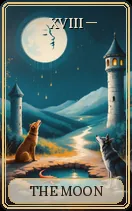 The Moon — Intuition guiding you through uncertainty; trusting your hunch while the situation is still unclear.
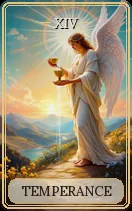 Temperance — Healing and balance: a calm, well-managed recovery.
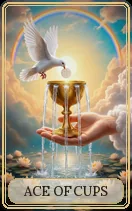 Ace of Cups — A new love or a deep emotional renewal, full of tenderness.
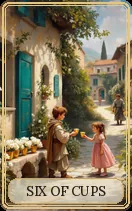 Six of Cups — Hope tied to the past: a reunion, a memory that brings comfort.
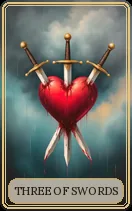 Three of Swords — The wound beginning to heal; hope after heartbreak.
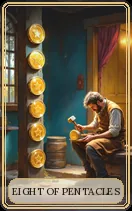 Eight of Pentacles — A talent that asserts itself through patient work; gradual recognition.
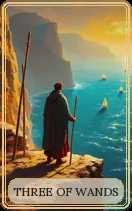 Three of Wands — Wide prospects: a broadening horizon, plans that reach far.
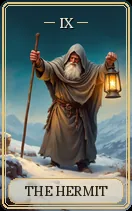 The Hermit — Clear inner guidance; the light found in solitude.
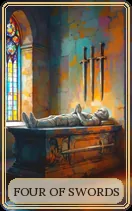 Four of Swords — Rest needed to regain hope; recharging before giving again.
Frequently asked questions
Is The Star a good card?
Yes, it is one of the most positive cards in the tarot. It speaks of hope, healing, inspiration and trust in the future. It does not promise immediate results, but it shows that things are heading for the good.
What does The Star mean in love?
Renewal and hope: a relationship that heals, a sincere love that is born, a heart that opens again. Reversed, it may speak of disappointment or of giving more than you receive.
Is The Star a yes or a no?
Yes. It is, however, a medium-term yes: it shows a favourable tendency that still needs time to come about.
Is The Star reversed bad?
No. Reversed, hope is only veiled: it speaks of passing discouragement, a clouded spring, a promise that seems far away. It asks you to rest and regain your confidence.
Why does The Star come after The Tower?
In the sequence of the Major Arcana, The Star is the calm after the storm: when the false structure falls, there is room for hope, healing and a truer sense of direction.
No sign-up · Reading written on the spot · Free