
King of Cups: meaning and symbolism of the tarot card
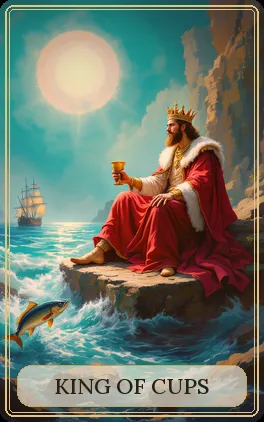
The King of Cups is the figure of emotional maturity. A bearded, crowned king in a red cloak sits on a rock above a rough sea, cup in hand, and gazes calmly into the distance. Around him the waves break, a fish leaps, a ship passes out at sea; and he does not move. It is not that he does not feel: he feels everything, and he governs what he feels. He is the most serene of the four Kings, and perhaps the hardest to imitate.
In a spread, the King of Cups speaks of emotional balance, practical wisdom and counsel. He may represent a person — someone older or more experienced, who listens, understands and helps to decide — or the attitude the situation calls for: keeping a cool head and a warm heart. His risk is the risk of all mastery: turning into control, and control turning into coldness or manipulation.
The card at a glance
| Card | King |
|---|---|
| Suit | Cups |
| Element | Water |
| Astrology | Varies between schools |
| Keywords | emotional maturity, calm mastery, wisdom, counsel, generosity, diplomacy, calm in the storm |
| Reversed | coldness, emotional manipulation, repressed emotions, unstable moods, control |
| Yes or no | Yes — after careful thought |
The image on the card
In the Sol da Alma Tarot, the King is a man with a brown beard and brown hair, wearing a tall-pointed golden crown. He wears a wide red cloak trimmed with white fur at the collar and sleeves, over a pale tunic, with a gold collar on his chest and golden cuffs. He is barefoot, sitting on the edge of a rock ledge that juts out over the sea, and in his right hand, at shoulder height, he holds a golden stemmed cup; his left hand rests on his knee. He looks to the left, out to sea, where a three-masted sailing ship is sailing along the horizon. Below, the turquoise sea breaks against the stones in white foam, and from among the waves a gold and blue fish leaps. An enormous, pale sun surrounded by a halo fills the sky on the left; on the right, tall cliffs rise.
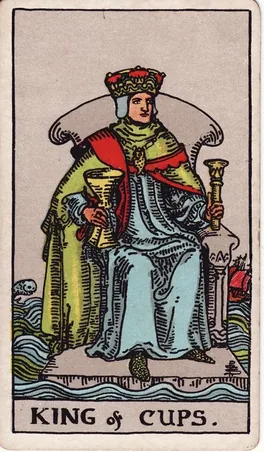
In the 1909 Rider-Waite-Smith, the King sits on a stone throne that seems to float on the waves. He holds a cup in his right hand and a short sceptre in his left, and wears a fish-shaped amulet on his chest. On the left, a fish leaps from the water; on the right, there is a ship with red sails. The Sol da Alma keeps the essentials of this iconography — the king seated in the midst of the sea, the cup, the leaping fish, the ship — but swaps the floating throne for a rock by the shore, removes the sceptre and the amulet, shows the king barefoot and in profile, and adds the sun, the cliffs and the breaking surf.
In the Marseille Tarot, the Roy de Coupe is a figure seated on a throne, shown full length, with the cup, with no sea and no ship. The seascape, the fish and the ship come from the Rider-Waite-Smith.
The symbolism, detail by detail
The card speaks of someone who is in the midst of emotions without being swept away by them. Each detail adds a nuance.
- The rough sea
- Emotions — one’s own and other people’s — strong and in motion. The King is not on a calm lake: he is in the middle of the breaking surf.
- The rock
- Stability. The King has his feet set on something firm, and that is what allows him to be so close to the water without falling in.
- The raised cup
- Feeling acknowledged and offered, without shame. The King does not hide what he feels, as the Queen does; he shows it, but in due measure.
- The gaze out to sea
- Perspective. The King does not react to every wave; he looks further, towards what really matters.
- The ship
- The practical world, trade, travel, things that follow their course. The King of Cups governs the heart without losing sight of concrete life.
- The leaping fish
- The emotion or intuition that suddenly arises. The King sees it without being carried away — the same image that was surprise in the Page is knowledge here.
- The red cloak with white fur
- Royal authority and human warmth. Red is life and passion; white, the purity of intention of one who governs well.
- The bare feet
- In the Sol da Alma, the King is barefoot: his is an approachable, humble authority, in direct contact with the earth and the water.
- The pale sun
- A great, soft light that illuminates without burning. It is the quiet clarity of someone who has seen a great deal.
- The beard
- Age and experience. The King of Cups gives good advice because he has been through it himself.
The history of the King of Cups
The king has been the highest figure in each suit since the first tarot decks, painted in northern Italy in the fifteenth century, and he still is in ordinary playing cards. In the Marseille decks, which settled into their form between the seventeenth and eighteenth centuries, he is called Roy de Coupe and appears seated on the throne, cup in hand.
At the end of the nineteenth century, the Hermetic Order of the Golden Dawn reorganised the court figures of each suit, and the names do not always match from one system to another: in the Thoth deck, by Aleister Crowley and Frieda Harris, the place the King holds in other decks is given to the Prince, shown in a chariot. Arthur Edward Waite and Pamela Colman Smith, in the 1909 deck, kept the traditional name of King and gave the King of Cups the throne on the waves, with the fish and the ship, which became the standard image.
The astrological and elemental attributions of the court cards vary between schools, and none is universally agreed. The Sol da Alma follows the iconography of the Rider-Waite-Smith, with its own painting.
The King of Cups upright: the meaning
Upright, the King of Cups is the card of emotional maturity. He speaks of someone — the querent or another person — who knows what they feel, accepts it and governs it: they do not repress it, they do not explode, they do not let themselves be swept away. It is the calm of someone who has weathered many storms and learnt that waves pass.
He is also the card of good counsel. The King of Cups listens, understands and helps to decide, with a wisdom that comes from experience rather than from books. He may represent a mentor, an adviser, an older friend, someone one trusts. In a reading, he may say that the situation calls for exactly this: careful thought, diplomacy, generosity.
Where the Queen of Cups keeps what she feels, the King expresses it outwardly, and uses it to care for others and to decide. It is Water put at the service of responsibility: feeling that does not lose its firmness, firmness that does not lose its heart.
The King of Cups reversed
Reversed, the King of Cups does not lose his mastery over emotions: he turns it astray. It may become coldness — the person controls what they feel so tightly that they stop feeling it, or showing it; they seem calm, but they are closed off. Or it may become the opposite: the emotional manipulation of someone who knows emotions well and knows exactly where to touch to get what they want.
It can also indicate repressed emotions that end up exploding, mood swings, or an apparent calm hiding a great deal of turmoil. Sometimes it describes someone who uses generosity as a form of control. The card asks you to consider whether the mastery you have over what you feel is serving to care for others — or to protect yourself, or to be in charge.
The King of Cups in love
In love, the King of Cups is a stable, affectionate and reliable partner: someone who loves with maturity, who knows how to listen and who does not run from difficulties. In a relationship, he speaks of emotional security, of serious commitment, of a phase in which the two understand each other without drama. For someone who is single, he may announce someone more mature, or ask you to look for that kind of love.
Reversed, he warns against an emotionally distant partner, who seems present but does not open up, or against someone who uses affection to control. He can also speak of jealousy kept hidden or of resentments no one voices.
The King of Cups in work and money
In work, the King of Cups is the boss people like to have: fair, understanding, calm in a crisis, able to mediate conflicts. He favours professions in counselling, support, teaching and care, and also artistic and diplomatic ones. He may indicate a position of responsibility in which emotional intelligence counts as much as technical skill.
With money, he is a card of balance and considered generosity: there is enough, and it is used well, without meanness or waste. The ship on the horizon may speak of business following its course. Reversed, he warns against financial decisions driven by emotion disguised as reason, or against someone who uses money to buy affection.
The King of Cups in health and wellbeing
In questions about wellbeing, the King of Cups speaks of emotional balance, of calm, of handling tension serenely. Reversed, he is a reminder that emotions kept in for a long time also weigh on you, and that it is good to have someone to talk to. The cards are no substitute for any kind of healthcare: the reading speaks of attitudes and tendencies, not of diagnoses.
The King of Cups in spiritual life
On the inner path, the King of Cups is hard-won serenity. He is the card of someone who has integrated their emotional life into their spiritual life, and lives with compassion without losing themselves. He may represent a guide, a teacher, someone who helps others cross their own waters. And he is a reminder that true calm is not the absence of waves: it is knowing where you have your feet.
The King of Cups as a person
When he represents someone, the King of Cups is traditionally a mature man, or a person of any gender with these qualities: calm, sensible, kind, diplomatic, a good listener, generous without ostentation. He is often someone who works with people, who gives advice or who cares for others, and whom others trust. His flaw is keeping too much of what he feels to himself — or, at worst, using what he knows of other people’s emotions to his own advantage.
The King of Cups as advice
As advice, the King of Cups says: keep calm, without ceasing to feel. Listen before you react, think about what others feel, decide with your head and your heart at the same time. Be generous, but in due measure. And he also says: do not confuse serenity with coldness — the King sits in the midst of the waves, not far away from them.
The King of Cups in the positions of a spread
- In the past
- A person who gave support and advice; or a period of emotional balance that served as a foundation.
- In the present
- The situation calls for calm, careful thought and maturity — or there is someone like that beside the querent.
- In the future
- A phase of emotional stability, or the arrival of an adviser, a protector, a mature partner.
- As an obstacle
- Coldness, repressed emotions, or someone who uses affection to control.
- As the outcome
- The matter is resolved with serenity and wisdom: through conversation, mediation and good sense.
The King and his correspondences
The King is the one who governs: the suit expressed outwardly, with authority, responsibility and the hardness that sometimes comes with it. In Cups, the suit of Water, governing is a delicate task — you do not command water; you guide it. The King of Cups is feeling put at the service of others, with the firmness of one who is responsible for them. And hardness, when it appears, is the hardness of control: the particular risk of this figure.
The element of the suit is Water. The elemental and astrological sub-attributions of the court cards vary between schools, and none is universally agreed; what matters is that the King represents Water in its most mature and most responsible state, the point at which the cycle of the court cards of Cups is complete.
Combinations with other cards
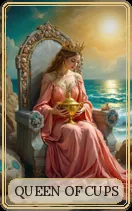 Queen of Cups — An emotionally mature couple; balance between receiving and guiding.
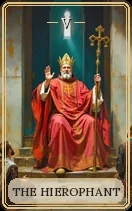 The Hierophant — An adviser, a mentor, a trusted guide.
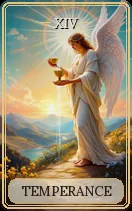 Temperance — Calm, balance and mediation: the conflict is resolved with patience.
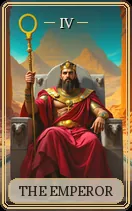 The Emperor — Firm and kindly authority; the heart at the service of responsibility.
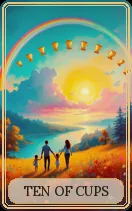 Ten of Cups — A protective head of the family; an emotionally secure home.
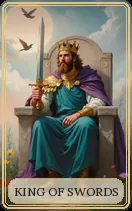 King of Swords — Heart and reason side by side: a fair and humane decision.
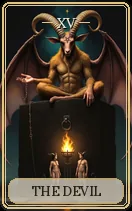 The Devil — Emotional manipulation; someone who uses what they know of other people’s emotions.
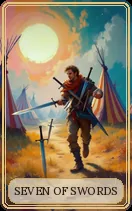 Seven of Swords — Beware of someone who seems calm but has other intentions.
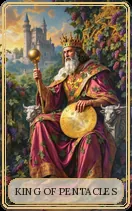 King of Pentacles — Emotional and material stability; generosity backed by means.
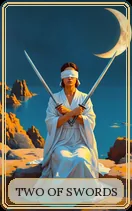 Two of Swords — Blocked emotions; a calm that is, in truth, a refusal to feel.
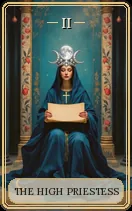 The High Priestess — Intuition in the service of counsel: someone who knows without needing to ask.
Frequently asked questions
What does the King of Cups mean in tarot?
Emotional maturity: governing your own feelings without denying them, keeping calm in storms and giving wise counsel.
What does the King of Cups mean in love?
A stable, affectionate and mature partner, or a relationship with emotional security. Reversed, he warns against coldness or against someone who uses affection to control.
Is the King of Cups a yes or a no?
Yes, but a considered yes. The card asks you to decide calmly, listening to both head and heart.
Is the King of Cups reversed bad?
It is not a card of misfortune: it is the same emotional mastery turned astray. It may be coldness, repressed emotions or manipulation, and it asks you to see whether the control serves to care or to be in charge.
Does the King of Cups represent a man?
Traditionally, a mature, calm and kind man. But he can represent anyone with these qualities, or simply the attitude the situation calls for.
No sign-up · Reading written on the spot · Free