The Tower: meaning of Lenormand card 19
The Tower is card 19 of the Lenormand and the card of institutions. A stone tower rises, tall and solid, above everything around it. It was built to last, to keep watch, to protect and to command — and also to keep others at a distance. The card holds both meanings: what is big, official and firm, and what is isolated, cold and closed.
It should be said straight away that this is not the Tower of the Tarot. In Major Arcana XVI, the tower is struck by lightning and collapses; in the Lenormand, the tower is standing, intact, and speaks of stability rather than destruction. It is a card of structure: companies, government offices, courts, schools, hospitals, everything with rules, hierarchies and paperwork. And it is also the card of the individual who stands alone — with dignity or in loneliness, depending on the neighbouring cards.
The card at a glance
| Number | 19 |
|---|---|
| Playing card | Six of Spades (6♠) |
| Lenormand names | Der Turm (German); The Tower (English); La Tour (French) |
| Type | Place and institution — authority, isolation |
| Keywords | institution, company, the state, authority, bureaucracy, structure, isolation, solitude, distance, protection, longevity |
| Timing | Slow and lasting: official processes, long deadlines, things built to last |
| Yes or no | It depends: yes, if the matter goes through the proper channels — but with delays |
The image on the card
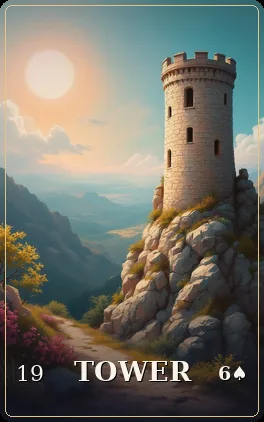
In the Sol da Alma Lenormand, the Tower is a round tower of pale stone, with battlements at the top and small arched windows, rising from a great outcrop of white rocks dotted with tufts of grass. It stands on the right, on top of a hill, and overlooks a wide valley of bluish mountains that fades into the distance. In the upper left corner, a large, pale sun in a peach and turquoise sky, with a few clouds. In the foreground, a dirt path climbs towards the tower, between pink flowers and a small tree with yellow leaves. In the corner, the number 19 and the six of spades.
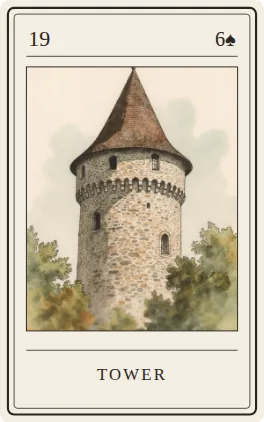
In the Engraved Lenormand, the Tower is seen from closer up: a cylindrical tower of irregular stone, in shades of grey, ochre and pink, with a projecting ring of machicolations just below the top storey, narrow arched windows and a conical roof of brown tiles topped by a spike. Treetops hide its base. The two pictures show the same thing — the isolated, round, stone tower — but in different tones: the engraving is more homely, almost village-like; the Sol da Alma sets the tower on top of a crag, facing an immense valley, and stresses height, watchfulness and solitude.
The symbolism, detail by detail
- The tower
- A building made to last and to be seen from far away. It represents the institution, the organisation, authority — and the ego itself, raised above others.
- The stone
- Solidity, permanence, resistance to time. The Tower does not change quickly: it is one of the slowest and most stable cards in the deck.
- The height
- The overall view and hierarchy. Whoever is in the tower sees far, but is far away; they command, but do not mingle.
- The battlements and machicolations
- Defence. The Tower protects those inside and shuts itself off from those outside — it is the card of boundaries, rules and doors that only open with permission.
- The small windows
- Communication kept to a minimum. From the Tower you see the world, but little of you is seen: it is reserve, formality, distance.
- The crag and the valley
- In the Sol da Alma painting, the tower on the rock, isolated above the valley, reinforces solitude and an elevated position. It is the watchtower, from which one observes without being touched.
- The path that climbs
- In the Sol da Alma, the tower is not inaccessible: there is a path up to it. Institutions can be reached, but through the proper channels, and by climbing.
- The six of spades
- Spades is the sternest suit in cartomancy with ordinary playing cards. It gives the Tower its sober tone: it is not a warm card, but it is a serious one.
The history of the Tower
The Tower was already card 19 of ‘Das Spiel der Hoffnung’, the Game of Hope published by Johann Kaspar Hechtel in Nuremberg around 1799, with the six of spades in the corner. The thirty-six cards were laid out like a board and moved across with dice; the miniature playing cards meant they could also be used to tell fortunes.
The name of Marie Anne Lenormand, the celebrated Paris fortune-teller, was only given to the deck after her death in 1843, and there is no proof that she ever used it. In Portugal and Brazil it is the ‘Baralho Cigano’, the Gypsy Deck — a popular name with no historical Romani origin.
The Tower is the Lenormand card most often confused with the Tarot, and it is worth keeping them apart. The Tarot’s Tower — ‘La Maison Dieu’ in the Marseille deck, ‘The Tower’ in the Rider-Waite-Smith — is the fall, the shock, what collapses. The Lenormand Tower is the opposite in tone: a building still standing, solid, representing the established order. The two cards share the image, but not the meaning.
The meaning of the Tower
The Tower is the card of institutions and of everything official. It represents large companies, the civil service, the courts, the tax office, universities, hospitals — structures with rules, hierarchy and paperwork. In a reading, it often says that the matter goes through an organisation, a formal process, a decision that depends not only on people but on a system.
It also speaks of authority and status: a senior post, a position of responsibility, the ambition to rise. And it speaks of solidity and duration: whatever the Tower touches is made to stay. Some readers associate it with longevity and protection, because a tower shelters those inside it.
The other side of the card is isolation. The Tower is the person who shuts themselves away, who withdraws, who sets themselves above others, or who is alone by choice or by circumstance. It may be the serene solitude of someone who needs to retreat, or the coldness of someone who has built too many walls. The neighbouring cards say which. It is not a bad card, but it is a distant one: it gives structure and takes away warmth.
The Tower in love
In love, the Tower is a reserved card. It can describe a solid, stable, formal relationship with clear rules — but also a relationship lacking closeness, where each person stays in their own tower. It often speaks of emotional distance, of pride, of someone who does not open up or who protects themselves too much.
For those who are single, the Tower often describes solitude itself: a period without a relationship, chosen or not. It can also indicate that the meeting happens in an institutional setting — at work, on a training course, in a large organisation. Next to the Heart, it is a guarded feeling; next to the Ring, a marriage with formal weight, or a commitment made official; next to the Garden, it asks you to come out of the tower and go and meet others.
The Tower in work and money
At work, the Tower is one of the clearest cards in the deck: it speaks of large companies, public bodies, structured careers, hierarchies and management positions. In a question about a job, it favours solid institutions and stable posts; in a question about a promotion, it indicates a rise, but a slow and formal one. It also describes bureaucracy, paperwork and processes that depend on an organisation.
In money matters, it speaks of official affairs: taxes, banks, contracts with large organisations, pensions, long-term funds. It is a card of security more than of quick gain. Next to the Fish, money from an institution or a big company; next to the Book or the Letter, official documents and paperwork; next to the Mice, losses connected with bureaucracy or with an institution.
The Tower in health and wellbeing
In questions about wellbeing, the Tower may speak of posture and the spine, because of the image of the upright tower, and of a need for retreat or for rest on one’s own. It can also represent health services as an institution. As always with the Lenormand, the reading shows tendencies and attitudes, and it is no substitute for any medical consultation or health care.
The Tower as a person
As a person, the Tower is someone with authority or status: a superior, an official, someone responsible within an institution, a specialist. It also describes someone proud, reserved and independent, who is self-sufficient and keeps others at a certain distance — sometimes out of shyness, sometimes out of arrogance. It is often an older person, serious and principled, hard to get to know and reliable once you do.
The Tower as advice
As advice, the Tower says: go through the proper channels. Handle the matter formally, gather the paperwork, talk to the right organisation, respect the rules. It also asks for a certain distance — to look at the situation from above, not to get too involved, to protect your boundaries. But it warns: do not shut yourself away so completely that you end up alone in the tower.
The timing of the Tower
The Tower is a slow card. Matters that depend on institutions take their time, and the Tower speaks of long deadlines, of processes that move forward step by step, of things built to last for years. Next to the Rider or the Key, the official answer arrives; next to the Mountain or the Anchor, you will have to wait.
In the Grand Tableau: house 19
In the Grand Tableau — the spread of all thirty-six cards laid out in four rows — the nineteenth position is the house of the Tower. The card that falls there shows how the querent stands with institutions, formal work and authority, or where they feel alone. And the Tower itself, wherever it falls, brings structure, formality and some distance to the theme of that house.
Combinations with other cards
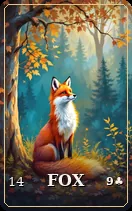 Fox — A job at a large company or a public body.
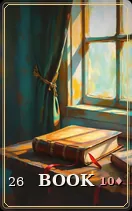 Book — A university, a school, official training; archives and records.
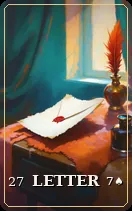 Letter — An official document, a letter from an organisation, a formal notice.
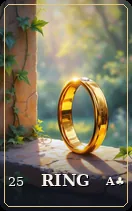 Ring — A contract with an institution; a formalised commitment.
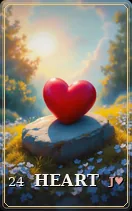 Heart — A closed heart, guarded feelings; a long-distance love.
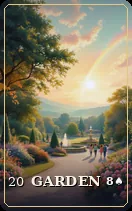 Garden — An official event, an institution open to the public; coming out of isolation.
 Bear — A strong authority, a company’s management, a senior position.
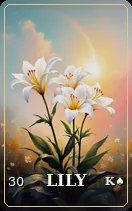 Lily — A respected, lasting position; an old institution.
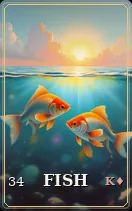 Fish — Money from an institution, a bank, a large company.
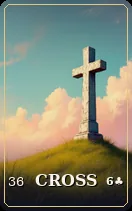 Cross — Heavy isolation; an obligation imposed by an organisation.
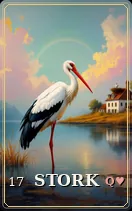 Stork — A change of institution or company; a transfer.
 Mountain — Bureaucracy that blocks the way, an official process at a standstill.
Frequently asked questions
What does the Tower mean in the Lenormand?
Institutions and everything official — companies, the state, authority — and also isolation and distance. It is a solid, lasting card, but a cold one.
Is the Lenormand Tower the same as the Tower in the Tarot?
No. In the Tarot, the tower is struck by lightning and falls; in the Lenormand, it is standing and represents stability, structure and institutions. They are different cards.
Is the Tower a bad card?
No. It is serious and distant, but it gives structure and protection. Its less favourable side is isolation, which the neighbouring cards confirm or rule out.
What does the Tower mean in love?
A stable but reserved relationship, or emotional distance and pride. For those who are single, it usually describes a period of solitude.
Is the Tower a yes or a no?
It depends. It leans towards yes when the matter goes through official channels, but it is a slow yes; if the question is about getting closer to someone, it leans towards no.
No sign-up · Reading written on the spot · Free