
The Stork: meaning of Lenormand card 17
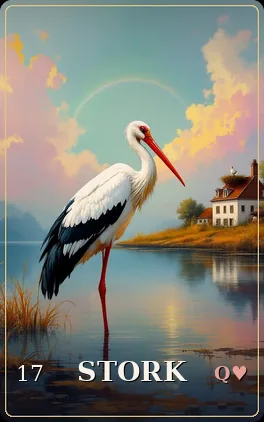
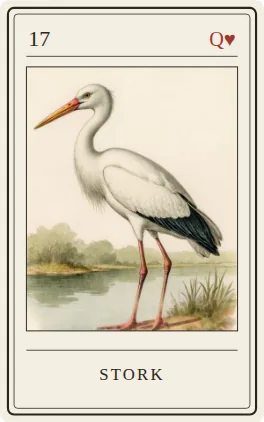
The Stork is card 17 of the Lenormand and the great card of change. A tall bird, white and black, with a red beak and red legs, stands still in the water, as if it has just arrived or is about to leave. Storks are migratory birds: every year they come and go, and every year they return to the same nest. That is where the meaning of the card comes from — moving, passing from one place or phase to another, and coming back.
The Lenormand has several cards of movement, and it is worth telling them apart. The Ship is the journey far away; the Rider, the swift arrival; the Scythe, the sudden cut. The Stork is different from all of them: it is change that transfers, carrying things from one place to another without destroying them. A change of home, of job, of status, of routine, of opinion. And in the great majority of readings it is a change for the better.
The card at a glance
| Number | 17 |
|---|---|
| Playing card | Queen of Hearts (Q♥) |
| Lenormand names | Der Storch (German); The Stork (English); La Cigogne (French) |
| Type | Event — change, relocation |
| Keywords | change, moving house, relocation, transition, improvement, novelty, return, cycle |
| Timing | Medium: a change that is prepared and happens within weeks or a few months |
| Yes or no | Yes — but with a change along the way |
The image on the card
In the Sol da Alma Lenormand, the Stork is a white stork shown full-length, in profile, facing right: white plumage, large black feathers on the wings, a long red beak and red legs. It stands on one leg in shallow water, in a still lake that mirrors the sky. On the left, reeds and golden grasses; in the background on the right, a bank of dry grass and a white house with a red roof, with a stork’s nest on top and another stork perched in it. The sky is pale blue, with pink and golden clouds and a faint rainbow. In the corner, the number 17 and the queen of hearts.
In the Engraved Lenormand, the stork is drawn in the manner of natural history engravings: white, with the black wing feathers clearly marked, an orange beak and pinkish legs, standing on both legs at the edge of a pond. It faces left, its neck curved. Around it there is only water, grass and a bank with pale trees. The two pictures agree on the bird and the water; the Sol da Alma adds the house with the nest on the roof, which brings to the card the idea of home and return — the familiar sight of storks nesting on roofs, chimneys and bell towers, so well known in Portugal.
The symbolism, detail by detail
- The stork
- The bird that leaves and returns with the seasons. It is cyclical movement, change that is part of life, not the accident that interrupts it.
- The raised leg
- In the Sol da Alma, the bird stands on one leg: a pause between two movements. The change has already been decided, but it has not yet happened.
- The long beak
- Precision, the ability to go and get what is needed. The Stork does not change blindly: it changes with a purpose.
- The water
- The element of transitions. The stork lives between land and water, on the shore — the exact place where one thing becomes another.
- The house with the nest
- In the Sol da Alma painting, the destination of the journey: the new home, or the old one you return to. It links the Stork with the House, and explains why it is so often read as moving house.
- The reflection in the lake
- Before and after. What changes remains recognisable: the Stork transforms without erasing.
- The rainbow
- In the Sol da Alma, the promise of improvement after the change. It underlines the card’s positive leaning.
- The queen of hearts
- A female figure and a suit of affection. That is why some readers see a woman in the Stork, and give it a warm tone: the change is usually a wished-for one.
The history of the Stork
The Stork was already card 17 of ‘Das Spiel der Hoffnung’, the Game of Hope published by Johann Kaspar Hechtel in Nuremberg around 1799, with the queen of hearts in the corner. It was a board game of thirty-six cards, laid out on the table and moved across with dice, and the miniature playing cards meant the same deck could be used to tell fortunes.
The name of Marie Anne Lenormand was only given to it after the fortune-teller’s death in 1843, by publishers who wanted to cash in on her fame; nobody knows whether she ever used it. In Portugal and Brazil the deck is known as the ‘Baralho Cigano’, the Gypsy Deck, a popular name that does not correspond to any historical Romani origin.
The choice of the stork for a card of change is no surprise: in Europe its arrival has always announced the end of winter, and its return to the same nest, year after year, made it a bird of good omen, linked to the home and to renewal. It is from this imagery that the card inherits its favourable tone.
The meaning of the Stork
The Stork is the card of change. It says that a situation is going to pass from one state to another: moving house, moving city, changing job, role, relationship, habits or way of thinking. It may be a change you choose or a change that simply happens, but it is rarely violent — it is a transition, something that moves on.
It carries the idea of improvement. When it falls in a stagnant reading, it is the sign that things are finally going to move; when it falls next to a problem, it says the problem is going to evolve. It also has the meaning of return — like the birds that come back — and can announce the return of a person, an opportunity, or a project that seemed to have been shelved.
Like the Rider, the Stork says that something is moving, and the neighbouring cards say what. Next to the House, it is moving house or building work; next to the Tower, a change of job or institution; next to the Heart, a change of feelings. Its leaning is positive: with heavy cards the change is costly, but it is still a step forward.
The Stork in love
In love, the Stork announces a new phase. In a relationship, it may mean moving in together, moving house as a couple, taking a step that changes the status of the relationship, or simply a renewal — the routine broken, the enthusiasm back. In a crisis, it says the situation is going to evolve and will not stay as it is.
For those who are single, it is a promising card: your love life is going to get moving, often because of a change in another area — a new home, a new job, a new place where you meet someone. It also has the meaning of return: someone from the past who reappears. Next to the Ring, it is a change in commitment; next to the Scythe or the Coffin, the change may be a separation, but one lived as a transition rather than a catastrophe.
The Stork in work and money
At work, the Stork is one of the best cards for anyone who wants a change: a promotion, a transfer, a new job, a move to a different field, team or workplace. It can also announce a reorganisation at the company, or a return — to a former profession, to a project that stalled. It favours those who adapt and are willing to move.
In money matters, it indicates a shift in the financial situation, generally for the better, and above all changes: a new source of income, a renegotiation, an expense connected with a move. Next to the Fish, money improves; next to the House or the Key, it may speak of buying, selling or renting a home.
The Stork in health and wellbeing
In questions about wellbeing, the Stork speaks of changing habits, a phase of transition and a favourable development; it is a card of recovery and renewal in terms of tendencies. Sometimes it is associated with the legs, because of the image of the bird. As always with the Lenormand, the reading is no substitute for any medical consultation or health care.
The Stork as a person
When it describes someone, the Stork is a person who changes, who adapts, who does not like standing still: someone in transition, someone who has just arrived or is about to leave, someone coming back. Because of the queen of hearts, some readers see a woman in it, affectionate in manner, and in certain contexts an elegant, slender, long-legged person, like the bird. It is also, at times, the person who brings about change in someone else’s life.
The Stork as advice
As advice, the Stork says: change. Do not cling to what no longer serves you, accept the new phase, prepare the transition calmly instead of resisting it. Changing place, method or point of view may be exactly what is needed to unblock the situation. And it reminds you that changing is not losing: whatever has value comes with you.
The timing of the Stork
The Stork is not as fast as the Rider nor as sudden as the Scythe. The changes it announces tend to be prepared and to happen within weeks or a few months. Like the migratory bird, it is linked to the seasons, and some readers associate it with spring or with a recurring cycle. Next to the Anchor or the Mountain, the change is delayed or meets resistance; next to the Rider, it speeds up.
In the Grand Tableau: house 17
In the Grand Tableau — the spread of all thirty-six cards laid out in four rows — the seventeenth position is the house of the Stork. The card that falls there shows what is changing, or is going to change, in the querent’s life. And the Stork itself, wherever it falls, brings change and movement to the theme of that house: the matter is not going to stay as it is.
Combinations with other cards
 House — Moving house, building work, a renewal in the home or the family.
 Fox — A change of job, a transfer or a new role.
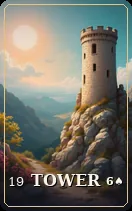 Tower — A change of institution or company; an official reorganisation.
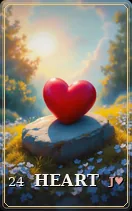 Heart — Feelings change; a relationship entering a new phase.
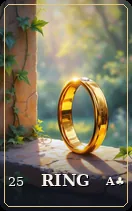 Ring — A change in commitment: renewing, formalising or revising an agreement.
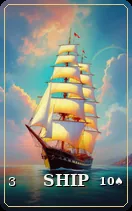 Ship — Moving far away, to another city or another country.
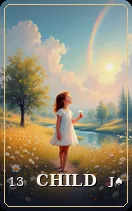 Child — A fresh start; a small change that opens a new phase; matters concerning children.
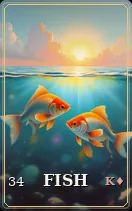 Fish — A financial improvement, a new source of income.
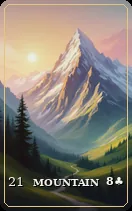 Mountain — A change held up or difficult, one that calls for patience.
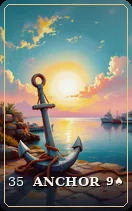 Anchor — A change that becomes permanent; settling down somewhere.
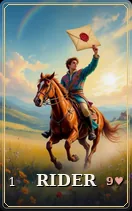 Rider — A quick change, or a piece of news that sets everything in motion.
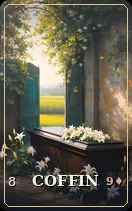 Coffin — The end of one phase making way for another; a necessary transition.
Frequently asked questions
What does the Stork mean in the Lenormand?
Change: of home, of job, of phase or of mind. It is a transition, something passing from one place to another, and generally for the better.
Is the Stork a good card?
Yes, in most readings. It announces change and improvement; next to heavy cards the change is harder, but it is still a step forward.
What does the Stork mean in love?
A new phase: moving in together, renewing the relationship, or, for those who are single, a change that brings new encounters. It can also announce someone’s return.
Does the Stork mean moving house?
Often, especially next to the House or the Key. On its own it is any kind of change; the neighbouring cards say in which area.
Is the Stork a yes or a no?
It leans towards yes, but a yes that comes through change: the result arrives after something has moved or been reorganised.
No sign-up · Reading written on the spot · Free