
The Cross: meaning of Lenormand card 36
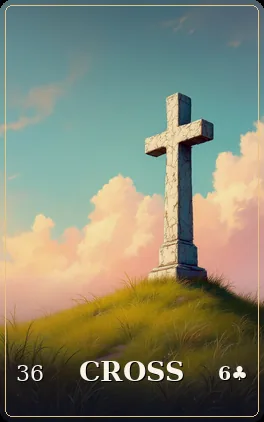
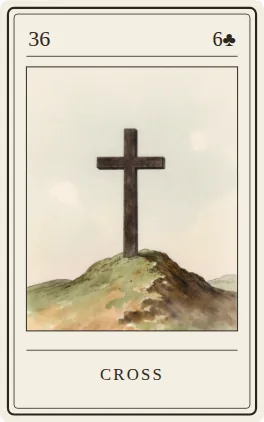
The Cross is the thirty-sixth and last card of the Lenormand, and it closes the series with the most serious card of all. A cross, standing on top of a hill, alone against the sky. It does not announce an event, as the Rider or the Scythe do: it describes a condition — something that has to be carried, lived through and come out the other side of.
It is the card of weight, trial and duty. But it is not only that. The Cross is also the card of faith, of the sacred, of destiny — of what has to be and has a meaning, even when it is hard. In a spread, it is a reminder that there are difficult phases that cannot be avoided, but that do pass; and that, often, it is precisely what weighs on us that gives value to what comes afterwards.
The card at a glance
| Number | 36 |
|---|---|
| Playing card | Six of Clubs (6♣) |
| Lenormand names | Das Kreuz (German); The Cross (English); La Croix (French) |
| Type | State — trial, duty, destiny |
| Keywords | weight, trial, duty, burden, sacrifice, responsibility, faith, destiny, what is final |
| Timing | The length of a trial: it weighs while it lasts, and then it ends |
| Yes or no | No — or yes, but with effort and sacrifice |
The picture on the card
In the Sol da Alma Lenormand, the Cross is a Latin cross of pale, whitish-grey stone, full of fine cracks and fissures, set on a square base of two steps. It rises on the crest of a hill covered in tall green and yellowish grass, bent by the wind, with a footpath climbing the slope. Behind it is a turquoise-blue sky with large pink and peach-coloured clouds and a few white wisps high up. The cross stands a little to the right, alone, lit from the front. In the corner, the number 36 and the six of clubs.
In the Engraved Lenormand, the Cross is made of dark wood, almost black, plain and unadorned, driven straight into the earth on top of a mound of green grass and brown soil, with low hills in the distance and a pale sky with light clouds. This is the classic Lenormand image: the simple cross, standing on high.
The two images repeat the same composition — the cross on a hilltop, standing out against the sky — but change the material. The dark wood of the Engraved deck stresses weight and austerity; the cracked stone of the Sol da Alma deck speaks of something old that has withstood time, scarred but still standing, beneath a sky that is not gloomy.
The symbolism, detail by detail
- The cross
- The burden, the trial, sacrifice — and, at the same time, faith and the sacred. It is the Christian symbol par excellence, and the card holds both readings.
- The hilltop
- What can be seen from afar and cannot be ignored. The Cross is not hidden: it is a matter that marks the life of the person asking.
- The solitude of the cross
- The trial you go through alone, the responsibility no one else can carry for you.
- The cracked stone
- In the Sol da Alma painting, the marks of what has been endured. The cross is worn, but standing: suffering leaves its traces, but it does not bring you down.
- The dark wood
- In the Engraved Lenormand, austerity and weight. A cross without ornament, which disguises nothing.
- The sky behind
- In both images the sky is clear. The Cross is not a card of darkness: it is a trial with a horizon.
- The six of clubs
- In fortune-telling with ordinary playing cards, clubs speak of work and effort. It gives the Cross its tone of a task carried out with commitment.
The history of the Cross
The Cross was already card 36 of ‘Das Spiel der Hoffnung’, the Game of Hope published by Johann Kaspar Hechtel in Nuremberg around 1799, with the six of clubs in the corner. It was a board game of thirty-six cards, played with dice, and the miniature playing cards meant it could also be used to tell fortunes.
After the death in 1843 of Marie Anne Lenormand — the most famous fortune-teller in Paris — publishers began selling the deck under her name, though there is no evidence that she ever used it. In Portugal and Brazil it became known as the ‘Baralho Cigano’, the Gypsy Deck, a popular name that does not reflect any historical Romani origin.
In the popular imagery of the nineteenth century, the cross, the anchor and the heart were the emblems of faith, hope and charity — and the Lenormand has all three: the Cross, the Anchor and the Heart. In the old readings the Cross was a dreaded card, linked to pain and misfortune; the modern reading, which is the one Sol da Alma follows, is more balanced: the Cross is trial and duty, and also the faith and meaning that help you get through them.
The meaning of the Cross
The Cross is the card of weight. It says that a matter is difficult, that it calls for effort, patience and endurance. It speaks of trials, of responsibilities, of duties that cannot be refused, of burdens that have to be carried. In a spread, it marks the point where the difficulty lies — the card beside the Cross usually tells you what is weighing on you.
It is also the card of what is final and of destiny. Whatever the Cross touches has the character of something that was meant to be: you do not choose it, you live it. Many readers see it as the central matter in the life of the person asking at that moment, the trial that gives meaning to the rest. And it is the card of faith, of spirituality, of the sacred — of the dimension of life that helps us bear what is heavy.
It is best not to read it as a sentence passed. The Cross is rarely for ever: it is a phase, and phases end. What it asks is that you do not run from responsibility, that you bear it with dignity and that you look for the meaning of what is happening. Beside good cards such as the Sun or the Key, the trial is short and has a clear way out; beside heavy cards, it asks for more patience.
The Cross in love
In love, the Cross speaks of a relationship going through a trial: difficulties, sacrifices, shared responsibilities, a phase in which loving is hard. It may point to a relationship that feels like a burden, or a love that demands renunciation. But it can also speak of a deep, faithful bond, lived as destiny — the love that withstands its trials and comes out of them stronger.
Beside the Heart, it is a love that costs, but a true one; beside the Ring, a serious commitment, with duties taken on; beside the Coffin, the end of a painful phase. For those who are single, it may ask you first to heal an old wound before making room for someone new.
The Cross at work and with money
At work, the Cross points to a demanding phase: heavy responsibility, overload, a difficult project, a duty that cannot be left behind. It may also speak of work lived as a vocation — as a mission, as service, as caring for others — or of professions connected with faith and with supporting those in need.
With money, it asks for prudence: obligations, debts, expenses that weigh heavily. With the Fish, it is a financial squeeze that calls for discipline; with the Sun, a difficulty that is overcome; with the Anchor, a long-term financial commitment.
The Cross in health and wellbeing
In questions about wellbeing, the Cross speaks of tiredness, of overload and of the need not to carry everything alone — to ask for help and to give body and spirit the rest they are asking for. As always in the Lenormand, the reading shows tendencies and attitudes, and does not replace any consultation or any form of health care.
The Cross as a person
The Cross is not one of the deck’s person cards, but when it describes someone, it describes a responsible, self-sacrificing person who carries a great deal — sometimes too much. It may be someone of deep faith, or a person who is, for the one asking, a responsibility or a trial. Serious, dedicated and, often, tired.
The Cross as advice
As advice, the Cross says: accept what has to be lived through. Do not run from responsibility, but do not carry more than your share either. Look for the meaning of the trial, lean on your faith or your values, and remember that this phase, too, will pass.
The Cross and timing
The Cross does not set a deadline: it marks the length of a trial. It weighs while it lasts, and then it ends. Beside fast cards, the difficulty is intense but brief; beside slow cards such as the Anchor or the Mountain, it is a weight that drags on and calls for endurance.
In the Grand Tableau: house 36
In the Grand Tableau — the spread in which all thirty-six cards are laid out in four rows — the thirty-sixth position is the house of the Cross, the last in the tableau. The card that falls there tells what the trial or the duty of the person asking is, or what is, for them, unavoidable. And the Cross itself, wherever it falls, brings weight and seriousness to the theme of that house.
Combinations with other cards
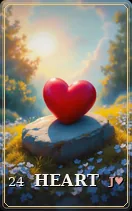 Heart — A love that costs; feelings put to the test.
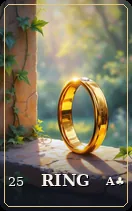 Ring — A heavy commitment; duties taken on for the long term.
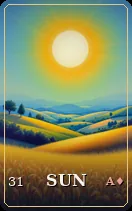 Sun — The end of an ordeal; a burden that grows lighter.
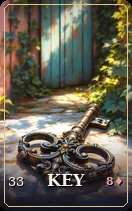 Key — Destiny; a trial that has to be lived through, but that has meaning.
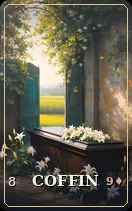 Coffin — The end of suffering; a painful phase drawing to a close.
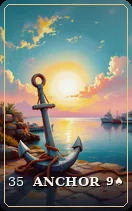 Anchor — A burden that drags on; a long-term responsibility.
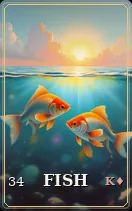 Fish — Financial strain, obligations and debts that weigh heavily.
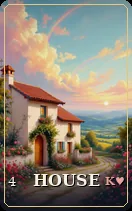 House — Worries at home; family responsibilities.
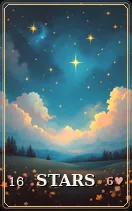 Stars — Faith, spirituality, hope in the midst of the trial.
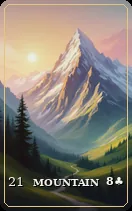 Mountain — A difficult obstacle that calls for a great deal of patience.
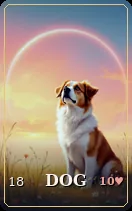 Dog — A friend who helps carry the load; or a friend going through a trial.
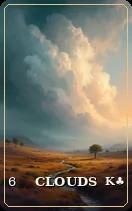 Clouds — Anguish, doubts, a time of great uncertainty.
Frequently asked questions
What does the Cross mean in the Lenormand?
Weight, trial and duty: a burden to be carried, a difficult phase that has to be lived through. It is also the card of faith, the sacred and destiny.
Is the Cross a bad card?
It is a heavy card, but it is not a sentence passed. It speaks of a trial that ends, and often of a meaning that only becomes clear afterwards.
Is the Cross a yes or a no?
It leans towards no — or towards a yes that comes with effort and sacrifice. Beside very favourable cards, the difficulty is brief.
What does the Cross mean in love?
A relationship going through a trial, one that demands renunciation or feels like a burden. It can also be a deep bond, lived as destiny.
Which playing card corresponds to the Cross?
The six of clubs, ever since the first deck of c. 1799. The suit of clubs links it to effort and work.
No sign-up · Reading written on the spot · Free