
The Heart: meaning of Lenormand card 24
The Heart is card 24 of the Lenormand and, as you would expect, the card of love. But it is broader than romantic love: it is affection in all its forms — passion, tenderness, friendship, a fondness for something, generosity, the wish to forgive. Wherever it falls, it says there are feelings involved.
In a spread, the Heart works almost like an adjective: it says what kind of matter the neighbouring cards are dealing with. Next to the House, it is a home where people are happy; next to the Anchor, a job you love; next to the Book, a secret love. And, like all Lenormand cards, it does not say on its own whether the feeling is returned or whether it will last — that is for the cards around it to say.
The card at a glance
| Number | 24 |
|---|---|
| Playing card | Jack of Hearts (J♥) |
| Lenormand names | Das Herz (German); The Heart (English); Le Cœur (French) |
| Type | Feeling — affection, love |
| Keywords | affection, love, passion, fondness, generosity, forgiveness, what you feel, what you love |
| Timing | Sets no timing of its own; follows the neighbouring cards |
| Yes or no | Yes — especially if the question is about feelings |
The image on the card
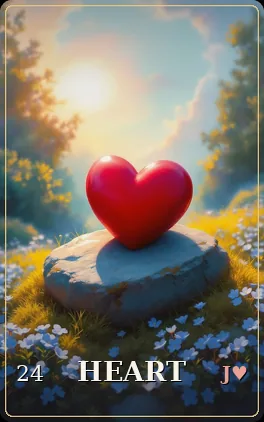
In the Sol da Alma Lenormand, the Heart is a large red heart, smooth and shining, resting on top of a rounded grey stone in the middle of a meadow. All around, the grass is golden and the ground is covered with small blue and white flowers; on either side, trees with yellow and green foliage frame the scene. Behind it, the sun is low and fills the sky with a warm light, among pale clouds. It is an emblem of a heart, not an anatomical one — an object put on display, like a present left in plain sight.
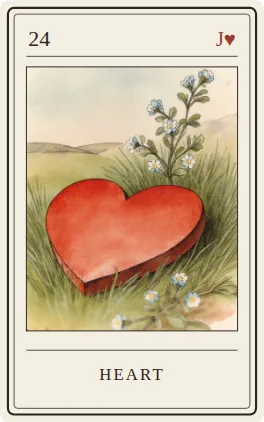
In the Engraved Lenormand, the heart is red too, but more withdrawn: a flat, thick shape painted in watercolour, lying in the tall grass of a meadow with hills in the background. Behind it rises a sprig of small pale-blue flowers with yellow centres, rather like forget-me-nots, and more of the same flowers lie fallen in the grass in front. Where the Sol da Alma raises the heart up on a stone, the Engraved Lenormand leaves it almost hidden in the grass — two ways of saying the same thing: affection.
The symbolism, detail by detail
- The heart
- Feeling, affection, emotional life. It is an ancient, universal emblem: the seat of the feelings, not the organ.
- The red
- Passion, warmth, life. It is the colour of desire, but also of the courage to feel.
- The stone
- In the Sol da Alma painting, the firm base on which affection rests. A feeling that has something to lean on lasts longer.
- The blue and white flowers
- Tenderness and delicacy. In the Engraved Lenormand, the forget-me-nots link affection to remembrance and faithfulness.
- The sunlight
- Warmth and clarity. The Heart is a bright card that warms everything beside it.
- The tall grass
- In the Engraved Lenormand, the half-hidden heart: affection that exists but is not always shown, and that has to be looked for.
- The jack of hearts
- Hearts, the suit of Cups in the tarot, is the suit of Water, of feeling and of bonds; the Jack is the suit’s youth, full of eagerness. The Heart is thus young, spontaneous, uncalculating affection — feeling in its first impulse.
The history of the Heart
The Lenormand descends from ‘Das Spiel der Hoffnung’, the Game of Hope, published around 1799 in Nuremberg by Johann Kaspar Hechtel: thirty-six illustrated cards, each with a small playing card in one corner, which were laid out on the table like a board. The Heart holds place 24, with the jack of hearts — the suit that has always stood for the feelings in fortune-telling with ordinary playing cards.
After the death of Marie Anne Lenormand in 1843, publishers began selling the deck under her name to cash in on her fame as a fortune-teller, with no evidence that she ever used it. In Portugal and Brazil, the same deck is called the ‘Baralho Cigano’, the Gypsy Deck, a popular name with no historical Romani origin.
The heart shape as a symbol of love is much older than the deck: it comes from the European tradition that made the heart the seat of the feelings, and the stylised shape drawn today — two lobes and a point — was already a common emblem when Hechtel’s game was published.
The meaning of the Heart
The Heart is affection: love, passion, friendship, fondness, tenderness. It is the card of everything you love and everything you do with pleasure. It also speaks of generosity, reconciliation and forgiveness — of everything that springs from feeling rather than calculation.
In a spread, it has two roles. The first is to speak of love as such, when the question is about the heart. The second is to colour the neighbouring cards: whatever lies next to the Heart is lived with emotion, with pleasure, with the heart put into it. A house, a job, a journey, a project — next to the Heart, they stop being merely practical matters and become things you love.
It is a positive card, but not a naive one. The Heart says there is feeling; it does not say whether it is returned, or whether it is wise. Next to the Fox it may be affection that has been deceived; next to the Clouds, a confused heart; next to the Cross, a love that hurts. The feeling is there — the cards around it say what state it is in.
The Heart in love
In love, the Heart is the most direct card in the deck: there are feelings. In a relationship, it speaks of real affection, passion and tenderness; in a question about someone, it says that this person feels something. For someone who is single, it announces a heart opening up — an interest, an infatuation, sometimes a love arriving.
With the Ring, it is love with commitment — an engagement, a wedding, a relationship made official. With the Rider, a declaration or a suitor. With the Mice, affection wearing thin; with the Coffin, a feeling coming to an end. With the Mountain, a love that faces obstacles or a heart that is blocked. Next to the Man or the Woman, it says that this person is in love, or is affectionate by nature.
The Heart in work and money
At work, the Heart speaks of loving what you do, of a good atmosphere with colleagues, of a vocation. It favours professions connected with caring, art, counselling and working with people. In a question about an offer, it says the offer appeals — but it is worth checking the neighbouring cards to see whether it appeals to the wallet as well.
With money, it is not a card of gains: it is a card of generosity. It speaks of giving, of helping, of spending on the people you love, of money that moves for emotional reasons. With the Fish, it may be a gift, help from someone close, or money earned doing what you love; with the Mice, emotional spending that is worth keeping an eye on.
The Heart in health and wellbeing
In questions about wellbeing, the Heart is a reminder of the link between feelings and the body: emotions weigh on us, and looking after our relationships is also a way of looking after ourselves. It speaks of joy, of human warmth, of being surrounded by the people you love. As always, the reading shows tendencies and attitudes, and it is no substitute for any consultation or any kind of health care.
The Heart as a person
As a person, the Heart is someone affectionate, warm, romantic and generous — sometimes too emotional. It may be the beloved, the person you care for, or simply someone with a good heart. Because of its playing card, the jack of hearts, some readers see in it a young person, or someone young at heart, passionate and sincere.
The Heart as advice
As advice, the Heart says: follow what you feel. Say what you have to say, make the affectionate gesture, forgive, give. But also: choose what you love — the right decision, right now, is the one your heart recognises as its own.
The timing of the Heart
The Heart is not a card of deadlines: it speaks of what is felt, not of when things happen. In practice, timing is read in the neighbouring cards — with the Rider, an emotion that arrives quickly; with the Tree or the Anchor, an affection that grows slowly and lasts.
In the Grand Tableau: house 24
In the Grand Tableau, house 24 is the house of the Heart. The card that falls there shows the state of the love life of the person asking, or whatever fills their heart. And the Heart itself, wherever it falls, brings affection and emotion to the subject of that house — whatever is there is lived with feeling.
Combinations with other cards
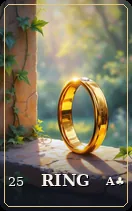 Ring — Love with commitment: an engagement, a wedding, a relationship made official.
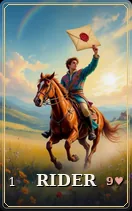 Rider — A declaration, a suitor, news of love that arrives quickly.
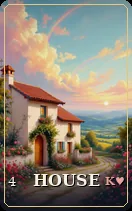 House — A happy home, love within the family, a house you love.
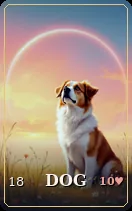 Dog — A deep and faithful friendship, or a love that is also a friendship.
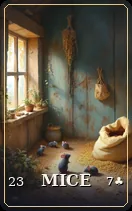 Mice — Affection wearing thin, anxiety in love, a weary heart.
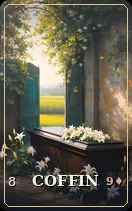 Coffin — The end of a feeling, or a heart that needs time to heal.
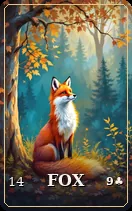 Fox — Affection that is not sincere, or feelings used with calculation.
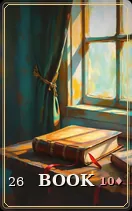 Book — A secret love, feelings kept hidden that have not yet been spoken.
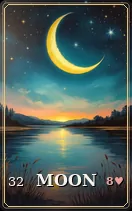 Moon — Passion, romance, a love with recognition and desire.
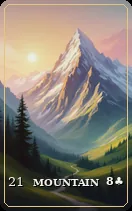 Mountain — A love that faces obstacles, or a blocked heart that struggles to open up.
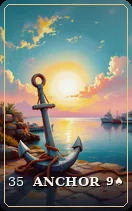 Anchor — A job you love; a stable and lasting love.
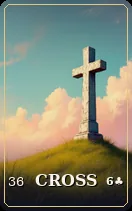 Cross — A love that hurts, a feeling lived with sacrifice.
Frequently asked questions
What does the Heart mean in the Lenormand?
Affection, love and feeling: everything you care about. Next to another card, it says that the matter is lived with the heart.
Is the Heart always romantic love?
No. It can be passion, but also friendship, tenderness, generosity or a fondness for something — a job, a house, a project.
Is the Heart a yes or a no?
It is a yes, especially in questions about feelings. It says there is affection. If the neighbouring cards are heavy, it is a yes with reservations.
Does the Heart next to the Ring mean marriage?
It is one of the classic combinations for a romantic commitment: an engagement, a wedding or a relationship made official. The other cards say when and on what terms.
Which playing card corresponds to the Heart?
The jack of hearts. Hearts is the suit of the feelings, and the Jack its youth — spontaneous, uncalculating affection.
No sign-up · Reading written on the spot · Free