
The Anchor: meaning of Lenormand card 35
The Anchor is card 35 of the Lenormand and the card of those who have arrived. After the voyage, the ship drops anchor and stays: it is in port, it is safe, it is no longer drifting. That is what the card says — that a matter becomes settled, puts down roots, endures.
In the Lenormand, the Anchor is above all the card of stable work and security: the job that lasts, the relationship that endures, the goal achieved. It is a good card, but not a neutral one in the sense of weak. It fixes everything it touches — and so, beside a difficult card, it fixes the difficulty too. The Anchor does not choose; it holds.
The card at a glance
| Number | 35 |
|---|---|
| Playing card | Nine of Spades (9♠) |
| Lenormand names | Der Anker (German); The Anchor (English); L’Ancre (French) |
| Type | State — stability, permanence, work |
| Keywords | steadiness, stability, work, security, permanence, persistence, goal reached, hope |
| Timing | Long: whatever the Anchor touches lasts |
| Yes or no | Yes — and one that stays |
The picture on the card
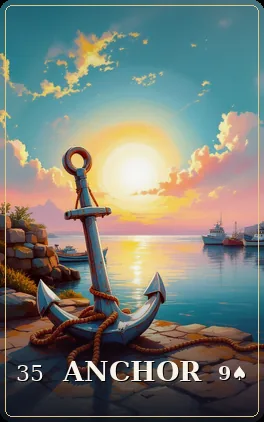
In the Sol da Alma Lenormand, a large anchor of bluish-grey iron, marked with rust, stands upright on a quay of stone flags, resting on its two curved arms. A thick rope, rust-coloured and orange, winds up the shank and falls in wide coils across the ground to the water’s edge. Behind it is a calm harbour at sunset: the sun large and bright above the horizon, the turquoise sky with pink and golden clouds, the smooth sea reflecting the light. On the right, fishing boats lie at anchor; on the left, a stone wall with grass growing on it and a small boat by the rocks. In the corner, the number 35 and the nine of spades.
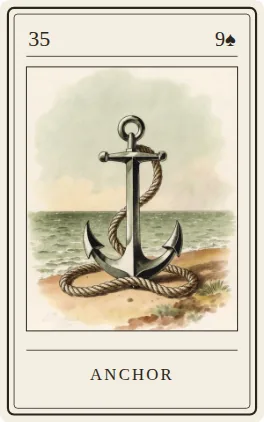
In the Engraved Lenormand, the Anchor stands on a sandy beach against a grey-green sea and a pale sky: a classic iron anchor, with the ring at the top, the stock set crosswise, the straight shank and the two arms ending in pointed flukes. A thick rope cable spirals up around the shank and uncoils across the sand in two wide loops around the base. This is the classic Lenormand image: the anchor resting on land, by the sea.
The two images agree on the essentials: the anchor is out of the water, upright, with the rope around it. It is not holding any ship — it is at rest, on solid ground. The Sol da Alma painting adds the harbour and the boats: arrival, the safe place after the voyage.
The symbolism, detail by detail
- The anchor
- Steadiness, security, permanence. It is what stops the boat from being carried off by the current.
- The iron
- Solidity and weight. The Anchor is not light: it gives stability, but it is also hard to lift.
- The coiled rope
- The bond, the tie that holds. It connects the anchor to the ship — and, in the card, connects the person to their work, their home, their place.
- The embedded flukes
- What takes hold and does not let go. It is persistence, the capacity to endure.
- The harbour and the boats
- In the Sol da Alma painting, arrival: the end of the voyage, the goal reached, the place where you stay.
- The beach
- In the Engraved Lenormand, the border between land and sea: the place where the voyage ends and settled life begins.
- The nine of spades
- A card that, in fortune-telling with ordinary playing cards, is not one of the lightest. It is a reminder of the Anchor’s other side: what holds you steady can also hold you back.
The history of the Anchor
The Anchor was already card 35 of ‘Das Spiel der Hoffnung’, the Game of Hope published by Johann Kaspar Hechtel in Nuremberg around 1799, with the nine of spades in the corner. It was a board game of thirty-six cards, played with dice, and the miniature playing cards meant it could also be used to tell fortunes.
After the death in 1843 of Marie Anne Lenormand — the most famous fortune-teller in Paris — publishers began selling the deck under her name, though there is no evidence that she ever used it. In Portugal and Brazil it became known as the ‘Baralho Cigano’, the Gypsy Deck, a popular name that does not reflect any historical Romani origin.
In the Christian tradition the anchor is an ancient symbol of hope — the image comes from the Epistle to the Hebrews, which speaks of hope as ‘an anchor of the soul’ — and in the popular imagery of the nineteenth century the cross, the anchor and the heart were the emblems of faith, hope and charity. The Lenormand has all three: the Cross, the Anchor and the Heart. From the Anchor, the Lenormand has kept above all the idea of security and permanence, but the echo of hope is still there.
The meaning of the Anchor
The Anchor is the card of stability. It says that a matter is becoming settled, that it is gaining solid foundations, that it is going to last. It is security after uncertainty, the place where you stay, the goal reached after much effort. In a turbulent spread, it is the fixed point; in a spread about the future, it says that what is being built will endure.
By tradition, it is the card of work — above all of stable, long-term work, of the job you have and keep. It also speaks of persistence, of loyalty to a goal, of someone who does not give up and holds on to the end. In a broad sense, it is the card of roots: a place, a profession, a relationship where the person feels secure.
The Anchor does, however, carry its own weight. What holds you steady can also hold you back: beside difficult cards, it can speak of stagnation, of a situation you cannot get out of, of clinging to something that no longer serves you. The card amplifies the permanence of whatever lies beside it — good or bad. That is why it is so important always to read the Anchor with its neighbours: with the Sun, it is lasting success; with the Clouds, confusion that drags on.
The Anchor in love
In love, the Anchor speaks of a stable, secure and lasting relationship: a couple who settle down, who build, who commit for the long term. It is a card of faithfulness and trust, excellent for anyone looking for something serious. For those who are single, it may announce a relationship that is here to stay — or the need to feel secure before giving yourself to someone.
The other side is complacency. An anchored relationship can turn into routine, or into a relationship kept going more out of habit or fear of change than by choice. Beside the Heart, it is steadfast love; beside the Ring, a lasting commitment; beside the Snake or the Fox, a complicated situation that is hard to leave.
The Anchor at work and with money
At work, the Anchor is one of the best cards: stable employment, a long-term contract, an established position, a secure career. In a question about an offer, it says that it is built to last; in a question about your current job, it says that you will keep it. It also favours professions connected with the sea, ports and shipping.
With money, it speaks of security and regular income rather than big gains. With the Fish, it is a reliable salary; with the Bear, solid assets; with the Mice, a loss that drags on and is best stopped early.
The Anchor in health and wellbeing
In questions about wellbeing, the Anchor speaks of stable routines, of consistency and of finding a rhythm you can keep up; beside heavy cards, it asks you not to let things that need attention drag on. As always in the Lenormand, the reading shows tendencies and attitudes, and does not replace any consultation or any form of health care.
The Anchor as a person
The Anchor is not one of the deck’s person cards, but when it describes someone, it describes a stable, loyal, persistent person you can rely on — the safe harbour for those around them. It may be someone very attached to their work, or to their place, who resists change. Steady, sometimes stubborn, almost always dependable.
The Anchor as advice
As advice, the Anchor says: stand firm. Persist, be consistent, build on solid foundations and do not let yourself be swept along by the current. But ask yourself, too, whether the place where you have dropped anchor is still yours — there are times when courage lies in weighing anchor.
The Anchor and timing
The Anchor is a card of long duration. What it touches does not pass quickly: it stays, and stays for a long time. Beside fast cards such as the Rider, it speaks of a change that comes and settles in; beside slow cards, of something practically permanent.
In the Grand Tableau: house 35
In the Grand Tableau — the spread in which all thirty-six cards are laid out in four rows — the thirty-fifth position is the house of the Anchor. The card that falls there tells what is stable in the life of the person asking, or speaks of their work and their goals. And the Anchor itself, wherever it falls, fixes the theme of that house and makes it lasting.
Combinations with other cards
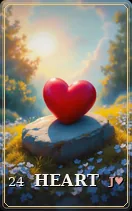 Heart — A steadfast, lasting love; feelings that stay.
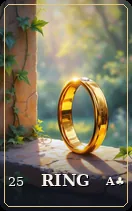 Ring — A commitment for life; a stable employment contract.
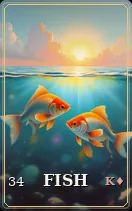 Fish — Steady income; a reliable, secure salary.
 Sun — Lasting success; a career that becomes established.
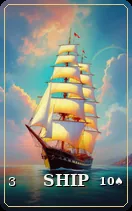 Ship — The end of a journey; arriving safely in port; work connected with the sea or with other countries.
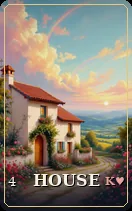 House — Settling in a home; a stable family.
 Clouds — Confusion that drags on; uncertainty that does not go away.
 Mountain — A persistent blockage; stagnation that calls for patience.
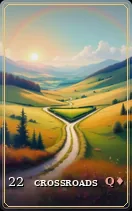 Crossroads — The choice to stay; or, with other cards of change, the need to weigh anchor.
 Bear — Solid assets; lasting financial security.
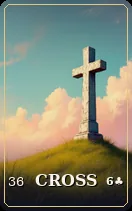 Cross — A burden that drags on; a long ordeal that calls for endurance.
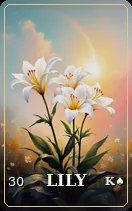 Lily — Serene stability; an established career, a peaceful retirement.
Frequently asked questions
What does the Anchor mean in the Lenormand?
Steadiness, stability and permanence: stable work, security, the goal reached. It is the card of staying.
Is the Anchor a yes or a no?
Yes — and a yes that lasts. Beside difficult cards, however, it fixes the difficulty too.
What does the Anchor mean in love?
A stable, secure and lasting relationship, with commitment. Beside heavy cards, it can speak of complacency or of a situation that is hard to leave.
Is the Anchor the work card?
Yes: by tradition, it is the card of stable work and of career. In a question about a job, it says that it is there to stay.
Which playing card corresponds to the Anchor?
The nine of spades, ever since the first deck of c. 1799. It is a reminder that what holds you steady can also hold you back.
No sign-up · Reading written on the spot · Free