
Three of Cups: meaning and symbolism of the tarot card
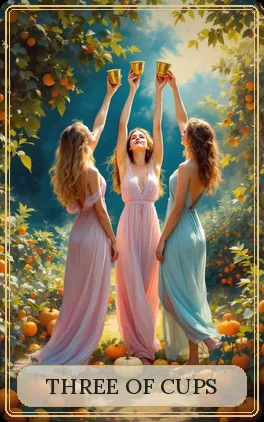
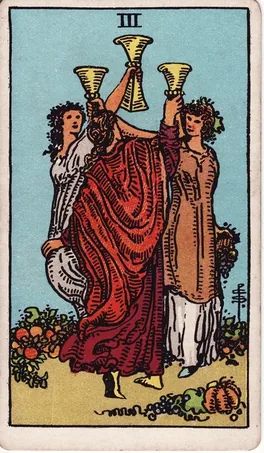
The Three of Cups is the card of celebration. Three young women, in long dresses and bare feet, raise their cups as high as they can, in an orchard heavy with fruit. They are not working or asking for anything: they are celebrating. It is one of the most light-hearted moments in the whole deck.
In a spread, the Three of Cups speaks of shared joy — of friendship, of reunions, of toasts, of a piece of good news celebrated with others. It is the card of a friend’s wedding, of the family dinner, of the team that won. After the meeting of two in the Two of Cups, affection widens to a group, and emotion comes to be lived in common.
The card at a glance
| Card | Three |
|---|---|
| Suit | Cups |
| Element | Water |
| Astrology | Mercury in Cancer (Golden Dawn) |
| Keywords | celebration, friendship, shared joy, harvest, party, community, gratitude |
| Reversed | excess, scattered joy, superficial company, gossip among friends, a party that wears you out |
| Yes or no | Yes — and with reason to celebrate |
The image on the card
In the Sol da Alma Tarot, three long-haired young women stand very close together in an orchard. The one on the left, seen from behind and in profile, wears a pink dress with a hint of lilac; the one in the middle, facing us, in a pale pink dress gathered at the waist, tilts her head back, eyes half closed, smiling; the one on the right, also seen from behind, wears a light turquoise dress and is barefoot. All three raise their arms fully and bring their golden cups together high above, almost touching, against a dark blue sky that opens into light on the right. All around, orange trees full of ripe oranges frame the scene, and on the ground there are orange pumpkins and a white pumpkin among the leaves.
In the 1909 Rider-Waite-Smith, the scene is essentially the same, and it was the starting point for the Sol da Alma painting: three women in a garden raise their cups as if in a toast, with fruit, bunches of grapes and a pumpkin at their feet. But there the figures form a tighter circle, they are dressed in white, red and orange, and two of them wear garlands of flowers or leaves in their hair; one holds a bunch of grapes. The Sol da Alma dresses them in pastel shades, stretches their arms right up high and swaps the plain background of the 1909 deck for an orchard of orange trees.
In the Marseille Tarot, the numbered cards have no scene: the Three of Cups shows only three cups set among leafy ornaments. The celebration of the three women is a creation of the Rider-Waite-Smith.
The symbolism, detail by detail
On this card nobody is alone, and nobody stands above anybody else. Every detail speaks of abundance that is shared.
- The three women
- Friendship, community, the group one chooses. Many readers are reminded of the three Graces of Greek mythology — joy, charm and abundance — although the card does not name them.
- The cups raised together
- The toast: the gesture of celebrating together. The cups meet up high, at the same point, as if joy were only complete when it is shared.
- The raised arms
- Giving oneself over to the moment, without reservation or calculation. In the Sol da Alma painting, the middle figure with her eyes half closed says the same thing: she is living the moment, not thinking about it.
- The laden orchard
- The harvest, plenty, the time when work bears fruit. The celebration of the Three of Cups is not for nothing: it celebrates something that has ripened.
- The pumpkins
- The fruits of the earth at the end of summer, simple abundance. They already appear in the Rider-Waite-Smith, and give the card the sense of a harvest festival.
- The bare feet
- Naturalness, being relaxed, feeling at ease among your own people.
- The circle
- The three figures turn towards one another. It is a group closed in on itself, self-sufficient — and that, in the reversed reading, can also become exclusion.
The history of the Three of Cups
The tarot was born in northern Italy in the fifteenth century as a card game, with the same four suits as Latin-suited cards — cups, swords, batons and coins. In the oldest decks, such as those painted for the Visconti and Sforza in Milan around 1450, and later in the Marseille decks, which settled into their form between the seventeenth and eighteenth centuries, the numbered cards showed only the suit symbols. The Three of Cups was an arrangement of three cups, and its meaning came from the suit and the number.
The scene of the three women was born with the Rider-Waite-Smith, drawn by Pamela Colman Smith under the direction of Arthur Edward Waite and published in 1909 — the first widely circulated deck with figures on all the Minors. Waite describes maidens in a garden, with cups raised as if pledging one another, and gives the card the meanings of abundance, of joy, of a matter that ends well, and also of solace and healing.
Waite followed the Hermetic Order of the Golden Dawn closely, which at the end of the nineteenth century had given each numbered card a planet in a sign and a title. The Three of Cups is Mercury in Cancer, with the title ‘Lord of Abundance’. This is the image most modern decks follow, the Sol da Alma included.
The Three of Cups upright: the meaning
Upright, the Three of Cups is the card of celebration. It announces a party, a get-together with friends, a wedding, a birthday, a reunion, a piece of good news that is shared. It says there are reasons to be happy and, above all, people to be happy with.
It is also the card of true friendship and of a support network: the people you can count on, the group in which you are accepted just as you are. In a difficult phase, it is a reminder that you are not alone; in a good phase, it says that success tastes better when it is celebrated with others.
There is also the idea of harvest in it. The Three is the first work of the suit — what is born of bringing two things together — and here that work is a wider bond, a community. The card often appears when a shared effort bears fruit: a finished project, a recovery, a goal reached as a team.
The Three of Cups reversed
Reversed, the Three of Cups does not become its own opposite: the party goes on, but without measure or without a centre. It can speak of excess — eating, drinking or spending too much — of a social life that tires you out instead of nourishing you, of a joy that serves to avoid thinking about what hurts.
It can also be scattered joy: plenty of people around and little real company, superficial friendships, a group where there is gossip, comparison or someone left out. In questions about love, the reversed card can point to the interference of others — friends who meddle, or a third person between two.
And it can simply indicate a celebration postponed: the reason to celebrate exists, but the time to enjoy it has not yet come.
The Three of Cups in love
In love, the Three of Cups is a cheerful, sociable card: romances that begin at parties or among friends, a relationship warmly welcomed by the family and the group, an engagement or a wedding celebrated. For someone who is single, it says the meeting is closer when you go out and socialise.
Reversed, it asks you to watch out for three things: the relationship that lives on fun alone and cannot cope with everyday life, the interference of friends or family, and the possibility of a third person. The neighbouring cards tell you which of the three it is.
The Three of Cups in work and money
In work, the Three of Cups speaks of a good atmosphere, of teamwork, of a completed project being celebrated, of a promotion toasted with colleagues. It favours events, hospitality, catering, everything that brings people together. It is also the card of the contact that comes out of socialising: the offer that turns up at a dinner, the colleague who becomes a friend, the opportunity that arrives through someone in the group.
With money, it points to a phase of some ease and of spending for pleasure — parties, dinners, presents. Reversed, it is a warning against excess: money that goes on nights out and social commitments, or business mixed with friendship without clear rules.
The Three of Cups in health and wellbeing
In questions about wellbeing, the Three of Cups speaks of the good that company does, of laughter, of the feeling of belonging to a group. It is a card of relief and of recovering your spirits. Reversed, it is a reminder of excess — too little rest, too much food and drink. The cards are no substitute for any kind of healthcare; the reading speaks of attitudes and tendencies, not of diagnoses.
The Three of Cups in spiritual life
On the inner path, the Three of Cups is a reminder that spiritual life is also lived in community: a prayer or meditation group, a circle of friends with whom you share the same questions, gratitude spoken aloud. It is the card of joy as a way of giving thanks, and of the idea that what is received multiplies when it is shared.
The Three of Cups as advice
As advice, the Three of Cups says: celebrate. Gather your people, arrange the get-together, give thanks for what went well, let yourself be happy without apologising for it. Look for support from your friends if you need it. And if the party has already gone on a long time, it also says: choose who you spend it with — good company is worth more than a lot of company.
The Three of Cups in the positions of a spread
- In the past
- A happy time among friends or with family, a memorable celebration; an important friendship.
- In the present
- A phase of socialising, support and shared joy; something to celebrate.
- In the future
- A party, a reunion, a wedding or a piece of good news that will be shared.
- As an obstacle
- Distraction, too much social life, or the influence of a group that leads away from what matters.
- As the outcome
- A happy ending, celebrated with others; a matter that ends well for everyone.
Numerology and correspondences
The Three is the first work: what is born of bringing two things together, and can already be seen from outside. In the suit of Cups — the suit of Water, of bonds and of feeling — that work is affection widening: after the meeting of two people in the Two, emotion opens up to a third and becomes sharing, group, celebration.
In the Golden Dawn tradition, the Three of Cups corresponds to Mercury in Cancer and bears the title ‘Lord of Abundance’. Mercury is the planet of communication and exchange; Cancer, a Water sign, is the sign of family, home and belonging. Together they give the card conversation around the table, good company, the warmth of being among your own people.
Combinations with other cards
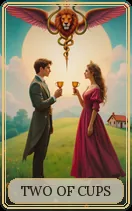 Two of Cups — A romance celebrated by friends; an engagement or a wedding.
 Ten of Cups — A family celebration, a happy gathering of everyone you love.
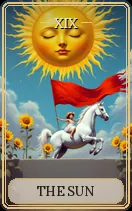 The Sun — An open, infectious joy; a success celebrated in style.
 Ten of Pentacles — A family celebration with plenty; an inheritance or a tradition that brings everyone together.
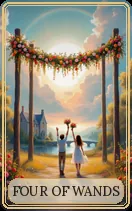 Four of Wands — A party at home, a housewarming, a celebration of a milestone reached.
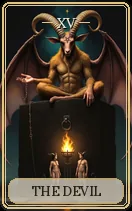 The Devil — Excess, parties that become a habit, company that ties you down more than it cheers you.
 Five of Swords — A falling-out between friends; gossip or rivalry within the group.
 Temperance — Joy in moderation; recovering your spirits through good company.
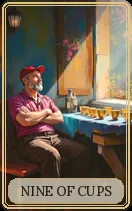 Nine of Cups — Complete satisfaction; a wish come true that is celebrated.
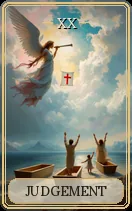 Judgement — A reunion with old friends; a celebration that brings together those who were far away.
Frequently asked questions
What does the Three of Cups mean in love?
A happy relationship, warmly welcomed by friends and family, or a meeting that comes out of socialising. It can announce an engagement or a wedding. Reversed, it asks you to watch out for interference from others.
Is the Three of Cups a yes or a no?
Yes, and with reason to celebrate. Reversed, it is still a yes, but with a warning not to overdo things or scatter your energy.
Can the Three of Cups indicate a third person?
It can, especially reversed and next to cards such as the Three of Swords or the Seven of Swords. Upright, it almost always speaks of friendship and celebration, not of betrayal.
Is the Three of Cups reversed bad?
It is not bad: it is the same party without measure. It speaks of excess, of superficial friendships or of a celebration postponed. It asks for discernment and moderation.
Who are the three women on the Three of Cups?
The card does not name them. Many readers associate them with the three Graces of Greek mythology, but the scene was created for the Rider-Waite-Smith in 1909 as an image of celebration and friendship.
No sign-up · Reading written on the spot · Free