
The Magician: meaning and symbolism of the tarot card
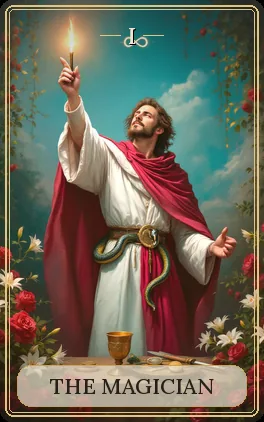
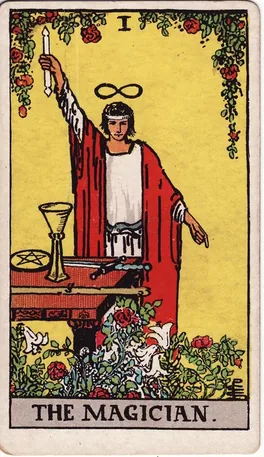
The Magician is the first numbered card of the Major Arcana, and it is the card of someone who has everything in front of them to begin. A man stands before a table, raising a wand towards the sky and pointing to the earth with his other hand. On the table lie the objects of the four suits — the cup, the sword, the coin, the wand — in other words, everything he needs. Only one thing is missing, and that is what the card brings: the decision to use what you have.
In a spread, The Magician speaks of initiative, talent, communication and beginnings with a sense of direction. Where The Fool sets out without knowing where he is going, The Magician knows what he wants and has the means to do it. It is one of the most favourable cards in the deck for anyone about to launch something — but it carries a question worth keeping in mind: what is the skill serving? The same man who creates can also deceive, and the cards beside it usually say which of the two is at play.
The card at a glance
| Number | I |
|---|---|
| Arcana | Major Arcana |
| Historical names | Il Bagatto (Italy); Le Bateleur (Marseille); The Magician (Rider-Waite-Smith) |
| Element | Air (through its link to Mercury, in the common reading) |
| Astrology | Mercury (Golden Dawn) |
| Hebrew letter | Beth (ב), according to the Golden Dawn |
| Keywords | directed will, the creative word, beginning, talent, initiative, communication, skill |
| Reversed | manipulation, scattered force, sleight of hand, empty promises, wasted talent |
| Yes or no | Yes — especially if the person is ready to act now |
The image on the card
In the Sol da Alma Tarot, The Magician is a man with a long brown beard and long brown hair, dressed in a white tunic and a crimson cloak falling from one shoulder. He raises his right arm high and holds between his fingers a small lit wand, with a bright flame at its tip; his left hand opens downwards, palm turned up, in the gesture of someone showing or offering. At his waist a green and gold serpent is coiled like a belt, fastened with a gold buckle. He looks up at the light he is holding. Beneath the number I, at the top of the card, the sign of infinity is drawn. In front of him stands a wooden table with a golden cup, gold coins, a dish holding more coins and a short sword or dagger. The sky is blue-green, with white clouds, and the whole scene is framed by red rose bushes and white lilies.
The Rider-Waite-Smith of 1909 shows the same composition, and it was the starting point for the Sol da Alma painting: the magician in a white tunic and red cloak, the wand raised in his right hand, his left hand pointing to the ground, the serpent biting its own tail at his waist, the table with the four suit symbols, the roses and the lilies. The differences lie in the details: in the RWS the sign of infinity floats above the magician’s head, and he wears a band in his hair and is clean-shaven; the background is yellow; and the wand is white, with no flame. The Sol da Alma placed the infinity sign beside the number, lit the wand and gave the figure an older face.
In the Tarot de Marseille the card is called Le Bateleur and the scene is a different one: a man in a broad-brimmed hat standing behind a three-legged table, with a wand in one hand and a small ball or coin in the other. On the table there are cups, dice or balls, a knife and a purse — the tools of someone performing tricks at fairs. There are no roses, no lilies and no infinity sign above his head, although many readers see the shape of a sideways eight in the brim of his hat.
The symbolism, detail by detail
The whole card turns around a single idea: what is above is joined to what is below through someone who decides to act. Each element adds a shade to that idea.
- The raised wand
- Will, clear intention, energy drawn from on high. In the Sol da Alma it is lit: the idea already has a light of its own and is asking to be used.
- The hand pointing down
- The link with the earth, with the concrete, with the world where things get done. The Magician does not stay among ideas: he brings them down to the ground. It is this double gesture — one arm up, the other down — that sums up the card.
- The table
- The field of work, whatever is available. Everything is in view and within reach; nothing is missing in order to begin.
- The four objects
- The cup (Cups, emotion), the sword (Swords, thought), the coins (Pentacles, matter) and the wand (Wands, energy). The Magician masters all four elements: he has feeling, a head, means and will.
- The sign of infinity
- Limitless potential, energy that circulates and renews itself. In the Rider-Waite-Smith it is above the magician’s head; in the Sol da Alma it sits beside the number I, like the card’s signature.
- The serpent at his waist
- In the RWS it is a serpent biting its tail, the ouroboros — the cycle, renewal, ancient wisdom. In the Sol da Alma it appears as a living belt: the knowledge the magician carries with him and keeps in hand.
- The white tunic and the red cloak
- Purity of intention underneath, passion and action on top. The white says where the strength comes from; the red says it is going to be spent in the world.
- The roses and the lilies
- Desire and purity, love and clarity. They are flowers the magician himself tends: the garden around him grows from what he does.
- The number I
- The first step, unity, a directed beginning. After The Fool’s zero, which is pure potential, one is potential that has chosen a form.
The history of The Magician
In the first tarot decks, painted in northern Italy in the fifteenth century, this card was called Il Bagatto, and no one saw it as a magician. He was a craftsman or a fairground conjuror, sitting or standing before a table covered in small objects. In the Visconti-Sforza deck, made for the court of Milan around 1450, he is a man in a wide hat with a table in front of him. In the game of tarocchi he was the lowest trump, the first in the sequence.
In the Tarot de Marseille, which took its settled form between the seventeenth and eighteenth centuries, the card is called Le Bateleur — the mountebank, the street performer who makes balls appear and vanish under cups. He is an ambiguous figure from the very beginning: he has nimble hands and a gift for patter, but he makes his living by fooling those who watch him. That double face — talent and deception — has stayed with the card to this day.
It was the occultists of the eighteenth and nineteenth centuries who turned the mountebank into a magician. Éliphas Lévi made him the image of human will and of the adept, and linked him to the first Hebrew letter. The Golden Dawn, at the end of the nineteenth century, gave him a different correspondence: the planet Mercury and the letter Beth. By the time Arthur Edward Waite and Pamela Colman Smith designed their deck in 1909, Le Bateleur had become The Magician: the fairground table had turned into an altar, the cups and balls had given way to the four suit symbols, and the wand pointed to the sky.
Most modern decks, the Sol da Alma included, start from that model. But the shadow of the mountebank has remained, and it is this shadow that reappears when the card comes up reversed.
The Magician upright: the meaning
Upright, The Magician is the card of the directed beginning. It says that the person has the means, the talent and the opportunity in front of them, and that the time has come to put them to work. It is an idea being put into practice, a project getting off the ground, a decision turning into a deed. Where there is hesitation, The Magician says there is no longer any reason to wait.
It is also the card of the word that makes things happen: the ability to persuade, to explain, to negotiate, to set things in motion through speech alone. That is why it so often appears in questions about interviews, presentations, sales, contracts and anything that depends on knowing how to communicate. It has the quickness of Mercury: it thinks fast, speaks well and finds solutions where others see problems.
Finally, The Magician is a reminder that the person has more resources than they think. The four objects are on the table; you only have to look at them. The card does not promise luck: it promises that, given will and focus, the tools will be enough. The result depends on the use they are put to.
The Magician reversed
Reversed, The Magician does not lose his talent: he loses his direction. The same skill that creates is left without a destination, or is used for ends that cannot bear the light of day. It can speak of manipulation — someone who says what others want to hear in order to get what they want — of promises that are not kept, of a well-rehearsed pitch that hides little substance. It is the return of the fairground mountebank.
But the reversed card often speaks of the person themselves rather than someone else. It can point to energy spread across too many fronts, a talent left unused out of insecurity, a plan that never leaves the drawing board. The will is there, but it is held back, or it is spent on tricks instead of real work. In these cases the advice is the same as for the upright card, only more urgent: choose one thing, focus on it and do it properly.
The Magician in love
In love, The Magician is the card of initiative and seduction. For those who are single, it says it is time to make the first move instead of waiting — to speak, to invite, to show yourself. It can herald someone charismatic, intelligent and good at conversation, who attracts through the way they carry themselves. In a relationship, it speaks of an active phase, of shared projects, of good communication that resolves whatever had stalled.
Reversed, it asks you to be wary of fine words. It can describe someone who seduces easily but commits little, a relationship with power games, or promises made to please rather than to be kept. It can also speak of the person themselves, hiding behind an image instead of showing themselves as they are.
The Magician in work and money
At work, The Magician is one of the best cards you can draw. It favours launching projects, starting your own business, applications, interviews, presentations and every profession that lives on skill, communication or ingenuity: commerce, teaching, technical work, the arts, writing. It says the person is competent and should show it. In a question about a career decision, it points towards acting, and acting methodically.
With money, it speaks of initiative: the money comes from what you do, not from luck. It is a good card for negotiating, selling or creating a new source of income. Reversed, it warns against schemes, murky dealings, promises of easy gains and contracts that need careful reading before they are signed.
The Magician in health and wellbeing
In questions about wellbeing, The Magician speaks of energy available and the will to take matters in hand: starting a routine, changing a habit, looking after yourself methodically. Reversed, it points to scattered energy, the tiredness of someone doing too many things at once, or the temptation to look for miracle solutions. The cards are no substitute for any kind of healthcare: the reading speaks of attitude, not diagnosis.
The Magician in spiritual life
On the inner path, The Magician is the awareness that the person takes part in their own life — they are not simply carried along by events. It is the card of intention, concentration and practice: of meditation done regularly, of study taken seriously, of attention paid to what one thinks and says. The gesture of the raised arm and the hand pointing to the earth is the image of someone who connects what they feel most deeply with everyday life. Reversed, it can speak of the temptation to use knowledge to impress others rather than to live it.
The Magician as advice
As advice, The Magician says: use what you have. Do not wait for ideal conditions, or for more training, or for more means — what is on the table is enough to begin. Focus on one goal, speak clearly and act with intention. And be honest in how you do it: the strength of this card comes from word and deed saying the same thing.
The Magician in the positions of a spread
- In the past
- An initiative that set the situation in motion, or a talent the person discovered and that still defines them today.
- In the present
- The moment to act: the person has the means and the opportunity, and the question is whether they will use them.
- In the future
- A beginning with direction — a project, an offer, a chance to show what you are capable of.
- As the obstacle
- Scattered energy, a lack of focus, or someone manipulating the situation with well-chosen words.
- As the outcome
- Mastery of the situation: what you want begins to take shape because someone decided to make it happen.
Numerology and correspondences
One is the seed: the whole of the strength, not yet spent, offered like an outstretched hand. After The Fool’s zero, which is potential without form, one is the first dot on the page — unity, affirmation, the ‘I’ that decides. That is why The Magician stands alone before the table: he is individual will, before there is any pair, relationship or finished work.
In the Golden Dawn tradition, The Magician corresponds to the planet Mercury — messenger of the gods, lord of the word, of trade, of dexterity and quick intelligence — and to the Hebrew letter Beth, whose name means ‘house’. A house is the place where something settles and takes shape: just like The Magician, who gives a place and a body to what was once only intention.
Combinations with other cards
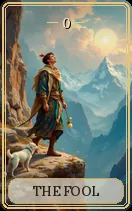 The Fool — A new idea that gains means and direction: the leap is no longer a blind one.
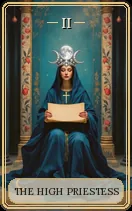 The High Priestess — Action and silence: knowing when to speak and when to keep quiet; talent that needs to listen before it acts.
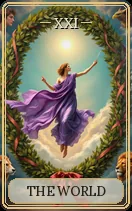 The World — A project seen through to the end, a skill recognised, a complete success.
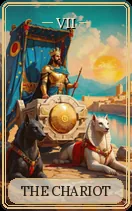 The Chariot — Will and determination together: a victory won through your own effort.
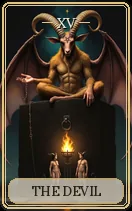 The Devil — Manipulation, self-serving seduction, talent put to the service of control; it is wise to be wary.
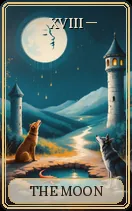 The Moon — Illusion and deceit: words that do not match the facts, or an idea that is not yet clear.
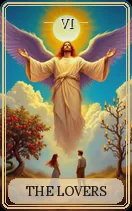 The Lovers — A seduction that bears fruit, or a romantic choice made with initiative.
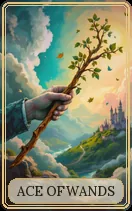 Ace of Wands — A start full of energy: the beginning of a project with a great deal of fire.
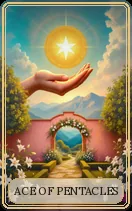 Ace of Pentacles — A concrete opportunity to earn money from your own talent.
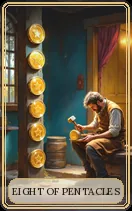 Eight of Pentacles — Technical skill, learning a trade, work well done.
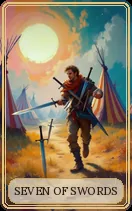 Seven of Swords — Too much cleverness: strategy, half-truths, someone playing with their cards hidden.
Frequently asked questions
What does The Magician mean in tarot?
Initiative, talent and directed will: the moment when a person has the means to begin and decides to use them. It is a card of beginnings with direction and of good communication.
Is The Magician a yes or a no?
It is a yes, especially when the question depends on the initiative of the person asking. It says the conditions are there; what remains is to act.
What does The Magician mean in love?
Initiative and seduction: making the first move, a charismatic person, a relationship with good communication. Reversed, it calls for caution with promises and power games.
Is The Magician reversed bad?
It is not a card of misfortune. Reversed, The Magician speaks of the same talent without direction: scattered energy, insecurity, or someone using their skill to manipulate. It is a warning to gather your strength and to check other people’s words.
What is the difference between The Fool and The Magician?
The Fool sets out without knowing where he is going; The Magician knows what he wants and has the means in front of him. The first is pure potential, the second is potential that has already chosen a form.
Why was The Magician called Le Bateleur?
In the old decks, the card showed a fairground mountebank with a table of tricks. Only with the occultists of the eighteenth and nineteenth centuries did it come to be read as the image of the magician and of human will.
No sign-up · Reading written on the spot · Free