The Whip: meaning of Lenormand card 11
The Whip is the card of what repeats itself and takes its toll. A bundle of rods, a leather whip: objects made for striking, not once but many times, always in the same place. In a reading, the Whip speaks of arguments that come back, tensions that are never resolved, criticism, pressure and effort — of everything that wears you down through sheer repetition.
But a repeated gesture is not only for hurting. It is also the gesture of training, of rehearsal, of manual work done a thousand times until it comes out right. That is why the Whip has two sides: the friction that tires and the persistence that builds. The neighbouring cards say which of the two is at play — and often it is both.
The card at a glance
| Number | 11 |
|---|---|
| Playing card | Jack of Clubs (J♣) |
| Lenormand names | Die Rute (German); The Whip (English) |
| Type | Circumstance — friction, repetition |
| Keywords | repetition, friction, argument, conflict, criticism, effort, training, sport, physical passion |
| Timing | Repeated: what comes back — today, tomorrow and again |
| Yes or no | Not at the first attempt — only with persistence and effort |
The image on the card
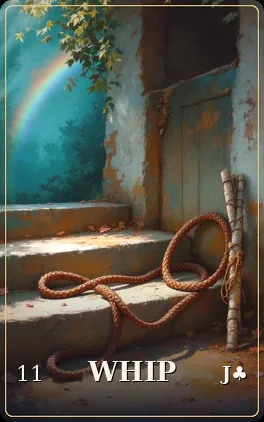
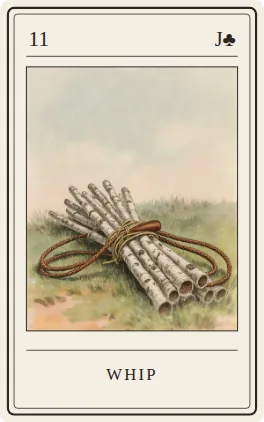
In the Sol da Alma Lenormand, a long whip of reddish-brown plaited leather lies dropped in coils and loops on the worn steps of a stone staircase. Leaning against the wall beside it is a bundle of white-barked birch rods, tied with string. The wall’s plaster is crumbling, and there is an old, closed door of bluish wood; dry leaves lie on the steps. On the left, through an opening, you can see a wood in shades of blue and green with a rainbow, and branches of yellow leaves hang down from above. It is a still scene: the implements are simply lying there, and no one is using them. In the corner, the number 11 and the jack of clubs.
In the Engraved Lenormand, the same two objects are joined in a single piece: a bundle of birch rods, white and flecked with dark marks, tied in the middle with string, with a leather handle on top and the plaited cord of a whip wound around it. It lies on the grass of a field under a clear sky. Both images bring together the rod and the whip — the two forms the card takes in the decks — but the Sol da Alma separates them and places them at the door of a house, a reminder that the friction the card speaks of is often domestic.
The symbolism, detail by detail
- The bundle of rods
- The rod of punishment and, at the same time, the broom and the bundle of firewood: objects of work and of discipline. This is the part of the card that speaks of correction, rules and effort.
- The leather whip
- The repeated blow, the crack, the pressure to go faster. It is also a tool for driving — animals are guided with it — and so the card speaks of control and pressure.
- The plaiting
- Strips twisted around one another, turn after turn: the exact image of repetition and of matters that become entangled.
- The steps and the closed door
- In the Sol da Alma, the whip lies at the entrance to an old house. It suggests tensions behind closed doors — in the family, between people who live together — and arguments left on the doorstep, never resolved.
- The implements laid down
- Neither image shows anyone striking. The Whip is a possibility, a tension in the air: what happens with it depends on who picks it up.
- The jack of clubs
- A jack — youth, energy, impulse — from the suit of clubs, the suit of fire and action. It gives the Whip its physical charge: movement, sport, drive, and a temper that flares up quickly.
The history of the Whip
The Whip was already card 11 in ‘Das Spiel der Hoffnung’, the Game of Hope published by Johann Kaspar Hechtel in Nuremberg around 1799, with the jack of clubs in the corner. It was a board game of thirty-six cards, played with dice, and the miniature playing cards meant it could also be used to tell fortunes.
The German name, ‘Die Rute’, means the rod — the bundle of birch rods used for punishment, which at the time of the first deck was a common instrument of discipline, at school and at home. In many decks the rod and the whip appear together or take turns, and in Portuguese the card came to be known above all as ‘Chicote’ — the Whip.
After the death of Marie Anne Lenormand in 1843, the deck began to be sold under her name, although there is no evidence that the fortune-teller ever used it. In Portugal and Brazil it is the ‘Baralho Cigano’ (‘Gypsy deck’), a popular name with no historical Romani origin.
The meaning of the Whip
The Whip is the card of small, repeated conflict: the argument that always comes back to the same subject, the needling, the constant criticism, the tension that settles between two people. It is not the great confrontation — it is the wearing down. It can also speak of pressure, of demands, of someone who asks too much, of excessive self-criticism.
The second meaning is that of effort and repetition: physical work, sport, training, daily practice, the task repeated until it is mastered. Here the Whip is a card of persistence — the persistence of someone who comes back to the same gesture every day until it comes out right.
There is also a third meaning, common among many readers: physical energy and passion, intense desire, an attraction that has something of a struggle about it. In every case, the Whip is a card of energy being spent. It is neither good nor bad by nature; it is hot, and it asks you to know where that heat is being directed.
The Whip in love
In love, the Whip warns of arguments, jealousy, criticism and tensions that keep repeating themselves — the on-and-off relationship, always coming back to the same quarrel. It asks you to look at the pattern, and not just at the latest argument: what is it that keeps coming back?
It is also a card of chemistry and physical passion: a strong, intense attraction that can be very lively. Next to the Heart, it is passion with fire — sometimes too much; next to the Dog or the Anchor, it is the normal friction of people who live together; next to the Fox or the Snake, it is a relationship with power games that are best not fed.
The Whip in work and money
At work, the Whip is a tense atmosphere: colleagues in conflict, managers who put on pressure, criticism, recurring deadlines, meetings that go over the same ground without moving forward. It is also the card of hard, repetitive work, and of professions connected with the body and effort — sport, training, manual work. On the positive side, it speaks of discipline and of practice that pays off.
In money matters, it points to hard work to earn, difficult negotiations, arguments about money, or expenses that come back every month. With the Fish, money earned through effort; with the Mice, a recurring drain that wears you out.
The Whip in health and wellbeing
In questions about wellbeing, the Whip speaks of physical exercise, training and effort, and also of the tiredness that comes from repetition and accumulated tension. It asks for a balance between effort and rest. As always in the Lenormand, the reading shows tendencies and attitudes, and it does not replace any medical consultation or care.
The Whip as a person
As a person, the Whip is someone energetic, competitive, critical and short on patience — who argues, who makes demands of others and of themselves. It may be a sportsperson, a coach, someone who works with their body. Because of the jack of clubs, some read it as a young, impetuous person. Its difficult side is verbal aggression; its good side is grit.
The Whip as advice
As advice, the Whip says two things. The first: stop repeating the same argument — if it keeps coming back, it is because it is not being resolved in the right way. The second: persist — whatever you want to master, you train for, every day. The card asks you to put your energy into the effort that builds, not into the friction that wears you down.
The timing of the Whip
The Whip does not speak of a date, but of a repetition: what it announces happens more than once, in cycles, with comings and goings. In a question about timing, it says the matter will not be settled at the first attempt and will call for persistence.
In the Grand Tableau: house 11
In the Grand Tableau — the thirty-six cards laid out in rows — the eleventh position is the house of the Whip. The card that falls there shows where the friction, repetition or effort lies in the life of the person asking. And the Whip itself, wherever it falls, brings tension and energy to the theme of that house: in the house of the Heart, lovers’ quarrels; in that of the Fox, pressure at work.
Combinations with other cards
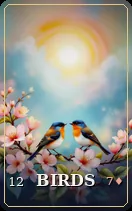 Birds — Arguments, heated conversations, repeated words that hurt.
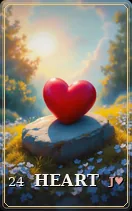 Heart — Intense, physical passion; or a relationship with constant quarrels.
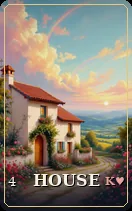 House — Tensions at home, family arguments that keep recurring.
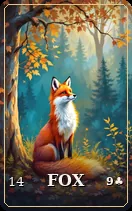 Fox — Pressure at work, conflict with colleagues; or hard, repetitive work.
 Bear — A demanding or authoritarian boss; conflict with someone more powerful.
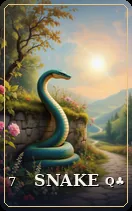 Snake — A complicated tension, power games, jealousy.
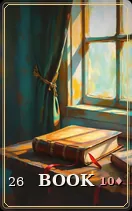 Book — Repeated study, training, disciplined practice until the subject is mastered.
 Dog — Disagreements between friends; or training with a partner.
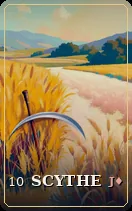 Scythe — An argument that ends in a break; decisions taken in the heat of the moment.
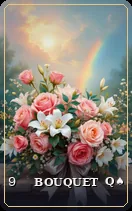 Bouquet — A reconciliation after a quarrel; conflict softened by a gesture.
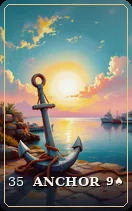 Anchor — A routine of effort that brings stability; or a tension that has settled in to stay.
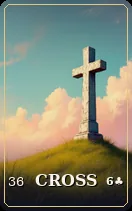 Cross — Wear and tear that weighs heavily; a costly effort that is worth easing.
Frequently asked questions
What does the Whip mean in the Lenormand?
Repetition, friction and effort: arguments that come back, tensions, criticism — and also training, sport and persistence. The neighbouring cards say which side prevails.
Is the Whip a bad card?
It is neither good nor bad: it is a card of energy. It warns of conflict and of wearing down, but it also speaks of discipline, of effort that bears fruit, and of passion.
What does the Whip mean in love?
Arguments and jealousy that keep repeating themselves, or a strong, physical passion. It asks you to pay attention to the patterns in the relationship rather than to each separate quarrel.
Is the Whip a yes or a no?
It leans towards no at the first attempt. It can only be achieved with persistence, effort and several tries.
Why does the Whip sometimes appear as a bundle of rods?
Because the card’s German name, ‘Die Rute’, means the rod. Many decks draw the rods, others the whip, and some — like the Sol da Alma Lenormand and the Engraved Lenormand — both together.
No sign-up · Reading written on the spot · Free