
The Moon: meaning of Lenormand card 32
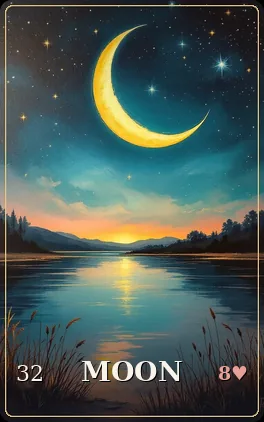
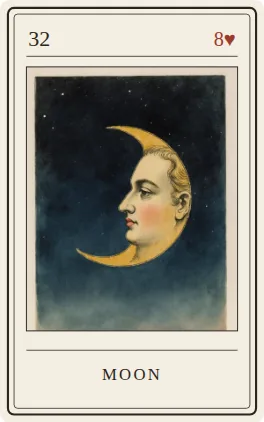
The Moon is card 32 of the Lenormand and, like the heavenly body it depicts, it has two faces. The face turned outwards is that of recognition: honour, fame, a good reputation, the esteem others feel for someone who has done something well. The face turned inwards is that of sensitivity: emotions, imagination, intuition, what is felt at night, when the noise of the day falls silent.
In the Lenormand, the Moon does not have the unsettling side it has in the Tarot. It is not the card of deception or fear; it is, first and foremost, a favourable card, linked to the esteem of others and to the life of the feelings. If the Sun is the achievement, the Moon is what others feel because of it. And because moonlight is reflected light, the card is also a reminder that recognition depends on how others see you — and that, for that reason, it can wax and wane.
The card at a glance
| Number | 32 |
|---|---|
| Playing card | Eight of Hearts (8♥) |
| Lenormand names | Der Mond (German); The Moon (English); La Lune (French) |
| Type | State — recognition, feeling |
| Keywords | recognition, honour, fame, reputation, sensitivity, emotions, imagination, creativity, intuition |
| Timing | At night; the cycle of a month |
| Yes or no | Leans towards yes, especially in matters of recognition and feeling |
The picture on the card
In the Sol da Alma Lenormand, the Moon is a golden crescent, large and slender, hanging in a deep teal night sky full of stars, some brighter than others, shaped like crosses of light. Down below, the horizon still holds the last orange of the sunset, between bluish mountains and the dark silhouettes of pines and other trees on either side. A wide, calm lake reflects that light like a golden road; in the foreground, the silhouettes of reeds and bulrush heads rise from the bank. The Moon has no face. In the corner, the number 32 and the eight of hearts.
In the Engraved Lenormand, true to the old images, the Moon has a face: a yellow crescent with a human profile drawn along its inner curve — high forehead, fair hair, straight nose, red lips and a rosy cheek — facing left, serene and thoughtful. The background is a dark blue sky, almost black, sprinkled with small stars, which grows lighter towards the bottom as if with mist. This is the classic Lenormand image: the personified moon, in profile, as in the almanacs and prints of other times.
The two images complete each other. The Engraved one gives the Moon a personality — someone who watches and feels; the Sol da Alma one shows what the Moon does: it lights up the night and traces on the water a path that can only be seen by night.
The symbolism, detail by detail
- The crescent
- What is growing: a reputation on the rise, recognition arriving. It is also the cycle — what waxes one day wanes on another.
- The reflected light
- The Moon does not shine by itself: it gives back the light of the Sun. It is the exact image of recognition, which is the reflection of what you have done in the eyes of others.
- The face in profile
- In the Engraved Lenormand, inwardness, reflection, feeling. The Moon looks to the side, not straight ahead like the Sun: it is the card of what is felt rather than what is shown.
- The starry sky
- Night, dreams, imagination. It is the time of rest, of intimacy and of the ideas that are born when you are alone.
- The lake and its reflection
- In the Sol da Alma painting, the emotions, which are water, and intuition, which gives back the light. The golden path on the water is what can only be perceived through sensitivity.
- The last of the sunset
- Also in the Sol da Alma painting: the passage from day to night, from the achievement to its echo, from the Sun to the Moon.
- The eight of hearts
- Hearts are, in fortune-telling with ordinary playing cards, the suit of the feelings. It gives the Moon its emotional, affectionate tone, alongside its sense of honour.
The history of the Moon
The Moon was already card 32 of ‘Das Spiel der Hoffnung’, the Game of Hope published by Johann Kaspar Hechtel in Nuremberg around 1799, with the eight of hearts in the corner. It was a board game of thirty-six cards, played with dice, and the miniature playing cards meant it could also be used to tell fortunes.
After the death in 1843 of Marie Anne Lenormand — the most famous fortune-teller in Paris — publishers began selling the deck under her name, though there is no evidence that she ever used it. In Portugal and Brazil it became known as the ‘Baralho Cigano’, the Gypsy Deck, a popular name that does not reflect any historical Romani origin.
In the traditional Lenormand readings, the Moon is above all the card of honour and recognition. The meaning of emotions, intuition and creativity gained weight over time, and today the two readings sit side by side. It should not be confused with The Moon of the Tarot, card XVIII, which speaks of illusions and fears: they are different traditions, and in the Lenormand the Moon is a favourable card.
The meaning of the Moon
The Moon is the card of recognition. It says that the work, talent or dedication of the person asking will be seen and appreciated. It speaks of reputation, honour, prestige and popularity — of being noticed for the right reasons. In a spread about public or professional life, it is an excellent sign.
It is also the card of sensitivity. It speaks of the emotions, the inner world, imagination and intuition; of the arts, creativity and dreams. In a more intimate reading, it says that the matter will be decided on the level of feeling, and that it is wise to listen to what the heart and your hunches are saying.
The Moon’s difficult side comes from its very nature. Recognition depends on others, and what depends on others fluctuates. Sensitivity, in excess, becomes touchiness, ups and downs of mood, a certain melancholy. Beside heavy cards, the Moon can speak of a reputation called into question, of raw emotions or of a phase of discouragement. Even then, the tone is that of a cycle: what wanes will wax again.
The Moon in love
In love, the Moon is a card of deep feelings, romance and tenderness. It speaks of a relationship lived with emotion, of intimacy, of shared nights, of a bond that is felt more than explained. For those who are single, it may announce a strong attraction, or say that the person is going through a phase of great emotional openness.
It is also the card of admiration: being seen and valued by the other person. Beside the Heart, it is passionate, requited love; beside the Clouds, confused emotions and changeable moods; beside the Fox, sensitivity taken advantage of by someone less sincere. Above all, it asks you to say what you feel.
The Moon at work and with money
At work, the Moon is the card of recognition par excellence: praise, an award, a promotion, a good reputation that opens doors. It favours creative professions and those that deal with the public — the arts, communication, image, care, teaching — and all those in which your name counts.
With money, it ties income to merit: recognition that turns into payment, creative work that begins to pay off. With the Fish, it is talent that brings in money; with the Sun, success and fame at the same time.
The Moon in health and wellbeing
In questions about wellbeing, the Moon speaks of emotional balance, of sleep, of the body’s cycles and of the importance of resting and looking after your feelings. As always in the Lenormand, the reading shows tendencies and attitudes, and does not replace any consultation or any form of health care.
The Moon as a person
The Moon is not one of the deck’s person cards, but when it describes someone, it describes a sensitive, intuitive, imaginative person, often with artistic talent — or someone well known and respected, whose reputation goes before them. This is a person who feels deeply, who needs to be recognised, and who may be prone to changes of mood.
The Moon as advice
As advice, the Moon says: trust what you feel. Pay attention to your intuition, leave room for imagination, show your talent so that it can be seen. And remember that recognition comes and goes — what remains is work well done and being at peace with your own feelings.
The Moon and timing
The Moon speaks of night and of cycles. Many readers associate it with a period of a month, the length of a lunar cycle, or with events that take place at the end of the day. Beside fast cards, recognition arrives quickly; beside slow cards, it grows little by little, phase by phase.
In the Grand Tableau: house 32
In the Grand Tableau — the spread in which all thirty-six cards are laid out in four rows — the thirty-second position is the house of the Moon. The card that falls there tells how the person is seen by others, or what fills their emotional world. And the Moon itself, wherever it falls, brings recognition, and emotion too, to the theme of that house.
Combinations with other cards
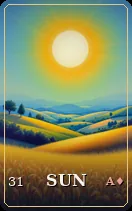 Sun — Success and recognition together: fame, honour, merit in full view of everyone.
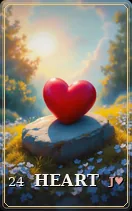 Heart — Deep, romantic love; intense feelings that are returned.
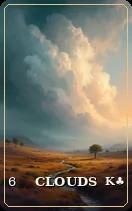 Clouds — Confused emotions, changeable moods; a reputation cast into doubt.
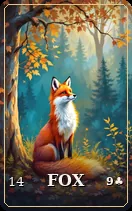 Fox — Sensitivity exploited by someone; beware of flattery.
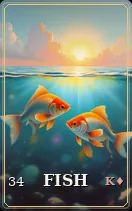 Fish — Talent that brings in money; recognition that pays.
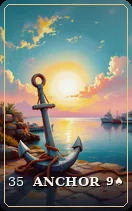 Anchor — A solid reputation at work; a stable, well-regarded career.
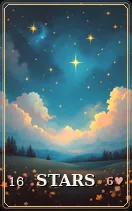 Stars — Great renown; talent and inspiration; a dream come true.
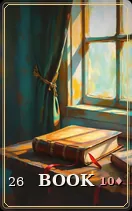 Book — Recognition in studies or in writing; a secret kept with emotion.
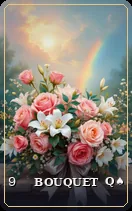 Bouquet — A tribute, a compliment, an honour bestowed.
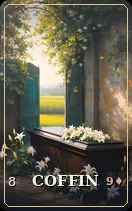 Coffin — Melancholy, discouragement; a phase of recognition coming to an end.
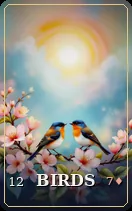 Birds — People talking about someone; a reputation that passes from mouth to mouth.
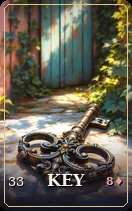 Key — Recognition assured; intuition that hits the mark.
Frequently asked questions
What does the Moon mean in the Lenormand?
Recognition, honour and reputation — and also sensitivity, emotions, imagination and intuition. It is a favourable card, unlike The Moon of the Tarot.
What does the Moon mean in love?
Deep feelings, romance and intimacy; being admired and valued by the other person. Beside difficult cards, it can speak of unstable emotions.
Is the Moon a yes or a no?
It leans towards yes, especially in questions about recognition, creative work or feelings. It is a yes that may take its own cycle to arrive.
Is the Lenormand Moon the same as the Tarot’s?
No. In the Tarot, The Moon speaks of illusions and fears; in the Lenormand, it is the card of honour, recognition and emotional life, and it is favourable.
Which playing card corresponds to the Moon?
The eight of hearts, ever since the first deck of c. 1799. The suit of hearts links it to the feelings.
No sign-up · Reading written on the spot · Free