
The Key: meaning of Lenormand card 33
The Key is card 33 of the Lenormand and the surest answer the deck can give. A key is for one thing: opening. In a spread, it opens what was closed — a door, a path, an answer — and confirms what was in doubt. It is the card of solutions and of certainty.
The Key carries a strength all its own in the Lenormand: it is the card that says ‘this will happen’. Beside a good card, it guarantees it; beside a difficult card, it shows the way out. And it also points to what matters: the card next to the Key is usually the key to the reading, the point on which everything depends.
The card at a glance
| Number | 33 |
|---|---|
| Playing card | Eight of Diamonds (8♦) |
| Lenormand names | Der Schlüssel (German); The Key (English); La Clé (French) |
| Type | Event — solution, confirmation |
| Keywords | solution, certainty, opening, confirmation, access, discovery, what matters, destiny |
| Timing | The right moment: what the Key announces is settled and will not be delayed |
| Yes or no | Yes — for certain |
The picture on the card
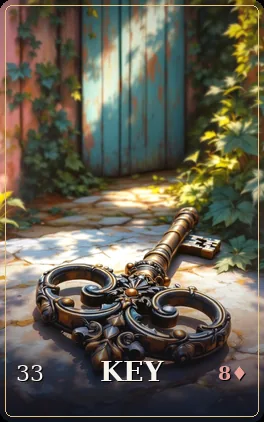
In the Sol da Alma Lenormand, the Key is a large antique key of darkened bronze, lying on the stone flags of a courtyard. The bow is richly worked, with two broad rings and scrolls, leaves and small spheres in relief; the shank is thick and ringed, and the bit has rectangular notches. Sunlight filters through the leaves and dapples the ground. In the background, closed, is an old gate of turquoise-blue wooden planks, its paint worn, set in a pink wall covered with ivy; on the right, a green and yellow climbing plant. In the corner, the number 33 and the eight of diamonds.
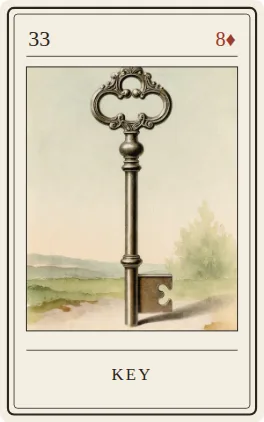
In the Engraved Lenormand, the Key stands upright, alone and straight, in the centre of the card: a grey iron key with a three-lobed bow decorated with scrolls, a long ringed shank and a notched bit at the bottom that almost touches the ground. Behind it is a simple landscape of green fields, hills in the distance and a shrub on the right, under a pale sky. This is the classic Lenormand image: the key as an object, large and in plain view.
The Sol da Alma painting adds something the engraving does not have: the door. The key lies on the ground, the door is closed, and between the two all that is missing is the gesture of picking it up. That is exactly what the card says — the solution exists, it is right there, within reach.
The symbolism, detail by detail
- The key
- The solution, access, the answer. Where there is a lock, there is a key: the card says that the problem has a way out.
- The ornate bow
- What is valuable and important. A key like this does not open just any door: it opens the one that counts.
- The notched bit
- Precision: each key opens one lock. The Key’s solution is not a general one; it is the right one for that particular case.
- The upright key
- In the Engraved Lenormand, firmness and certainty. The Key does not hesitate; it stands straight, ready to be used.
- The closed gate
- In the Sol da Alma painting, what is still to be opened — an opportunity, an answer, a new phase. The door is closed, but not locked for ever.
- The light on the ground
- Also in the Sol da Alma painting: clarity arriving. The solution is in plain sight for anyone who looks.
- The eight of diamonds
- Diamonds, in fortune-telling with ordinary playing cards, speak of material life and of what is concrete. It gives the Key a practical tone: it solves real things.
The history of the Key
The Key was already card 33 of ‘Das Spiel der Hoffnung’, the Game of Hope published by Johann Kaspar Hechtel in Nuremberg around 1799, with the eight of diamonds in the corner. It was a board game of thirty-six cards, played with dice, and the miniature playing cards meant it could also be used to tell fortunes.
After the death in 1843 of Marie Anne Lenormand — the most famous fortune-teller in Paris — publishers began selling the deck under her name, though there is no evidence that she ever used it. In Portugal and Brazil it became known as the ‘Baralho Cigano’, the Gypsy Deck, a popular name that does not reflect any historical Romani origin.
The key is one of the oldest and clearest symbols in Europe: the power to open and to close, access, the trust shown to someone who is given the key to a house. In the Lenormand its meaning settled on the simplest and most useful sense — solution and certainty — and the Key became, together with the Sun, one of the two most affirmative cards in the deck.
The meaning of the Key
The Key is the card of solutions. It says that a problem has a way out, that an answer will appear, that a door is going to open. It is the discovery that unlocks everything, the right idea at the right moment, access to an opportunity that had been closed. In a spread full of obstacles, it is the card that shows the way through.
It is also the card of certainty and confirmation. Whatever the Key touches comes to pass: it is the deck’s ‘yes’, the guarantee that a matter is settled. Many readers see it as a card of destiny, in the sense of something that was meant to be. And it points to what matters — the card beside the Key often tells you what the central point of the reading is, the matter on which everything else depends.
The Key can also lock. Beside cards of endings or of blockage, such as the Coffin or the Tower, it can speak of a door that closes for good, of a matter definitely concluded. But even then it brings clarity: you know where you stand, and that in itself is a kind of solution.
The Key in love
In love, the Key is a card of certainty: the feelings are genuine, the relationship has a future, the answer you are hoping for is positive. For those who are single, it announces an important person, or a door opening in their love life. For a couple, it speaks of a problem solved, of a conversation that clears the air, of a phase in which everything falls into place.
Beside the Heart, it is the right love; beside the Ring, a commitment confirmed; beside the Cross, a relationship that is meant to be, with its trials. If there are doubts about what the other person feels, the Key says that the answer exists — and that it is a good one.
The Key at work and with money
At work, the Key opens doors: a job, a project approved, a technical solution, an opportunity that is confirmed. It favours anyone waiting for an answer — and says that it will come, and that it will be yes. It can also point to a position of trust, someone who is handed the keys to a place or a matter.
With money, it speaks of a financial solution, of a money problem that is sorted out, of access to credit or resources. With the Fish, it is the right business; with the Bear, financial security; with the Mice, the way to stop a loss.
The Key in health and wellbeing
In questions about wellbeing, the Key speaks of finding what works — the right habit, rhythm or support — and of breaking out of a deadlock. As always in the Lenormand, the reading shows tendencies and attitudes, and does not replace any consultation or any form of health care.
The Key as a person
The Key is not one of the deck’s person cards, but when it describes someone, it describes a person who is important in the life of the one asking — someone who holds the solution, who opens doors, who is the missing piece. It may be a go-between, a decisive contact, or someone trustworthy with clear ideas.
The Key as advice
As advice, the Key says: the answer is within your reach. Do not wait for the door to open by itself; use what you have, ask the question, take the step. Trust your ability to solve things — and keep an eye on what really matters, because that is where the solution lies.
The Key and timing
The Key is not, in itself, a fast card or a slow one: it is the card of the right moment. What it announces is settled and happens when it has to happen, without getting lost along the way. Beside fast cards such as the Rider, the solution arrives quickly; beside slow cards such as the Mountain, it arrives for certain, but takes longer.
In the Grand Tableau: house 33
In the Grand Tableau — the spread in which all thirty-six cards are laid out in four rows — the thirty-third position is the house of the Key. The card that falls there tells what the solution is, or what is most important and assured in the life of the person asking. And the Key itself, wherever it falls, confirms and opens up the theme of that house.
Combinations with other cards
 Heart — The right love; feelings confirmed.
 Ring — A commitment or a contract that is guaranteed.
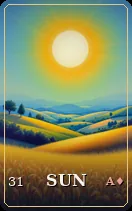 Sun — Certain success; a solution that works out very well.
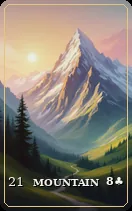 Mountain — An obstacle overcome; the way through a blockage.
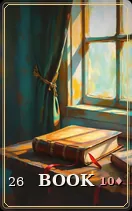 Book — A secret revealed; the answer that was hidden; success in studies.
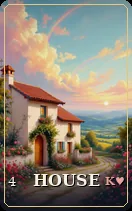 House — A new home, the keys to the house; a solution within the family.
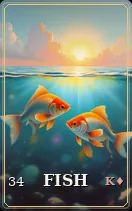 Fish — The right business; the solution to a money problem.
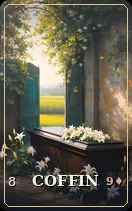 Coffin — A door that closes for good; a clear, definite ending.
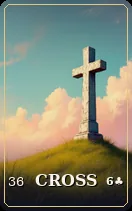 Cross — Destiny; a trial that has to be lived through, but that has meaning.
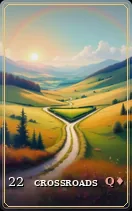 Crossroads — The right choice; the path that opens up.
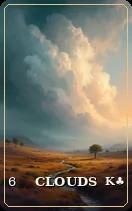 Clouds — Confusion that clears; the solution after doubt.
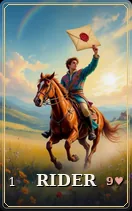 Rider — Decisive news, the answer you were waiting for.
Frequently asked questions
What does the Key mean in the Lenormand?
Solution, certainty and confirmation: the door that opens, the answer that arrives, what is assured. It also points to what matters most in the reading.
Is the Key a yes or a no?
Yes — it is the surest answer in the deck. Whatever the Key touches comes to pass.
What does the Key mean in love?
Genuine feelings and a relationship with a future; the solution to a problem between two people. For those who are single, a door that opens.
Can the Key be negative?
Rarely. Beside cards of endings, it can speak of a door that closes for good — but it always brings clarity, which is a kind of solution.
Which playing card corresponds to the Key?
The eight of diamonds, ever since the first deck of c. 1799. The suit of diamonds gives it a concrete, practical tone.
No sign-up · Reading written on the spot · Free